

Fire Trailer Selection Guide
DOT vs Off Road Fire Fighting Trailer
A DOT vs off road fire fighting trailer decision comes down to where the trailer will travel, what terrain it must cross, how it will be filled, and whether public-road use is part of the fire-readiness plan.
Why this DOT vs off road fire fighting trailer decision matters
Fire water trailers are not all used in the same conditions. Some trailers need to travel on public roads between stations, properties, fill points, utility sites, jobsites, or response areas. Others stay on ranch roads, private drives, fields, access lanes, or rural properties where ground clearance and rough-terrain access matter more than road-use equipment.
Choosing the wrong setup can create problems before the trailer ever reaches the fire-risk area. A road-use trailer that cannot reach a pasture gate, barn lane, or remote utility asset may sit parked when water staging is needed. An off-road trailer that has to travel on public roads can raise road-use, towing, registration, lighting, braking, insurance, or agency review questions that should have been checked before purchase.
Road legal vs off road fire water trailer: side by side
Use this table to separate road-use requirements from rural access requirements before comparing trailer sizes, pump setups, hose layouts, refill plans, or staging locations.
| Decision factor | DOT-Ready Fire Trailer | Off-Road Fire Trailer |
|---|---|---|
| Primary travel path | Best when the trailer moves on public roads between fill points, properties, stations, jobsites, or response areas. | Best when the trailer stays on private property, ranch roads, fields, pastures, gravel lanes, or rural access routes. |
| Main selection issue | Road-use configuration, tow vehicle compatibility, loaded trailer weight, and applicable DOT, state, local, agency, or insurance requirements. | Ground clearance, uneven terrain, soft ground, access road width, turning room, slope, and tow vehicle traction. |
| Common users | Fire departments, utilities, agencies, contractors, emergency response teams, and property groups moving water between locations. | Ranches, farms, rural property owners, controlled burn teams, and private-site fire-readiness buyers. |
| Refill planning | Fits routes where water may be moved from hydrants, tanks, fill stations, ponds, or other sources that require road travel. | Fits properties where the fill source and staging area can be reached without leaving private roads or field access routes. |
| Terrain concerns | Works best when the route is suitable for the tow vehicle and trailer when loaded, including road grade and stopping distance. | Requires careful review of ruts, pasture entrances, gravel roads, mud, ditches, gates, barns, fence lines, and remote structures. |
| Fire-readiness fit | Useful for mutual aid, utility response, municipal support, moving water to rural response areas, and public-road water staging. | Useful for ranch readiness, brush fire support, controlled burn standby, field protection, and private-property staging. |
| Compliance caution | Road-use requirements should be verified before purchase and operation. This page is not legal guidance. | Off-road capability does not mean all-terrain capability, and it does not automatically make a trailer suitable for public roads. |
| Best for | Buyers who need public-road travel, road-use planning, and trailer movement between fill sources, response areas, or properties. | Buyers who primarily operate on private land, rural access roads, pastures, fields, or staged fire-readiness zones. |
When to choose a DOT-ready fire trailer
Choose a DOT-ready or road-use fire trailer when the operating plan includes public-road travel. The trailer still needs to fit the tow vehicle, loaded weight, route, refill source, and fire-response workflow.
-
The trailer moves between stations, fill points, or properties
If the trailer has to travel on public roads to reach a water source or response area, road-use configuration becomes part of the purchase decision.
-
Your department, utility, or agency supports multiple sites
Public-road movement may be necessary for municipal response, utility right-of-way work, remote asset support, or mutual aid operations.
-
The refill source is not on the same private property
A fill route that leaves the property can change the trailer selection from a private-road access question into a road-use planning question.
-
You need a documented road-use review before purchase
Lighting, reflectors, brakes where applicable, tires, hitch setup, loaded trailer weight, and registration should be checked against the requirements that apply to your use case.
Recommended for DOT-ready use
For road-use fire trailer setups, these recommendations help match trailer size, towing needs, and public-road travel requirements to the way the trailer will be filled, moved, and staged.
![compact DOT-ready fire-response ]](/image-files/364-0631-550-gallon-expres-man-spraying-fire-control-800x500-042026.webp)
Compact Road-Use Fire Trailer
For buyers who need a smaller trailer footprint that can support public-road movement and site-to-site water staging.
✓ Road-use planning support
Request a quote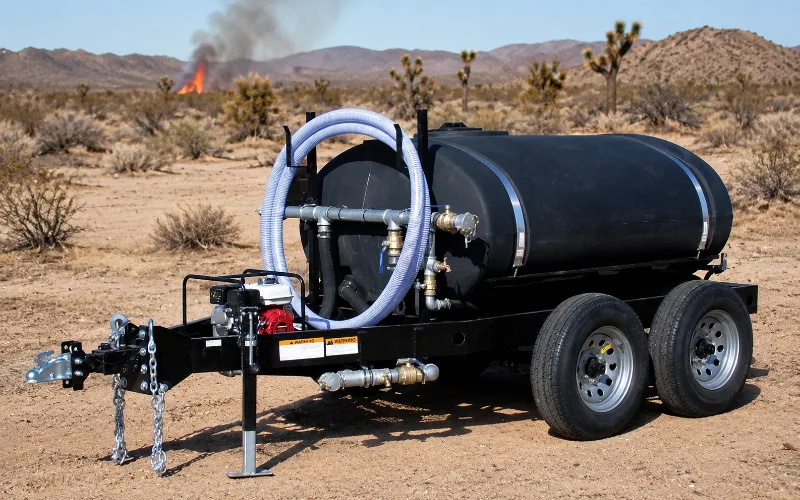
Mid-Size Road-Use Fire Trailer
For departments, utilities, or property teams moving water between fill points, response areas, and rural staging locations.
✓ Tow vehicle fit review
Request a quote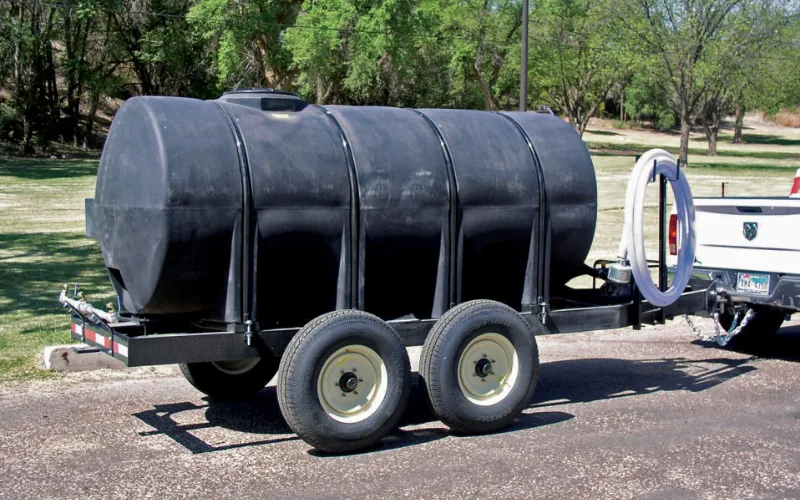
Higher-Capacity Road-Use Fire Trailer
For larger water staging plans where loaded trailer weight, stopping distance, and tow vehicle compatibility need careful review.
✓ Loaded-weight planning
Request a quoteWhen to choose an off-road fire trailer
An off-road fire trailer may be the better fit when the trailer stays on private property and must reach barns, fields, fence lines, remote structures, or controlled burn areas through rural terrain.
-
The trailer stays on private ranch, farm, or rural property roads
If public-road travel is not part of the plan, ground clearance, turning room, field access, and tow vehicle traction may matter more than road-use configuration.
-
You need brush fire support or controlled burn standby
Private-site fire readiness often depends on staging water near likely risk areas without blocking emergency access or vehicle movement.
-
The route includes gravel lanes, pasture entrances, ruts, or uneven drives
Off-road selection should start with the actual access route, not just the water capacity. A trailer that cannot reach the staging area when loaded is the wrong trailer.
-
The fill source and staging location are both on private property
When the water source, operating area, and storage location are all private, buyers can prioritize rural access and workflow over public-road travel.
Recommended for off-road use
For off-road fire trailer setups, these recommendations help match rural access, ground clearance, tow vehicle fit, and staging location to the terrain the trailer will actually need to cross.

Compact Off-Road Fire Trailer
For tighter gates, smaller rural access roads, private drives, and staged water near barns or outbuildings.
✓ Rural access planning
View Details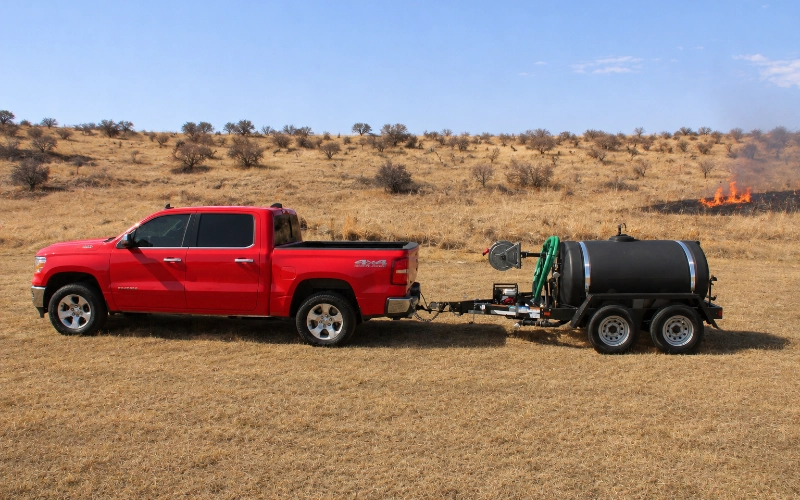
Ranch-Ready Fire Trailer
For private roads, pastures, fields, fence lines, and fire-readiness routes that need ground-clearance review.
✓ Ground clearance review
View Details
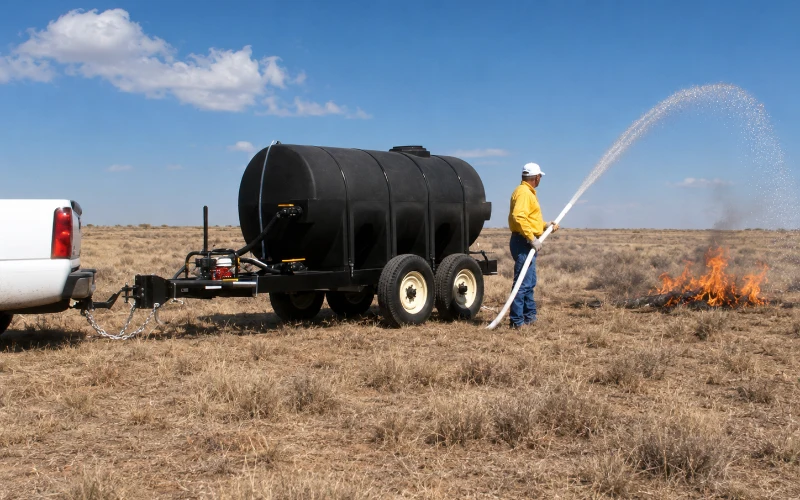
Off-Road Fire-Response Trailer
For rural property protection where pump, hose, nozzle, suction, refill source, and staging location need to work together.
✓ Fire-readiness workflow review
View DetailsCommon mistakes buyers make
Most selection problems come from comparing trailers before defining the route, terrain, tow vehicle, refill source, and staging location.
-
Assuming off-road means all-terrain
An off-road fire trailer still has limits. Review ruts, ditches, mud, slope, soft ground, turning room, and loaded trailer movement before assuming it can reach every part of a property.
-
Ignoring loaded trailer weight
Water adds significant weight. The tow vehicle, hitch setup, route grade, stopping distance, and surface conditions should be reviewed based on the trailer when loaded, not empty.
-
Forgetting the refill source
A trailer staged near a barn or field still needs a practical refill plan. If the refill route crosses public roads, narrow gates, slopes, or soft ground, that route may decide the configuration.
-
Treating DOT-ready as universal compliance
A DOT-ready or road-use configuration does not guarantee compliance in every jurisdiction, agency program, or operating scenario. Verify applicable DOT, state, local, insurance, and agency requirements before purchase and operation.
Related guides
Frequently asked questions
A DOT-ready fire trailer is configured for public-road travel where road-use equipment, tow vehicle fit, loaded weight, and local requirements may apply. An off-road fire trailer is usually selected for private property, ranch roads, fields, and rural access routes where ground clearance and terrain access matter more than highway travel.
A road-legal fire water trailer may be needed when the trailer travels on public roads between fill points, stations, properties, utility sites, jobsites, or mutual aid areas. Before choosing a road-use trailer, verify DOT, state, local, agency, and insurance requirements for the intended use.
Do not assume an off-road fire trailer is suitable for public-road use. If a trailer needs to leave private property, confirm the road-use configuration, registration, lighting, braking, tires, hitch setup, loaded trailer weight, and local requirements before operation.
Fire trailer ground clearance matters when the trailer must cross ruts, gravel roads, pasture entrances, ditches, uneven drives, soft ground, or rural access lanes. The trailer and tow vehicle both need to reach the staging area safely when loaded.
If the fill source requires public-road travel, a DOT-ready or road-use configuration may be appropriate. If the fill source is entirely on private property, an off-road setup may be more practical depending on terrain, tow vehicle capability, and staging location.
Ready to choose a setup?
Send us the travel route, terrain, tow vehicle, refill source, and staging location. A Sales Specialist can help narrow the right fire-response trailer configuration for your project.
Request a QuoteNeed configuration guidance?
Talk through DOT-ready and off-road fire trailer options before you commit. The right call can save time, avoid mismatched equipment, and make your fire-readiness plan easier to operate.
Talk to a Specialist