

Drought Backup Water Supply for Livestock
When drought drops well levels or dries out pastures, a drought backup water supply for livestock keeps cattle and other animals watered. A water trailer gives you a mobile way to haul and stage water wherever the herd is.
When Drought Turns Livestock Water Into a Daily Problem
A drought backup water supply for livestock matters most on the day your normal source stops keeping up. Wells run low or fail outright, ponds and creeks shrink, dry pasture pushes animals to graze farther from fixed water, and seasonal shortages or a temporary water line issue can cut off access with little warning. Cattle still need water every single day, and in dry heat they need more of it, not less. Without a backup plan, you are left choosing between moving the herd, paying for emergency water delivery, or watching troughs run dry. An emergency livestock water supply during drought does not need to be complicated. It needs to be mobile, dependable, and ready before the shortage hits.
How a Water Trailer Supports a Drought Backup Water Supply for Livestock
A water trailer turns backup watering from a scramble into a routine: fill from an available supply, tow to the herd, and stage water at troughs, stock tanks, temporary pens, or remote pasture areas. For drought backup duty, the trailer needs to do a few specific things well.
- Haul from a dependable source During drought your fill point may be a hydrant in town, a neighbor's well, or a co-op supply. The trailer has to make that round trip reliably, which often means towing on public roads with a DOT-compliant setup.
- Keep water clean and drinkable Backup water is still drinking water. Food-grade polyethylene tanks with sealing lids keep hauled water safe for cattle, horses, sheep, and goats between fills.
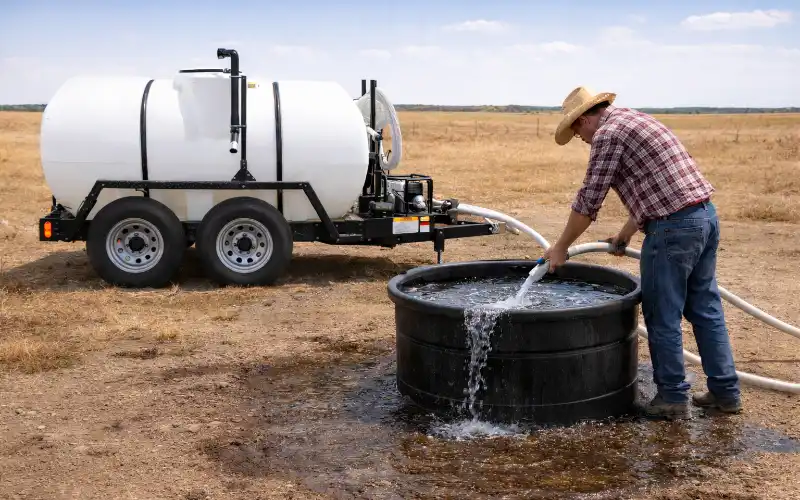
- Fill troughs without infrastructure Dry pastures and off-grid livestock areas rarely have power or plumbing nearby. Gravity-feed outlets work with no fuel or electricity, while pump-equipped models handle longer hose runs to multiple troughs.
- Move between groups of livestock Drought rarely hits one pasture at a time. The trailer needs to stage at one watering point, top off troughs, and relocate to the next group on the same haul when possible.
- Tow with the truck you already own A backup plan fails if the loaded trailer exceeds what your tow vehicle and ranch routes can handle. Water weighs about 8.3 pounds per gallon, so capacity has to match the truck and the ground conditions on the way in.
Building a Backup Water Plan for Cattle During Drought
A backup water plan for cattle during drought comes down to a short checklist: where backup water will come from, how far it must be hauled, how often troughs need to be checked or refilled, where the trailer can be staged safely, whether it must move between groups of livestock, which tow vehicle can access the pasture or ranch route, how ground conditions may affect access, and whether hoses, a pump, or a gravity-feed setup is needed at the watering point. Work through those questions first, then match capacity to the answer. As a reference point, cattle drink roughly 10 to 20 gallons per day depending on size, weather, and lactation status, so a 50-head cow-calf operation in summer can need 750 to 1,000 gallons daily.
Small Herds and Short Hauls
For smaller groups close to the fill source, a small-capacity trailer in the 550 gallon range keeps refill trips manageable and tows behind most half-ton trucks with a proper hitch setup.
Mid-Size Herds and Daily Refill Routes
For operations hauling to multiple troughs on a daily water hauling routine, an 800 to 1,025 gallon trailer covers more demand per trip. Plan on a 3/4-ton or one-ton truck for the larger end of this range.
Large Operations and Long Distances
For remote ranch water delivery during drought, where the fill source is far from the herd, a higher-capacity trailer around 1,600 gallons means fewer round trips and more water staged per haul.
Recommended Trailers for Drought Backup Water Supply
These agricultural and equestrian water trailers are the capacities most often matched to drought response, trough filling, and temporary livestock water supply. Each one hauls from a dependable source to where the herd actually is.
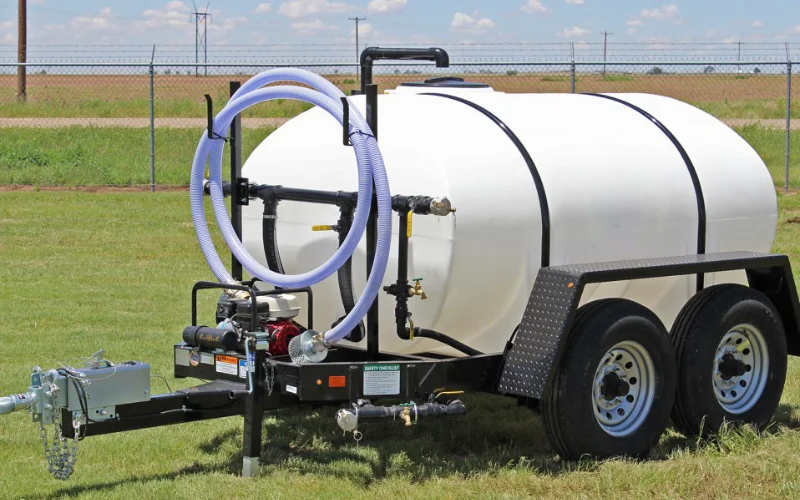
800 Gallon Agricultural Water Trailer
Mid-range backup capacity with easy towing for most trucks on daily refill routes.
✓ DOT-compliant options with tandem axles and electric brakes for public road hauling
View Details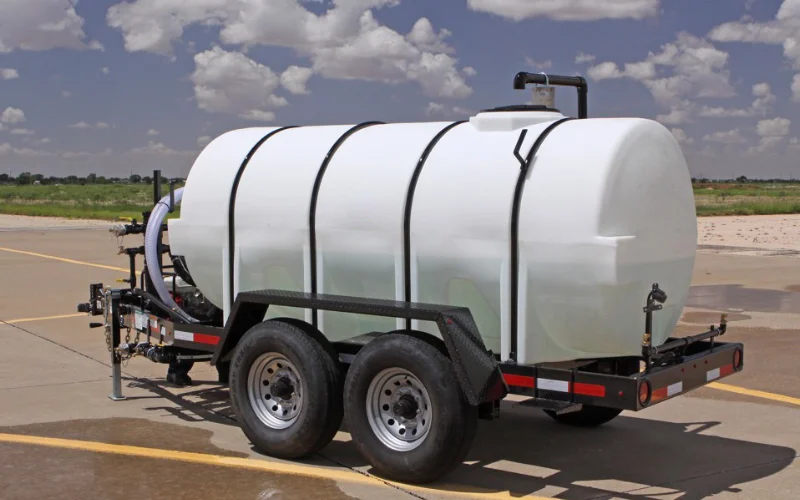
1,025 Gallon Water Trailer
Larger herds with fewer refill trips when troughs are spread across pastures.
✓ Food-grade polyethylene tank with baffled design to control sloshing in transit
View Details
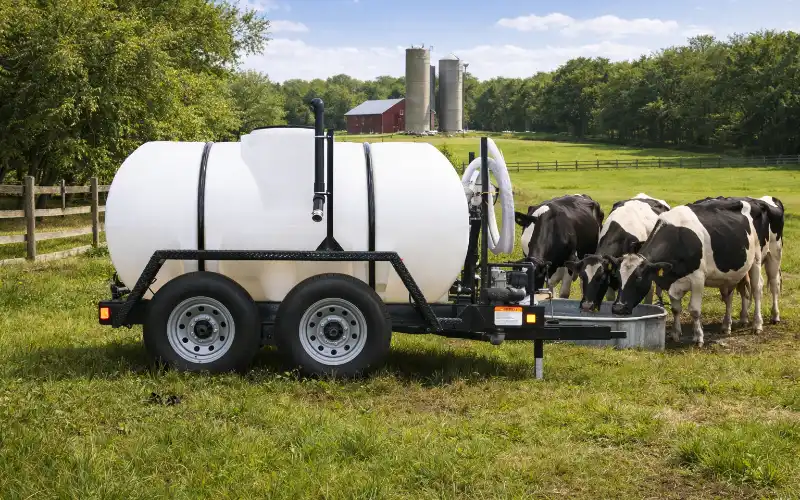
1,600 Gallon Water Trailer
Maximum capacity for long hauls between the fill source and remote grazing areas.
✓ Higher capacity means fewer round trips on long-distance remote ranch routes
View DetailsNot sure where to start? Browse water hauling trailer options or compare farm water wagon options against your herd size and haul distance.
Related Guides
Frequently Asked Questions
A drought backup water supply is a planned secondary way to keep livestock supplied with drinking water when the primary source is low, offline, or too far from the animals. For many farms and ranches, that plan centers on a water trailer that can be filled from a dependable source and hauled to troughs, stock tanks, or temporary pens until normal water access returns.
Yes. When a well slows down or drops during dry conditions, a water trailer can supplement it by hauling water from a dependable source to fixed tanks and troughs. It is a bridge for short-term shortages, not a replacement for the well, so refill trips and trough checks still need to be planned and monitored.
A practical backup water plan for cattle during drought identifies where fill water will come from, how far it must be hauled, how often troughs need to be checked and refilled, where the trailer will be staged, which tow vehicle can reach each pasture, and whether hoses, a pump, or a gravity-feed setup is needed at the watering point.
Most operators fill a water trailer at a dependable source, tow it to the pasture, and connect it to portable stock troughs. Pump-equipped trailers handle longer hose runs and faster fills, while gravity-feed outlets work for simple single-trough setups. Float valves can help maintain trough levels between visits, but troughs still need regular checks.
Yes. A water trailer can serve as an off grid livestock water supply setup in areas with no power, plumbing, or hydrant access. Gravity-feed outlets require no fuel or electricity at the watering point, and pump-equipped models carry their own gas engine, so the trailer can operate anywhere the tow vehicle can safely reach.
No. A water trailer supports temporary water delivery and contingency planning during drought, well issues, or remote grazing. Livestock still need consistent monitoring, a dependable fill source, and a long-term water plan. The trailer is the backup layer that keeps animals supplied while the primary source recovers or permanent infrastructure is addressed.
Ready to Move?
Tell us your herd size, fill source, and haul distance and we'll respond same-day with a quote on the right trailer for your drought backup plan.
Request a QuoteStill Planning Your Backup?
Need help planning backup water for livestock during drought? Talk to a Sales Specialist about agricultural water trailer options for drought response, remote ranch water delivery, and temporary livestock water supply.
Talk to a Sales Specialist