

Defensible Space Water Trailers for Pre-Wetting and Fire Protection
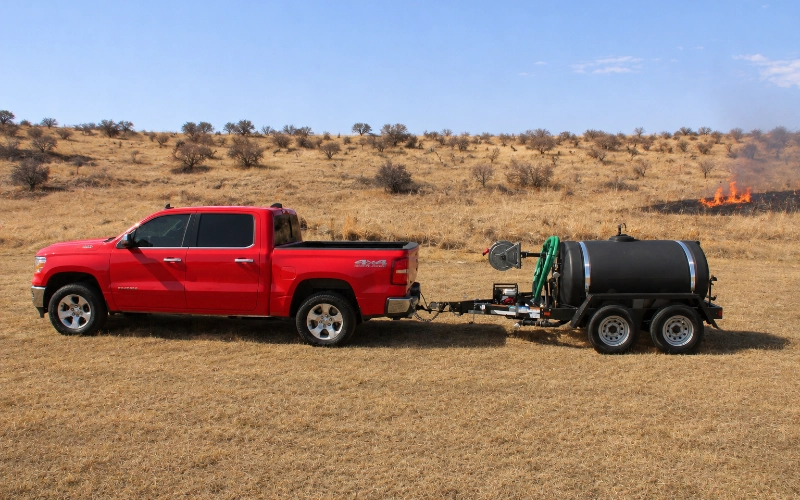
A pre wetting water trailer for fire protection gives rural properties, ranches, fire districts, and utility sites a mobile water source for defensible space work, vegetation pre-wetting, and structure defense planning where hydrants are limited or far away.
When Defensible Space Planning Meets the Limits of Fixed Water Sources
Defensible space work, pre-wetting around structures, and wildfire readiness usually need to happen before conditions turn critical. The challenge for rural properties, ranches, utilities, and remote work sites is that fixed water sources often are not close to the areas that matter most: the vegetation buffer around outbuildings, the fence line near a dry pasture, the access road that crews need to cut and clear. A defensible space water trailer gives property teams or response crews a mobile water source they can stage where it is actually useful, whether that is pre-wetting target areas during red flag conditions, supporting vegetation management work, or standing by during a controlled burn. It supports planning and preparedness; it does not replace trained fire response, code-required protection systems, or a complete wildfire mitigation plan.
What a Water Trailer for Defensible Space Needs to Do
Defensible space work is usually about reducing fire risk around structures, access routes, and vegetation areas. A water trailer can support that work, but the configuration has to match how the property will actually use it.
- Tow well on rural access Crews stage trailers near vegetation lines, fence rows, or remote outbuildings that pickup-towable equipment can reach but heavy apparatus cannot. Access roads are rarely flat, paved, or graded.
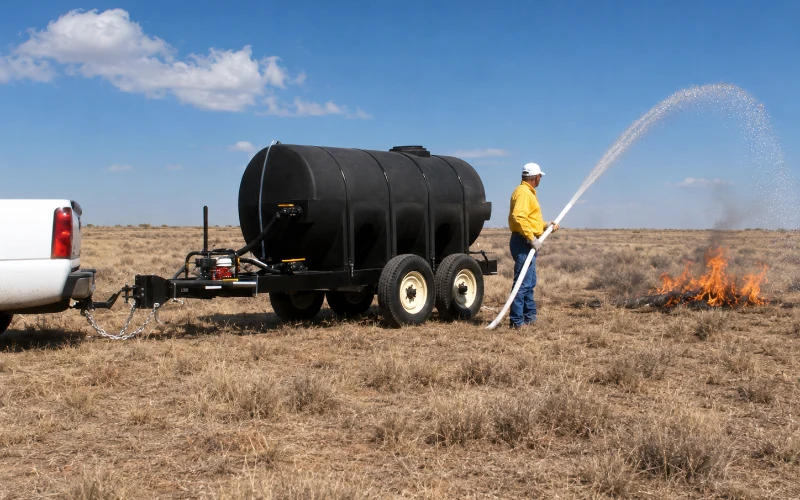
- Support a pre-wetting setup Pre-wetting around structure perimeters, driveways, or vegetation areas typically calls for a hose, pump, or spray configuration so crews can apply water deliberately to target areas.
- Stage pre-filled and ready During red flag warnings or controlled burn operations, the trailer needs to sit ready where it will be used, not somewhere that requires another fill cycle before it is useful.
- Match the fill plan Where the trailer can actually be filled (a property well, a hydrant miles away, a tender, a municipal source) shapes which configuration fits the site and how often it can be reset during the day.
- Capacity matched to the staging plan A trailer sized for one structure perimeter is different from one sized to support a vegetation crew working a multi-acre buffer or a fire district staging across a long fence line.
- Fit the property’s emergency plan The trailer is one piece of a broader readiness plan, not the whole plan. Where it stages, who tows it, and when it gets pre-positioned all need to be worked out before fire season, not during it.
Pre wetting Water Trailers for Fire Protection during Wildfire Season
A pre wetting trailer for wildfire protection is part of a broader readiness plan when conditions are dry, fire risk is elevated, or crews are preparing around structures, driveways, fences, fields, or vegetation areas. The right configuration depends on the size of the property, how far the trailer needs to reach from the staging point, and how many sites it has to cover. The scenarios below cover the most common patterns.
Small rural properties and single-residence ranches
Smaller-capacity trailers are often a fit for property owners staging water near a single structure, driveway, or short vegetation buffer. Look for a configuration you can reposition without specialized towing equipment.
Larger ranches, fire districts, and utility sites
Higher-capacity trailers make sense when crews need standby water across a longer fence line, a multi-acre vegetation buffer, or a remote utility site with fire exposure. Plan around fill access and access road conditions before sizing up.
Vegetation crews and controlled burn standby
Crews working vegetation management or standing by during a controlled burn often want a trailer they can move repeatedly through the workday. Pre-wetting reach and quick reposition tend to matter more than maximum capacity.
Property Protection Water Trailers for Fire Season Readiness
Property owners, fire districts, utilities, and agencies often pre-position a property protection water trailer for fire season ahead of the dry months, before high-risk windows arrive. The badges below reflect configuration options available across our fire protection and emergency response trailer lineup.
Recommended Water Trailers for Structure Defense and Fire Season Staging
The right water trailer for structure defense planning depends on access, training, local fire guidance, water availability, and site conditions. The solutions below cover scenarios from compact pickup-bed staging at a single property to crew-supported staging at remote sites. A trailer or staging tank can support a readiness plan; it does not replace trained fire response.
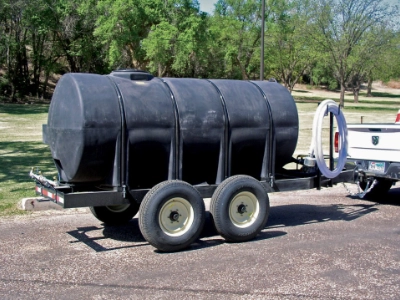
Fire fighting water trailer
Off-road trailer in 500, 800, or 1,025 gallon capacities for ranches, rural properties, and crews staging standby water near structures, fence lines, or vegetation buffers.
✓ Fills from ponds or hydrants; algae-resistant tank holds water pre-positioned for readiness
View Details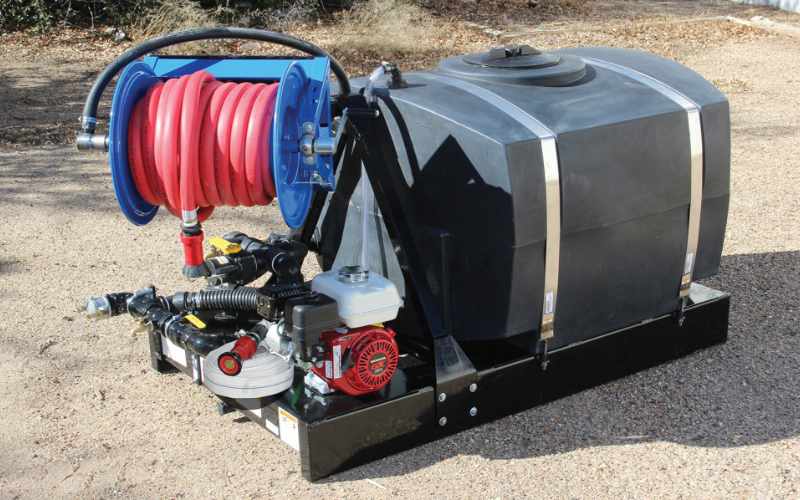
Pickup-mounted fire skid unit
Compact 200-gallon skid that mounts in a half-ton or three-quarter-ton pickup bed for single-property staging and quick reposition around structures and outbuildings.
✓ Pump, engine, and hose included; reaches access roads larger trailers cannot
View Details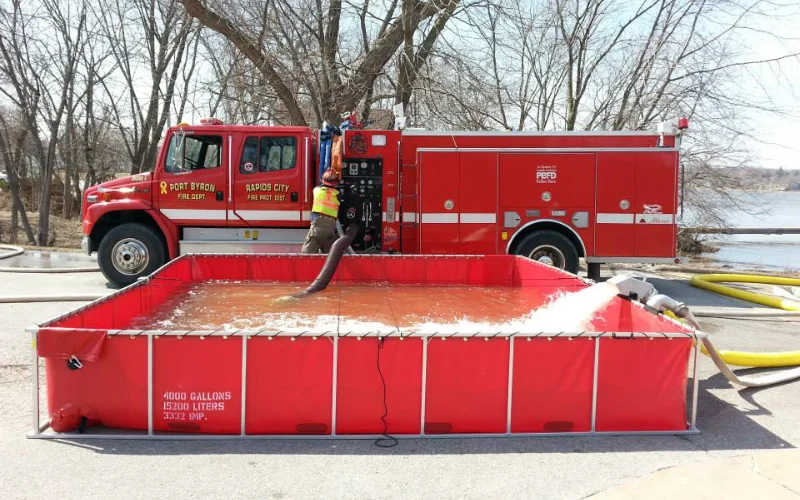
Folding frame drop tank
Portable drop tank that sets up in minutes to give crews a refillable water source where hydrants are out of reach. Pairs with a trailer for sustained pre-wetting or vegetation work.
✓ Configurable liner sizes; quick setup for crew water staging
View DetailsRelated Guides
Frequently Asked Questions
A defensible space water trailer is a mobile water source used to support pre-wetting, vegetation management, and wildfire readiness on rural properties, ranches, utility sites, or other locations without nearby hydrants. It is one part of a broader fire preparedness plan, not a substitute for trained fire response or code-required protection systems.
Defensible space work usually focuses on reducing fire risk around structures, access routes, and vegetation areas. A water trailer can support that work by giving crews a mobile water source for wetting dry areas, supporting cleanup, and staging water near work zones. The trailer does not create defensible space on its own.
Yes. Pre-wetting around structures, driveways, fences, or vegetation areas is a common use case during dry, high-risk conditions. The setup matters: pre-wetting effectively usually requires a hose, pump, or spray configuration matched to the property layout. Pre-wetting does not guarantee fire protection.
Plan around where the trailer can be filled, where it can be staged safely, what areas need pre-wetting attention, how access roads will hold up under tow, and how the setup fits the broader emergency plan. A Sales Specialist can help map those considerations to a workable trailer configuration.
No. A defensible space water trailer is positioned for pre-fire readiness work, including pre-wetting, vegetation support, and standby water staging. Fire fighting trailers and fire suppression trailers are configured for active response and may include different pumps, plumbing, and certifications.
Ready to stage water for fire season?
Tell us about your property, your access, and how you plan to use the trailer. We respond same-day.
Request a QuoteStill planning?
A Sales Specialist can walk through fill access, staging, and configuration options for defensible space and pre-wetting work. No pressure to commit on the call.
Talk to a Specialist