

Brush Fire Water Trailer Setup
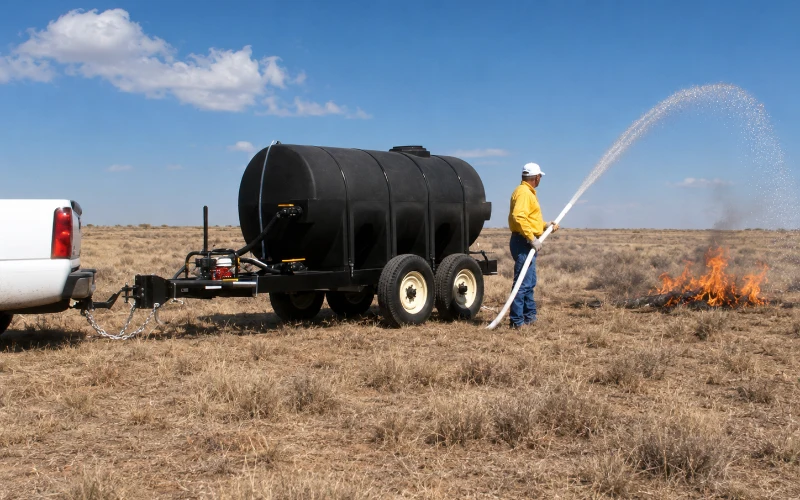
Brush fires and grass fires can spread fast in rural and dry areas where hydrants are not nearby. A brush fire water trailer setup gives responders, ranches, utilities, and property teams a mobile water source that can be staged or moved into position for early fire response support.
When Fire Moves Faster Than the Nearest Hydrant
Brush fires and grass fires often start in the places water is hardest to reach: open fields, fence lines, rural driveways, utility corridors, and remote access roads. Crews and property owners are left waiting on tenders or chasing refill points while small ignitions grow into incidents. A pre-positioned mobile water source closes that gap for the first critical minutes. The goal is not to replace fire department response. The goal is to extend access to water before help arrives, during standby, or in conditions where fixed water sources simply are not available.
What this Trailer Needs to Do
A brush fire water trailer setup has to match the property, the response plan, and the realistic conditions of the area it will operate in. The list below covers the practical requirements that drive the setup.
- Tank capacity that fits the use case Capacity should reflect property size, refill availability, and how long the trailer is expected to support response before refilling.
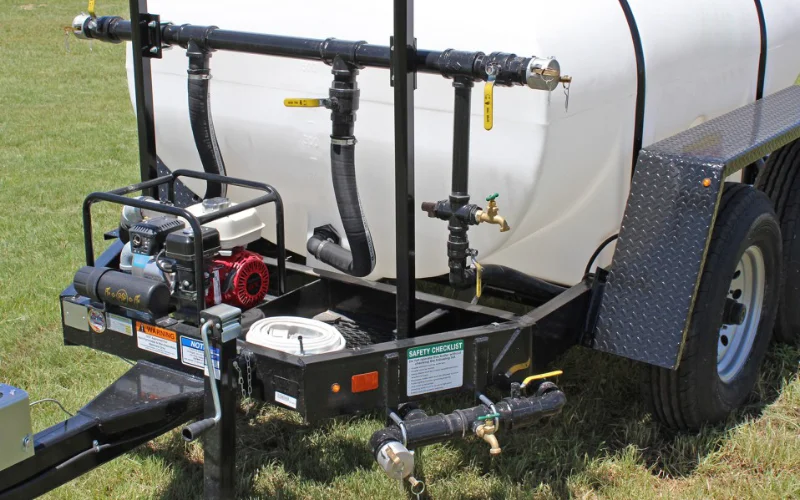
- Pump and hose configuration A pump, hose reel, and nozzle setup determines whether the trailer can be used to wet vegetation, support standby, or assist with initial attack tasks.
- Tow vehicle compatibility The trailer must move safely when fully loaded, especially on rural roads, soft shoulders, or steep access points where brush fires often occur.
- Access to a refill source Mobile water is only useful as long as it can be replenished. The setup should account for nearby hydrants, ponds, draft points, or scheduled refills.
- Mobility across the response area Brush fire risk is rarely fixed to one location. The trailer should be able to reach fields, fence lines, access roads, and standby positions where ignitions are most likely.
- Suction or discharge fittings that match the plan Standard fittings let the trailer integrate with engines, portable pumps, or refill points instead of becoming a stand-alone island.
How to Choose the Right Trailer
For brush fire and wildfire readiness, the right setup depends less on a single spec and more on access, terrain, and how the trailer will be used. The scenarios below cover the most common starting points.
Rural property and ranch standby
Smaller-capacity to mid-capacity trailers work well when the trailer needs to live on the property, move between fields and outbuildings, and be towed by a pickup or utility vehicle the owner already has.
Volunteer and rural fire department initial attack
Higher-capacity fire-response trailers are a better fit when crews need extended water on remote calls, draft and discharge fittings for engine integration, and a pump that supports active response.
Utility, public works, and emergency teams
Specialty fire-response trailers are sized around route coverage, refill access, and the role the team plays in standby, controlled burn support, or limited-access response situations.
Recommended Trailers for Brush Fire and Wildfire Setup
The right trailer for brush fire and wildfire initial attack support depends on access, response role, and refill plan. The options below cover the most common starting points for rural property owners, fire-response teams, and utility crews.
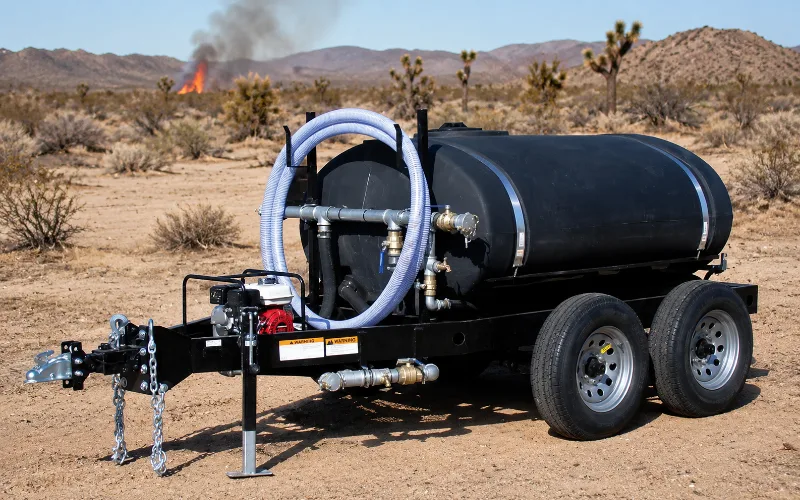
Compact fire-response trailer
Small-capacity setup for rural property standby, fence-line access, and tight rural roads where a smaller tow rig is the only option.
✓ Sized for properties where access, not capacity, is the limiting factor
View Details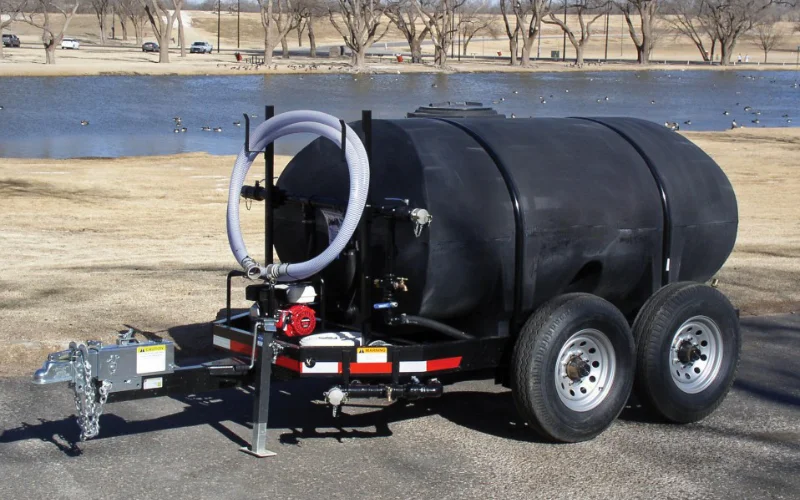
Mid-capacity fire-response trailer
A balanced setup for grass fire response, controlled burn standby, and ranches that need to cover larger areas without a full water tender.
✓ Pump and hose configuration suited to active response support
View Details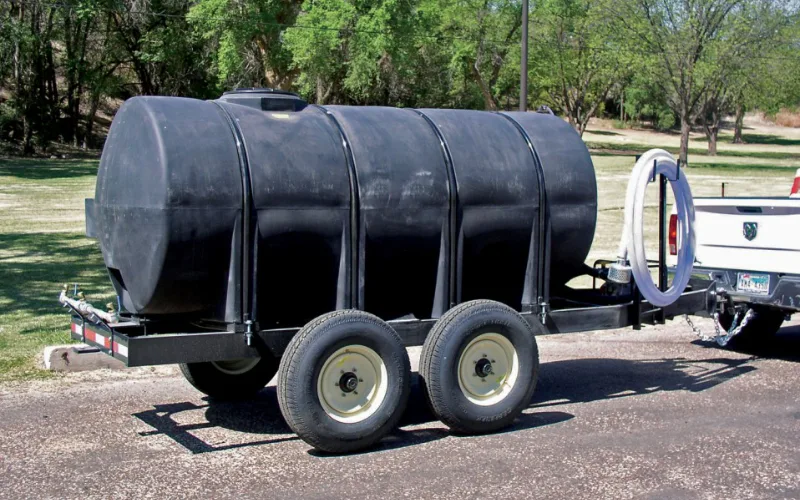
Higher-capacity fire-response trailer
Larger water volume for fire department initial attack, utility emergency response, and remote calls where refill points are a long round trip away.
✓ Built around extended response time and engine integration
View DetailsRelated Guides
Frequently Asked Questions
A brush fire water trailer setup is a mobile water source that ranches, rural property owners, utilities, and response teams stage or tow into position to support early-stage brush fire, grass fire, or wildfire response in areas where hydrants and tenders are not immediately available. It does not replace trained fire response or required fire protection systems.
Yes. A water trailer for initial attack fire response gives crews an early mobile water source for small fires, standby coverage, and limited-access conditions. The configuration depends on the property, response plan, tow vehicle, and refill source.
A wildfire initial attack water trailer setup typically considers tank capacity, pump configuration, hose reel, nozzle, suction or discharge fittings, tow vehicle compatibility, and access to a refill source. The right combination depends on terrain, vegetation, and the response plan, so configuration should be reviewed with a Sales Specialist.
Yes. A mobile water source for brush fire response can be repositioned between fields, property entrances, access roads, or standby locations as conditions change. Mobility planning should account for tow vehicle capacity, road conditions, and refill logistics.
A quick response water trailer for grass fires can support early action in dry or windy conditions where grass fires can spread quickly. Readiness depends on staging, trained operators, and refill logistics, and a trailer alone is not a substitute for active fire protection or emergency response.
Rural property owners should consider where the trailer will be stored, where it will be filled, whether it can reach likely response areas, the condition of access roads, tow vehicle capability when the tank is loaded, and whether the setup needs pump, hose, and nozzle capability for the intended use.
A water trailer can serve as a standby water source during controlled burns, providing pre-positioned water near the burn area. Standby planning should follow the burn plan, local agency guidance, and trained fire response practices.
No. A brush fire water trailer is a readiness and support tool, not a replacement for fire department response, trained fire crews, or code-required fire protection systems. It is intended to extend access to water during early response, standby, or limited-access situations.
Ready to move?
Tell us about your property, response plan, and refill access, and we will get a quote back to you the same day.
Request a QuoteStill deciding?
A short call with a Sales Specialist saves time on capacity, pump, and tow vehicle questions before you commit to a setup.
Talk to a Specialist