

How to Water Cattle in Remote Pastures
When cattle are grazing a back pasture or a leased field with no well, hydrant, or permanent trough nearby, the water has to come to them, and that turns into a daily logistics problem.
When a Remote Pasture Leaves Cattle Without Water
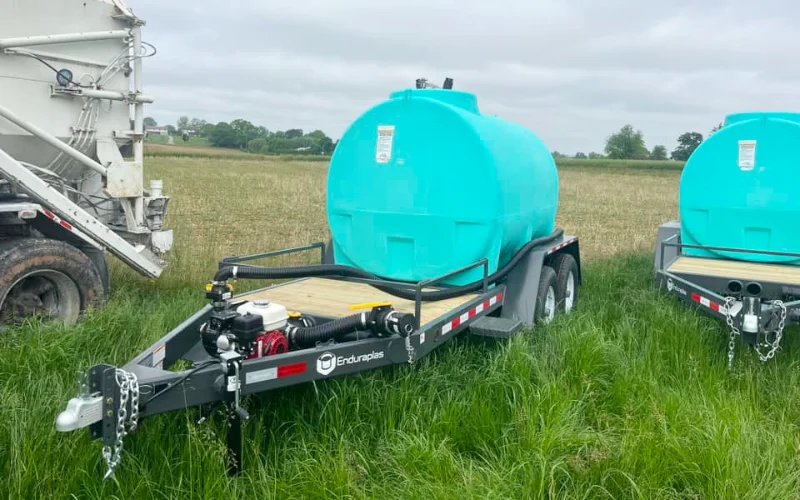
Remote pastures, back paddocks, and leased grazing land often sit far from any well, hydrant, or permanent water line. When you rotate cattle into those areas, the water has to follow the herd. The most practical way to water cattle in remote pastures is to haul it: a towable water trailer lets you move a working volume of water out to where the animals are, fill troughs on site, and stage water near the points where cattle actually drink. That keeps livestock close to a dependable source without running a new line or digging a well, and it lets you adjust the setup as you move animals from one paddock to the next.
Remote pasture watering usually comes into play when:
- Cattle are grazing away from the main barn or water source
- A remote paddock has no well or permanent trough
- You are using temporary or seasonal grazing areas
- You move animals on a rotational grazing schedule
- Pastures are dry or only watered seasonally
- You are running cattle on leased land with no permanent water infrastructure
- A well or water line is down and you need emergency cattle water access
How to Water Cattle in Remote Pastures Using a Water Trailer
Watering cattle in a remote pasture comes down to two things: moving water to the herd and getting it into a trough they can actually drink from. To do that dependably, a pasture water trailer for cattle needs to handle a few jobs.
- Tow over pasture ground Fill sources and grazing areas are rarely on smooth pavement, so the trailer has to reach the cattle across uneven, sometimes soft, ground.
- Carry a useful working volume Hauling from a distant source is the main labor cost, so moving more water per trip means fewer trips, less time, and less fuel.
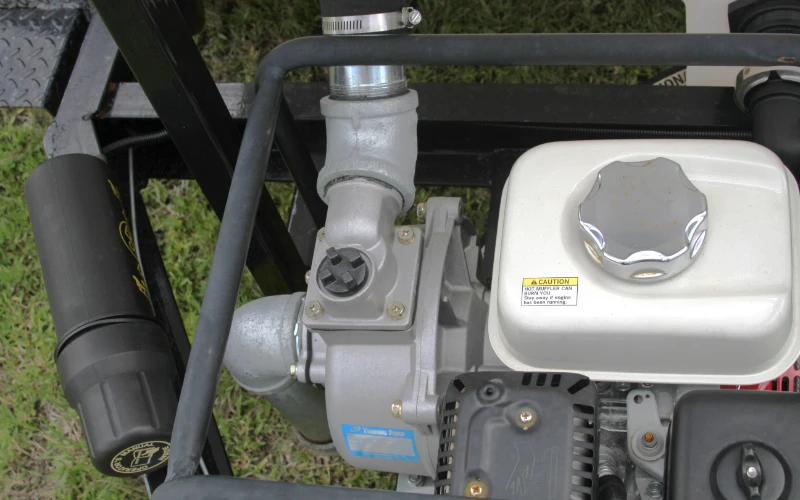
- Fill troughs on site Cattle drink from troughs, not from the tank, so you need a way to move water out, whether that is a pump, a hose, or a gravity-feed outlet.
- Stage safely near access points A staged trailer may sit in a paddock while cattle draw from a connected trough, so it needs to park stably where animals can reach water without crowding the rig.
- Move between paddocks Rotational grazing means the water source has to follow the herd, so the setup should be quick to hitch, move, and re-stage.
Planning a Remote Pasture Water Setup
Before you haul the first load, walk through the practical details that decide how much capacity you need and how often you will be refilling. A short checklist keeps water hauling for remote livestock from becoming guesswork.
- Distance from your fill source to the pasture
- How many cattle need water
- How often the trailer or trough needs to be refilled
- Whether the trailer stays in place or moves between paddocks
- Your tow vehicle and the access route into the pasture
- Ground conditions in wet or dry weather
- Trough location and safe livestock access
- Whether you need a pump, a hose, or a gravity-feed setup
How to Choose the Right Trailer
The right setup depends mostly on three things: how many head you are watering, how far you have to haul, and how often you move the herd. Use those to narrow the field before you worry about anything else.
Small Herds, Short Hauls
When the fill source is close and you are watering a small herd, a compact option like the 550 Gallon Water Wagon is often enough. You refill more often, but the rig stays easy to tow and quick to stage.
Larger Herds or Distant Sources
When you are watering more animals or hauling a long way, a higher-capacity trailer cuts down on refill trips. The 800 Gallon Farm Water Wagon handles bigger herds, and the 1600 Gallon Water Tank Trailer stretches furthest between refills when the fill point is far off.
Paddocks on a Rotation
If you move cattle between paddocks, prioritize a trailer that hitches and re-stages quickly so portable water for cattle paddocks can follow the herd through the rotation.
See our sizing guide for matching capacity to your herd and haul distance →
Cattle Water Without a Well
When a remote pasture has no well, the water has to come from a source you already have, such as a yard hydrant, a barn fill point, or a municipal connection, and then travel out to the herd. A water trailer makes that routine more manageable than refilling small portable tanks or carrying water by hand, because you can move a larger working volume in a single trip and top off troughs on a set schedule.
A trailer does not remove the need to plan, though. You still have to watch trough levels, track how fast the herd draws the water down, and keep a dependable refill rhythm so cattle never run short. Think of the trailer as the tool that makes a good refill routine easier to keep, not a replacement for one.
Recommended Agricultural and Equestrian Water Trailers
Agricultural and equestrian water trailers are built to support remote livestock watering, pasture routes, trough filling, and temporary cattle water access. Match the capacity to your herd, your haul distance, and how often you move animals between paddocks.
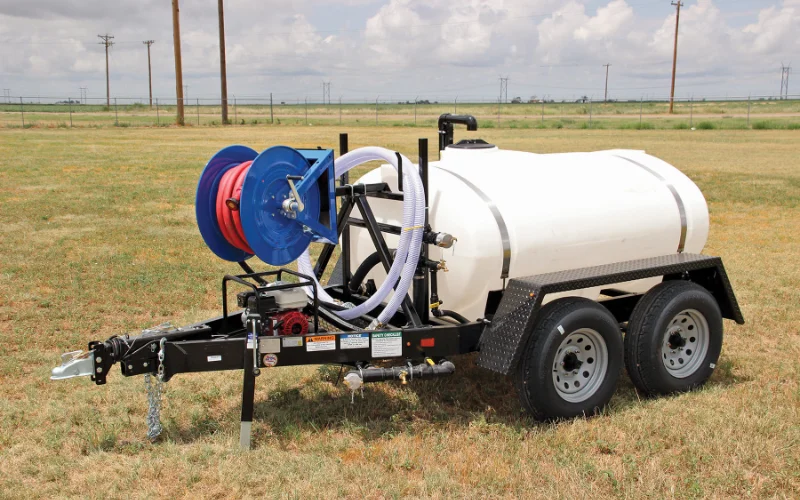
550 Gallon Water Wagon
A compact, easy-tow option for small herds and pastures close to your fill source.
✓ Quick to stage and reposition between paddocks
View Details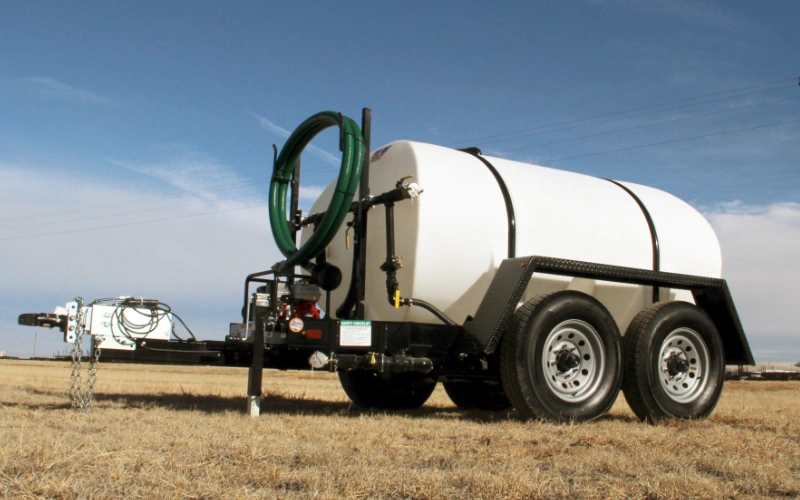
800 Gallon Farm Water Wagon
More capacity to cut refill trips when you water bigger herds or haul a longer distance.
✓ DOT-compliant; tows without a CDL in most states
View Details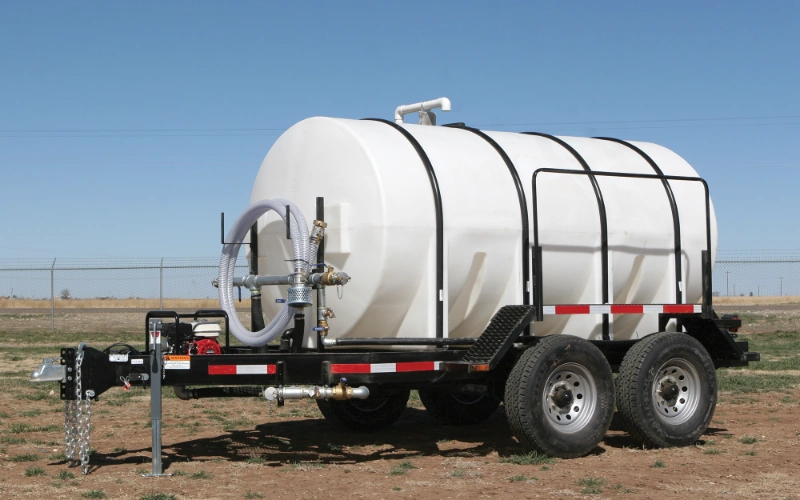
1600 Gallon Water Tank Trailer
High-capacity hauling for distant pastures, larger herds, or long stretches between refills.
✓ DOT-compliant high-capacity build for remote field use
View DetailsRelated Guides
Frequently Asked Questions
Haul the water to the herd with a towable water trailer, fill troughs on site, and stage water near the points where cattle drink. Because remote pastures rarely sit next to a well or hydrant, moving a working volume out to the animals and refilling on a set schedule is usually the most practical approach.
Yes. Cattle drink from troughs rather than the tank itself, so the trailer needs a way to move water out, such as a pump, a hose, or a gravity-feed outlet. With that, you can top off troughs in the paddock and keep them filled between refills.
When a pasture has no well, haul water from a source you already have, such as a yard hydrant, a barn fill point, or a municipal connection, then refill troughs on a schedule. A trailer makes that routine more manageable than small portable tanks, but you still need to monitor trough levels and keep a dependable refill rhythm. See cattle water without a well above for more.
Look at the distance from your fill source to the pasture, how many cattle need water, how often the trough needs refilling, your tow vehicle and access route, ground conditions in wet or dry weather, and where the trough sits for safe access. The planning checklist above walks through each one.
Yes. With rotational grazing the water source has to follow the herd, and a towable trailer lets you move water from one paddock to the next as you rotate cattle, so animals always have a dependable drinking point nearby.
It depends on herd size, weather, and trough capacity, so there is no single number. The practical approach is to watch how fast the herd draws the trough down and set a consistent refill routine so cattle never run short.
Ready to Set Up Pasture Water?
Tell us your herd size, your distance to water, and how you rotate paddocks, and we'll point you to the right setup, usually same-day.
Request a QuoteStill Planning Your Setup?
Need help planning water access for remote cattle pastures? Talk to a Sales Specialist about agricultural water trailer options for livestock watering, trough filling, and remote paddock support.
Talk to a Specialist