

Decision Guide
Pump vs Gravity Feed Water Trailer
The pump vs gravity feed water trailer choice comes down to your watering routine. Gravity feed is the simple answer when water can flow downhill or over a short run. A pump is the answer when you need pressure, longer hose runs, faster filling, or more flexibility in where the trailer parks.
Why This Decision Matters
The wrong setup shows up fast in daily chores. A gravity-only trailer parked below a raised trough delivers a trickle instead of a fill. An operator who planned to drag a hose across a paddock finds the flow fading long before the far fence line. Watering rounds that should take minutes stretch into extra trips around the property, and the trailer ends up sitting while someone hauls buckets instead.
The cost picture is just as practical. Gravity feed keeps the trailer simple, with no pump to power, maintain, or winterize, which makes it the lower-cost setup to own. A pump kit adds upfront cost and a power source to manage, but it buys back time on every fill when troughs, tanks, and watering points are spread across fields, barns, and paddocks. The right choice is the one that matches your refill routine, not the one with the longest feature list.
Gravity Feed vs Pump Water Trailer for Farm Use: Side by Side
Read down each column and match the answers to how the trailer will actually be used on your property.
| Decision factor | Gravity Feed | Pump Setup |
|---|---|---|
| How water moves | Relies on elevation. Water flows because the tank outlet sits above the discharge point. | Moves water under pressure, so flow does not depend on where the trailer sits. |
| Trailer position | Must park at or above the fill point for water to flow. | Can park wherever access is easiest, including below the trough or tank. |
| Hose length | Short runs only. Flow drops off quickly as the hose gets longer. | Supports longer hose runs, depending on the pump and hose configuration. |
| Discharge speed and control | Slower and less controlled. Fine for topping off nearby troughs. | Faster filling and a more controlled discharge setup. |
| Simplicity and maintenance | Nothing to power or service beyond the valve and hose. | Adds a pump, plumbing, and a power source to maintain. |
| Power source | None required. | 12V battery power or a gas engine, depending on the configuration. |
| Typical farm tasks | Filling nearby troughs and topping off tanks in predictable spots. | Rotational grazing, remote paddocks, multiple barns and fields, longer hose work. |
| Best for | Farms with a short, predictable watering routine where the trailer can park above or beside the fill point. | Operations moving water across multiple paddocks, barns, or fields, or anywhere hose length, lift, or fill speed matters. |
When to Use a Gravity Feed Water Trailer
Gravity feed is the right call more often than buyers expect. If your routine looks like the scenarios below, keep the setup simple.
-
The trailer parks above or right beside the fill point
When the trough or tank sits downhill from the trailer, or directly next to it, elevation does the work. There is no pump to buy, power, or maintain.
-
Your watering stops are short, nearby, and predictable
If you fill the same troughs in the same spots every day, and long hose runs are not part of the routine, a gravity feed setup covers the job without extra equipment.
-
You want the lowest-maintenance setup on the property
Gravity feed has nothing to fuel, charge, or winterize. For a barn or homestead where simplicity matters more than fill speed, it is the most dependable option to own.
Recommended for Gravity Feed
These Gravity Feed trailers fit the scenarios above. Each one can be ordered without a pump, which makes the Gravity Feed a simple, low-maintenance fit for gravity feeding.
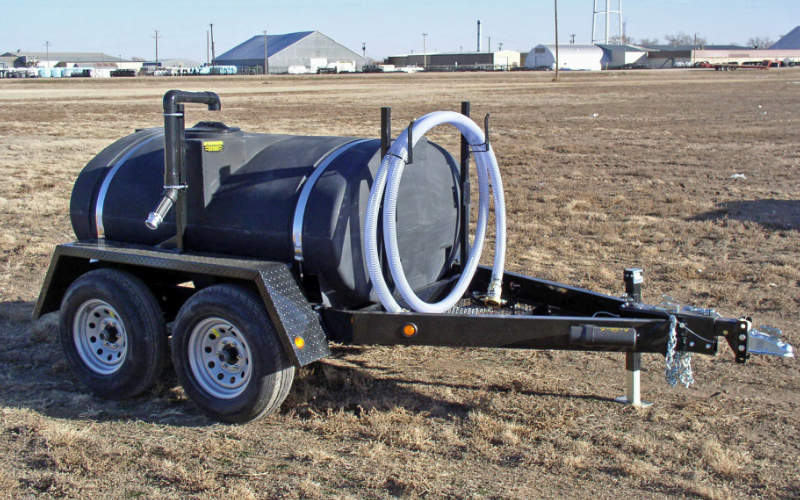
550 Gallon Gravity Feed Water Trailer
A Gravity Feed trailer for barns, paddocks, and watering stops close to where the trailer parks.
✓ 550 gallon capacity, available pumpless for gravity feed
View Details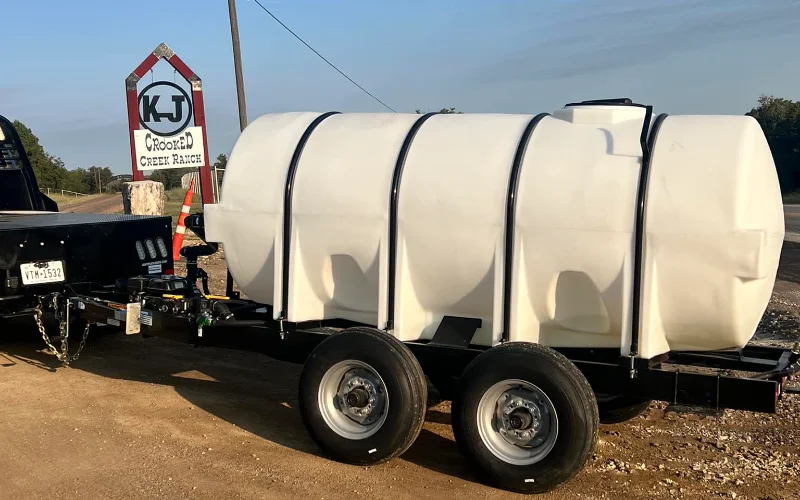
1025 Gallon Gravity Feed Water Trailer
A mid-capacity Gravity Feed trailer for routines that top off more troughs between refills.
✓ 1025 gallon capacity, available pumpless for gravity feed
View Details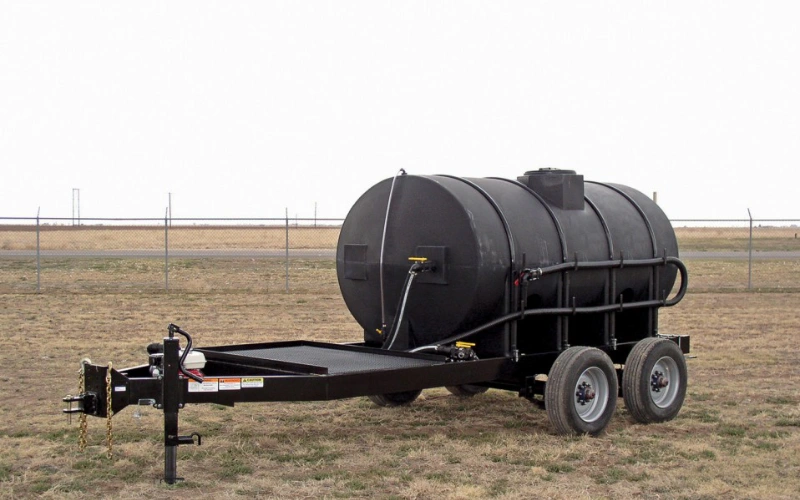
1600 Gallon Gravity Feed Water Trailer
The largest Gravity Feed capacity here, for properties that want fewer trips back to the fill point.
✓ 1600 gallon capacity, available pumpless for gravity feed
View DetailsWhen a Pump Setup Makes More Sense
A pump kit earns its cost when position, distance, or speed work against gravity. These are the situations that come up most.
-
The trailer cannot park above the trough or tank
Raised troughs, stock tanks on a rise, or fill points the trailer simply cannot reach from above all defeat gravity. A pump moves water under pressure no matter where the trailer sits.
-
Water has to travel through a longer hose
Far fence lines, arenas, and watering points across a paddock need flow that holds up over distance. A pump keeps the discharge usable where a gravity run would fade out.
-
Your watering points change with the rotation
Rotational grazing, multiple barns, and remote paddocks mean troughs and tanks vary by location. A pump gives flexible trailer placement and faster fills at every stop.
Recommended for Pump Setups
These pump-equipped trailers fit the scenarios above.
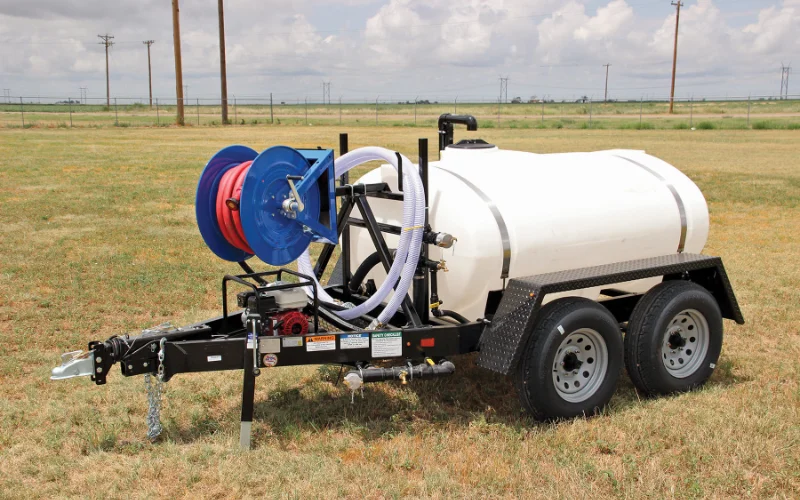
550 Gallon Pump Water Trailer
A pump-assisted trailer sized for arena watering, barn work, and hose runs around the property.
✓ 550 gallon capacity with pump-assisted discharge
View Details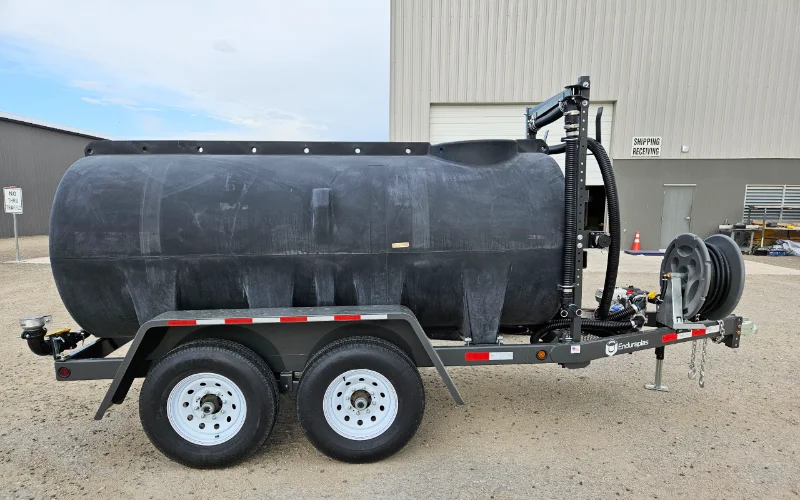
1010 Gallon Pump Water Trailer
A mid-capacity pump trailer for watering points spread across fields and paddocks.
✓ 1010 gallon capacity with pump-assisted discharge
View Details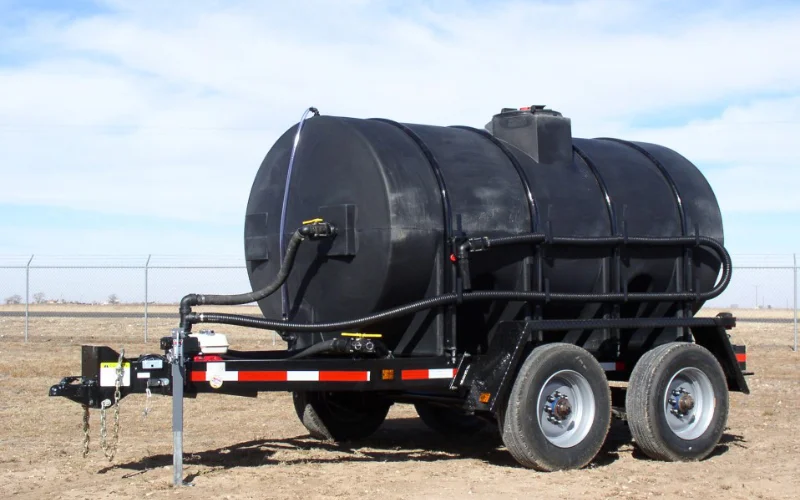
1600 Gallon Pump Water Trailer
A high-capacity pump trailer for long hose runs and multi-stop watering rotations.
✓ 1600 gallon capacity with pump-assisted discharge
View Details12 Volt Pump vs Gas Pump Water Trailer
If a pump is the right direction, the next decision is how to power it. A 12 volt pump vs gas pump water trailer comparison stays simple. 12V pump setups run on battery power, which keeps things convenient for lighter-duty or lower-volume tasks like topping off troughs around the barn. Gas pump setups generally fit higher-flow or more demanding use cases where water needs to move farther or faster.
The right option depends on how far water needs to move, how often the trailer is used, and which power source is practical on the farm. A Sales Specialist can confirm which pump options are available for a given trailer configuration.
Choosing Pump Size for a Water Trailer
Pump sizing is where most buyers get stuck, and it is worth a short conversation rather than a guess. The right size depends on the desired flow rate, hose length, elevation change between the trailer and the discharge point, how fast troughs or tanks need to be filled, whether the trailer supports one task or several, and the power source and maintenance expectations on your property.
If exact sizing matters for your operation, bring those details to a Sales Specialist. The conversation takes a few minutes and prevents an undersized pump from slowing down every fill afterward.
Configured for Farm, Ranch, and Equestrian Use
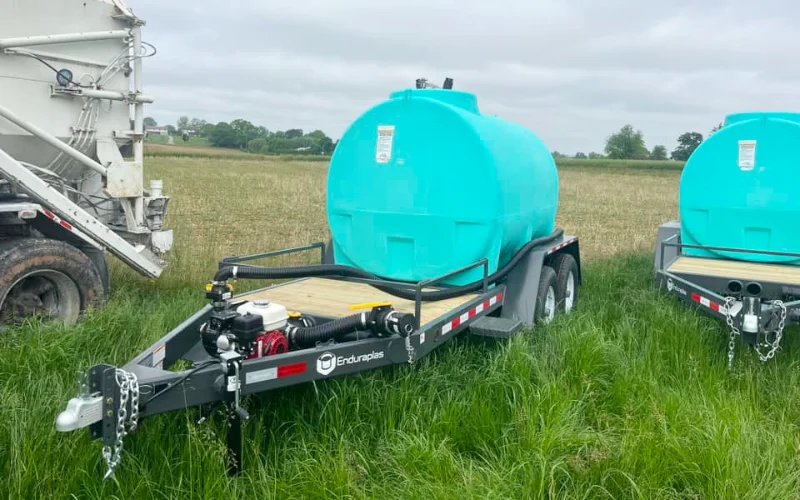
Farm water trailer pump or gravity feed is a configuration choice, not a separate product line. Agricultural and equestrian water trailers can be set up for simple gravity-feed use or pump-assisted water delivery depending on the farm, ranch, or barn application. Compare farm water wagon options for the trailers themselves, or review water trailer pump options if you already know a pump kit is the right direction. Either way, the goal is to narrow the configuration before requesting a quote.
Common Mistakes Buyers Make
These come up on quote calls all the time, and every one of them is avoidable with a quick walk around the property.
-
Assuming gravity will fill a raised trough
Gravity feed needs the tank outlet above the discharge point. If the trough rim sits higher than the trailer outlet, flow slows to a trickle or stops. Walk the property and note where the trailer can actually park before deciding.
-
Picking a pump before thinking about the power source
A pump only helps if it is practical to run. A 12V setup needs battery power available, and a gas pump needs fuel and routine upkeep. Match the power source to your routine, not the other way around.
-
Sizing by tank capacity and ignoring the discharge setup
Buyers often compare gallons and forget the water still has to leave the tank at a usable rate. The discharge setup determines how the trailer performs day to day, so weigh it as heavily as capacity.
-
Planning around one paddock when the routine covers five
A setup that works at the home barn can fall short across a grazing rotation. Choose for the farthest, highest, and slowest watering point in your routine, not the easiest one.
Related Guides
Frequently Asked Questions
Neither is better across the board. Gravity feed fits short, downhill, predictable watering routines, while a pump fits longer hose runs, raised or scattered watering points, and faster fills. Match the setup to your refill routine, not the other way around.
Use gravity feed when the trailer can park above or beside the fill point, hose runs are short, and fast discharge is not the priority. It keeps the trailer simple and low maintenance, with no pump to power or service.
A pump makes sense when the trailer cannot sit above the trough or tank, water has to move through a longer hose, watering points vary by location, or filling speed matters to the daily routine.
A 12V pump runs on battery power and generally fits lighter-duty or lower-volume tasks where convenience matters. A gas pump generally fits higher-flow or more demanding use cases. The right choice depends on how far water needs to move, how often the trailer is used, and which power source is practical on the farm.
Yes, when the tank outlet sits above the trough and the run is short. Raised troughs, or troughs uphill from where the trailer can park, usually call for a pump instead.
Yes. Gravity flow drops off quickly as hose length grows. If your routine includes long hose runs across a paddock, barnyard, or arena, plan on a pump setup.
Ready to Move?
You know which setup fits your routine. Send us your project details and a quote comes back same-day.
Request a QuoteStill Deciding?
Need help choosing between pump and gravity feed? Talk to a Sales Specialist about agricultural water trailer configurations for trough filling, farm water delivery, and livestock watering. One short call saves a return trip.
Talk to a Sales Specialist