

Rotational Grazing Water Trailer
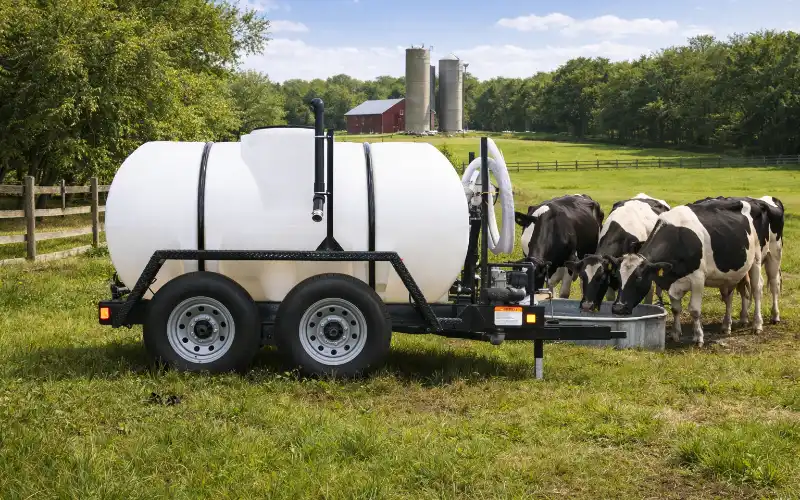
When you rotate livestock through paddocks and temporary pens, water has to follow the herd, and a rotational grazing water trailer keeps every grazing area supplied even where there is no trough, well, or hydrant.
When Every Paddock Move Raises a Water Question
Rotational grazing works by moving animals through a sequence of paddocks so each area can rest and recover. The catch is that water does not always follow the same schedule. One paddock may sit near a permanent trough or hydrant, while the next has no water line, no well, and no practical way to run pipe before the herd arrives. Leased ground, seasonal grazing areas, and temporary fencing make this harder, because the infrastructure that exists is rarely where the next rotation needs it. A rotational grazing water trailer answers that gap directly: it hauls water to temporary pens, refills troughs on site, and keeps livestock supplied as the grazing plan changes from one paddock to the next.
What a Rotational Grazing Water Trailer Needs to Do
The grazing plan sets the job. To keep water access easy as animals move, the trailer has to handle a handful of real conditions on the ground.
- Tow Over Pasture and Lease Roads Paddock access routes are often gated, uneven, and unpaved, so the trailer has to follow the tow vehicle wherever the next rotation sits.
- Carry Water Between Refills Between fill points the trailer is the only water source on the paddock, so capacity has to match how many animals are grazing and how long it is before you can refill.
- Fill Troughs Without a Fixed Connection Temporary pens rarely have a hydrant nearby, so the trailer needs a way to move water into the trough, whether by pump or gravity feed.
- Stage in Place or Move With the Rotation Some operations park the trailer near a pen for a few days while others tow it to each new paddock, so the setup has to work both ways.
- Stand Up to Field Conditions Trailers used for grazing live outside in sun, mud, and temperature swings, so the tank and frame have to take repeated field cycles.
How to Choose the Right Trailer
For rotational grazing, the variables that matter most are herd size, how far the next paddock sits from your fill source, and how you plan to move water into the trough. Match the trailer to your rotation, not to the largest tank you can find.
Small Herds and Short Rotations
If you run a small herd through nearby paddocks and can refill often, a compact trailer keeps water close without a large tow rig.
Bigger Herds or Distant Paddocks
When the herd is larger or the next paddock sits well away from your fill source, a higher-capacity trailer cuts the number of refill trips per rotation.
Leased or Multi-Site Grazing
If you graze leased or scattered ground, a trailer you can tow between properties gives every site a water source without building permanent infrastructure.
See our full sizing guide for rotational grazing water trailers →
Building a Mobile Water System for Grazing
The trailer is one part of the picture. A reliable mobile water system for grazing is the trailer plus the trough, the hose, the pump or gravity-feed setup, and the refill routine that keeps them topped off. Thinking about all of those together, rather than the tank alone, is what keeps water access steady as the herd works through the rotation. Plan where troughs sit for easy livestock access, how often they get checked, and the route your tow vehicle takes back to the fill source, and the trailer becomes a practical part of the grazing plan instead of an afterthought.
Recommended Trailers for Rotational Grazing and Temporary Pens
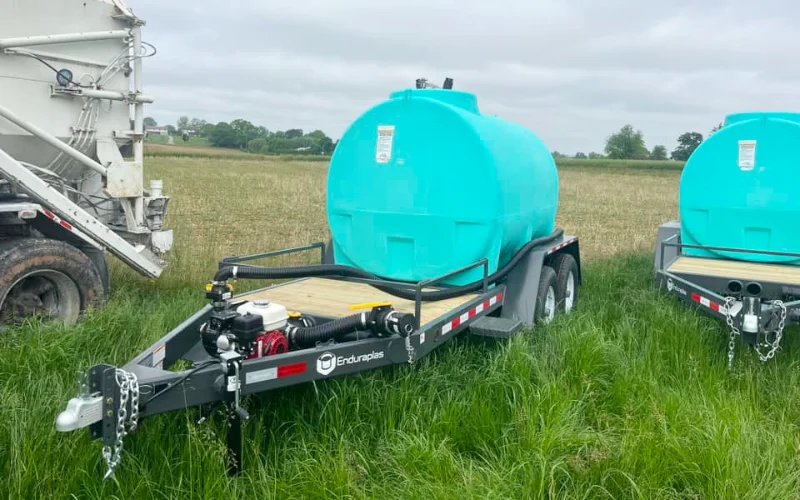
Agricultural and equestrian water trailers fit this work because they are built to tow across pasture, hold enough water for a paddock between refills, and fill troughs where there is no fixed connection. The options below cover different herd sizes and rotation distances.
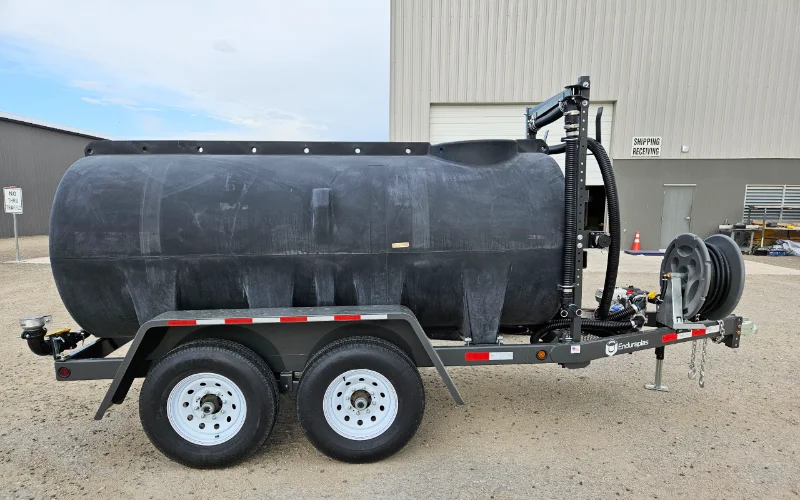
1,010 Gallon Water Trailer
A road-legal everyday hauler for most rotations, sized to refill troughs across multiple paddocks.
✓ DOT-compliant for public roads, with a fully draining tank
View Details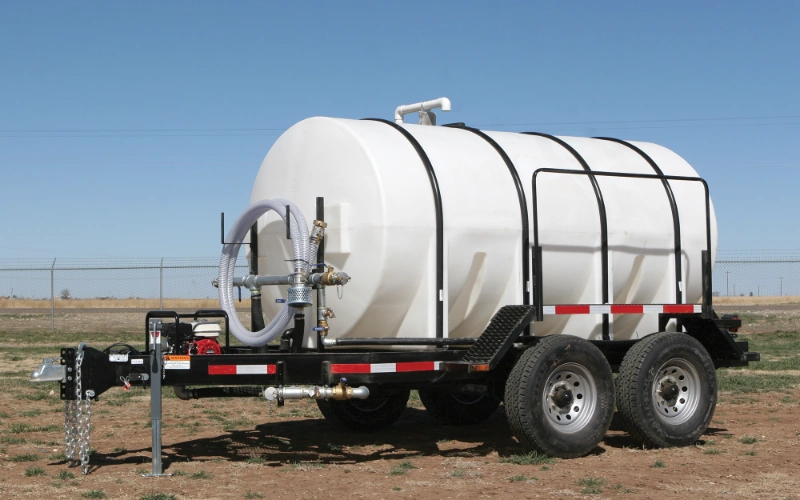
1,600 Gallon Water Trailer
Higher capacity for larger herds or paddocks far from your fill source, cutting refill trips.
✓ High-capacity DOT build rated for road transport and remote sites
View Details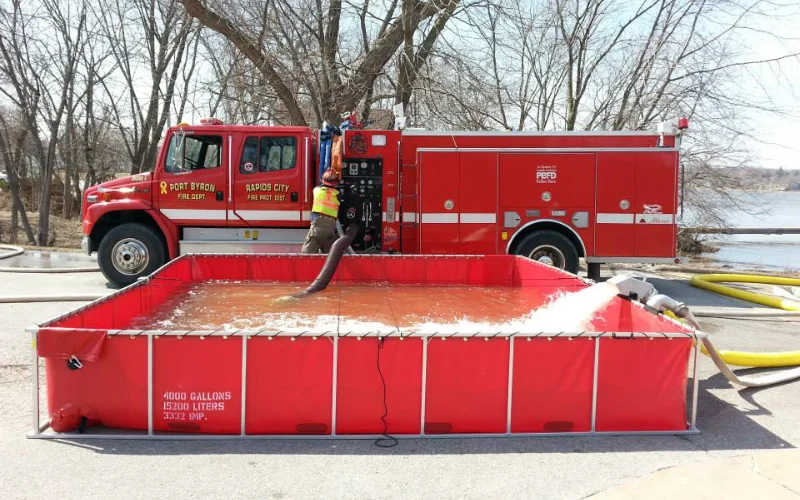
Portable Stock Water Tanks
Stage water right at the trough for temporary pens and short-term holding areas between moves.
✓ Custom folding-frame tanks from 500 to 5,000 gallons, sized to your herd
View DetailsRelated Guides
Frequently Asked Questions
A rotational grazing water trailer is a towable tank that hauls water to paddocks and temporary pens where there is no permanent trough, well, or hydrant. It lets you keep livestock supplied as the herd moves through your grazing plan. You can see the full range on our agricultural and equestrian water trailers page.
You stage or tow the trailer to each grazing area, then fill troughs by pump or gravity feed. The trailer, trough, hose, and refill routine work together as one mobile water system that moves with the rotation.
Yes. Temporary pens rarely have a water line nearby, so a trailer gives those animals a reliable source until they move again. For longer-term holding areas, portable stock water tanks can also support the same routine.
Both setups work. Some operators park the trailer near a pen and refill it in place, while others tow it to each new paddock. The right choice depends on herd size, refill distance, and how often you move animals.
Yes. A mobile water system for grazing combines the trailer with troughs, hoses, and a refill plan so water access keeps up with paddock rotation, even on leased or seasonal ground.
Ready to Move?
Tell us your herd size, paddock layout, and fill points, and a Sales Specialist will help you size portable water for your rotation. We respond same-day.
Request a QuoteStill Deciding?
Not sure a trailer fits your grazing workflow? A Sales Specialist can walk through paddock rotation, temporary pen water access, and trough filling before you commit.
Talk to a Specialist