

Technical Reference
What makes a water trailer NSF 61 compliant?
A plain-language reference for municipal maintenance leads, public works buyers, and utility teams who need to know what makes a water trailer NSF 61 compliant and what to verify before specifying one for drinking water use. Covers NSF 61, FDA food-grade components, potable fittings, DOT road-use configuration, and a municipal spec checklist.
What Makes a Water Trailer NSF 61 Compliant?
When a water trailer will carry drinking water, the word "potable" on a product page is not enough on its own. What makes a water trailer NSF 61 compliant comes down to the materials and components that touch the water. NSF/ANSI 61 is a standard that evaluates drinking water system components for health effects, and a trailer satisfies it at the component level rather than as a single certified unit. The tank, fittings, hoses, valves, gaskets, and any pump parts that contact the water each need to be rated and certified for potable use.
Before specifying or buying, municipal buyers should confirm three things: that the tank is intended for potable water, that the wetted components carry documented NSF/ANSI 61 certification, and that the trailer can be cleaned and sanitized between fills. A trailer is not automatically compliant because it is sold as a potable water trailer, and compliance depends on the specific build, not on broad category language. When any of those points is unclear, ask the supplier for documentation or talk to a Sales Specialist before committing to a purchase order.
NSF 61, FDA Food-Grade, and Potable Water Language
Buyers reviewing quotes and product pages will see several terms used loosely. They are related but not interchangeable, and a municipal specification may call for a specific one. The short version: NSF/ANSI 61 addresses materials in contact with drinking water and their health effects; FDA food-grade refers to materials recognized as safe for food contact; and language like "potable water-safe" or "drinking water-compatible" describes intended use without naming a standard. Treat each as a buyer consideration to confirm against your own specification rather than as a guarantee. The cards below summarize the layers a municipal buyer typically reviews.
NSF/ANSI 61: Drinking Water Components
Health-effects certification for tanks, fittings, hoses, valves, gaskets, and any wetted part in contact with potable water. Confirmed at the component level.
FDA Food-Grade Components
Materials recognized as safe for food contact. Related to potable use but not the same as NSF/ANSI 61. Confirm which your spec actually requires.
DOT & Trailer Road Use
Lighting, braking where required, axle and trailer rating, registration, and tow-vehicle compatibility for trailers towed on public roads. Requirements vary by state.
Municipal & Public Works Specs
Public works specifications may set their own potable-use, documentation, and configuration requirements. Always read the spec against the actual build and quote.
Why These Distinctions Matter
A trailer marketed for potable use that includes non-certified fittings may not satisfy a municipal specification that calls for NSF/ANSI 61 components. A trailer with the right components that is not cleaned and sanitized before service can still introduce contamination risk. And a trailer that handles both of those correctly but is not configured for the road, or is too heavy for the intended tow vehicle, cannot be legally or safely moved through your fleet. A complete review looks at the components, the intended use, and the road configuration together rather than at any one of them alone.
What to Verify When You Specify a Potable Trailer
Each consideration above turns into a specific question to ask the supplier and a line you can put into a written specification, RFP, or purchase order. Use this list when you review a quote for municipal potable and public works water trailers.
-
Confirm NSF/ANSI 61 certification on every wetted component.
It is not enough that the tank is certified. Ask for documentation that fittings, hoses, valves, gaskets, fill ports, and any pump parts that touch the water also carry NSF/ANSI 61 certification. Request the certification reference, not just the marking.
-
Confirm the tank interior is intended for potable water.
The tank material and interior should be suitable for drinking water, not only for general water hauling. Ask whether the tank is rated for potable use and how that is documented.
-
Match fittings, hoses, and valves to potable service.
Any fitting, hose, or valve in the water path should be compatible with drinking water. Specify the potable fittings and hose and valve setup rather than accepting "standard," and confirm caps, vents, and connections suit a potable water system.
-
Plan cleaning and sanitation access.
Confirm the tank can be inspected, cleaned, sanitized, filled, and drained properly. Ask about access points and discharge so the trailer can be returned to potable service after use.
-
Verify road-use configuration with your state.
If the trailer is towed on public roads, confirm DOT configuration, axle and trailer rating, lighting, braking where required, registration, and towing setup. These vary by state and by weight, so verify with your state DOT or DMV.
-
Check loaded weight against the tow vehicle.
Water weighs roughly 8.34 pounds per gallon, so a full tank adds substantial loaded weight. Confirm the trailer rating and your municipal fleet tow-vehicle capacity match the loaded weight at the capacity you intend to use.
-
Put potable-use components on the purchase order.
Record the tank material, the potable-use components, and any NSF 61 or FDA documentation on the PO so the build is auditable later. A quote that clearly lists potable-use components is easier to verify and defend in a public works review.
Municipal Potable Water Trailer Spec Checklist
A scannable verification list for public works teams reviewing a quote or product page. Print it, attach it to an RFP, or use it as a supplier intake form.
Municipal Water Trailer Spec Checklist
- Potable tank: the tank is intended and documented for potable water use.
- Fittings and hoses: components in the water path are compatible with drinking water applications.
- NSF 61 / FDA documentation: any NSF 61 or FDA food-grade claims are documented, not assumed.
- Road-use configuration: the trailer is configured for its intended road use (lighting, braking where required, rating, registration).
- Tow-vehicle match: the trailer size and loaded weight are compatible with the intended tow vehicle.
- Cleaning and sanitation: the tank can be cleaned, sanitized, filled, and drained properly.
- Potable components listed: the quote clearly lists the potable-use components and materials.
Potable Water Trailers for Municipal and Public Works Use
Each trailer below is built for potable service and can support municipal water transport, utility work, outage response, and public works distribution when it is specified for the application. Verify current certification and configuration on the product page, since builds and options change. Confirm size and pump configuration with a Sales Specialist before you order.
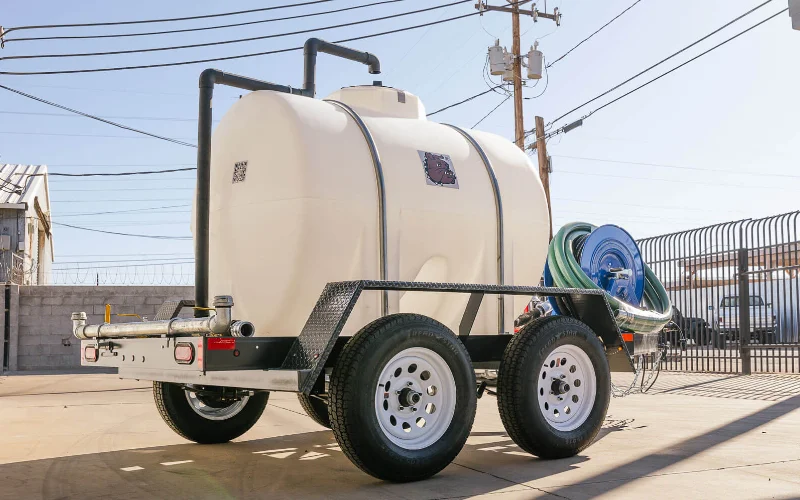
325 Gallon NSF 61 Water Trailer
Compact single-axle build for remote-site and event drinking water.
✓ Tows behind a standard pickup, roughly 3,310 lb loaded
View Details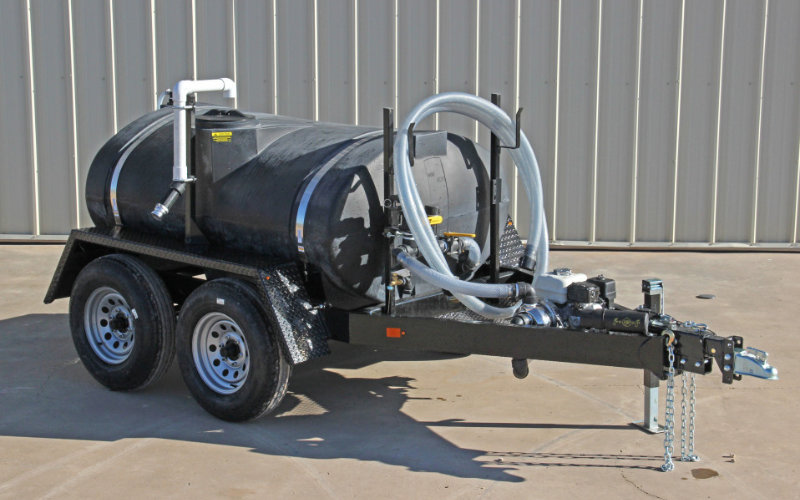
550 Gallon Potable Water Transport Trailer
DOT-approved potable transport with a certified poly tank and pump.
✓ Food-grade hoses and plumbing, anti-siphon lockable fill
View Details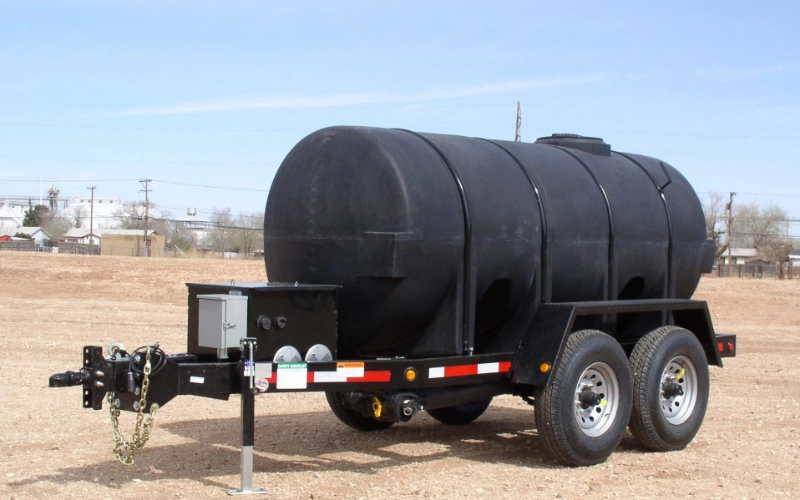
1025 Gallon Drinking Water Trailer
Higher-capacity potable build for municipal and emergency supply.
✓ Full-drain baffled poly tank, DOT compliant for highway use
View DetailsFrequently Asked Questions
NSF/ANSI 61 is a standard that evaluates the materials and components in a drinking water system for health effects. A water trailer meets it at the component level rather than as a whole unit, so the tank and every wetted part (fittings, hoses, valves, gaskets, and any pump internals that touch the water) need to be rated and certified for potable contact. To confirm compliance, ask the supplier for the NSF/ANSI 61 certification documentation on each wetted component rather than relying on a potable label alone.
They are not interchangeable. NSF/ANSI 61 specifically addresses materials in contact with drinking water and their health effects, while FDA food-grade refers to materials recognized as safe for food contact. A component can carry one designation without the other, so confirm which your municipal specification actually requires and ask for documentation that matches it.
Any fitting, hose, or valve that touches the water should be suitable for potable use, and municipal specifications often call for NSF/ANSI 61 certified components. The exact fittings, sizes, and configuration depend on how the trailer will be filled, discharged, and connected, so confirm the setup against your application and ask a Sales Specialist to review it before you order.
If a potable water trailer is towed on public roads, it needs to be configured for road use. Lighting, braking where required, axle and trailer rating, registration, and tow-vehicle compatibility all apply, and the specifics vary by state and by loaded weight. Verify the requirements with your state DOT or DMV before specifying.
A practical checklist confirms that the tank is intended for potable use, that fittings and hoses are compatible with drinking water, that any NSF 61 or FDA claims are documented, that the trailer is configured for its intended road use and matched to the tow vehicle, that the tank can be cleaned, sanitized, filled, and drained, and that the quote clearly lists the potable-use components.
No. A trailer should only be used for drinking water when its tank and wetted components are suitable and documented for potable contact and the trailer has been properly cleaned and sanitized. Trailers used for non-potable work should not be switched to potable service without verification, because residue and non-certified components can compromise water safety.
Public works teams should verify the NSF/ANSI 61 status of the tank and wetted components, the road-use configuration for their fleet, the tow-vehicle and rating match, and the ability to clean and sanitize the trailer, and they should make sure the quote spells out the potable-use components. When a specification is complex, review it with a Sales Specialist before purchase.
Related Guides
Explore potable water transport options, potable water trailer options, water buffalo trailer options, and water tank trailer options.
![[SIBLING 1 ALT]](image-files/water-delivery-800x500-062026.webp)
![[SIBLING 2 ALT]](image-files/364-0631-1025-express-red-truck-800x600.webp)
About this reference: This page summarizes general NSF/ANSI 61, FDA food-grade, and DOT road-use considerations as a planning aid for municipal procurement. It is not legal, engineering, or certification advice, and it does not confirm that any specific trailer is compliant. Verify current requirements, certifications, and product documentation with the relevant authority before issuing a purchase order.
Need the Full Spec Sheet?
Request a quote and a Sales Specialist will send the spec details for your size and configuration.
Request the Spec SheetTalk to a Sales Specialist
Need help reviewing potable water trailer requirements? A Sales Specialist can walk you through NSF 61, FDA food-grade components, DOT configuration, and municipal potable water trailer options.
Request a Quote Or call 1-863-261-8388