

Technical Reference · OSHA Silica / SWPPP / DOT Setup
Water Trailer for OSHA Silica Dust Control
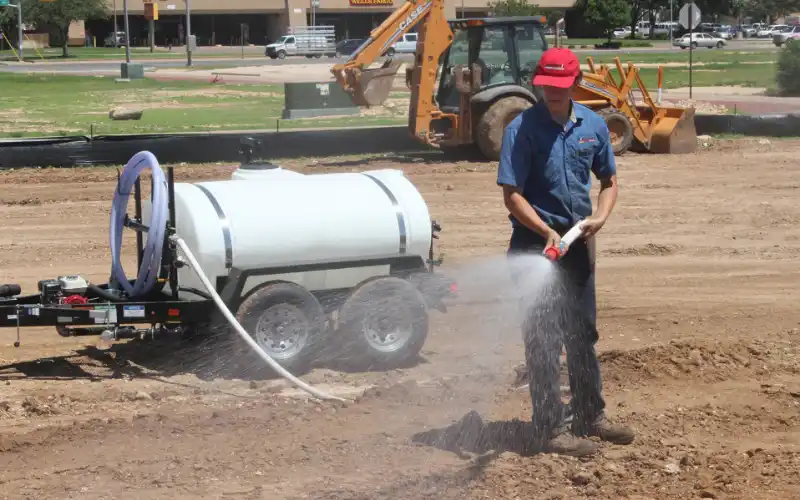
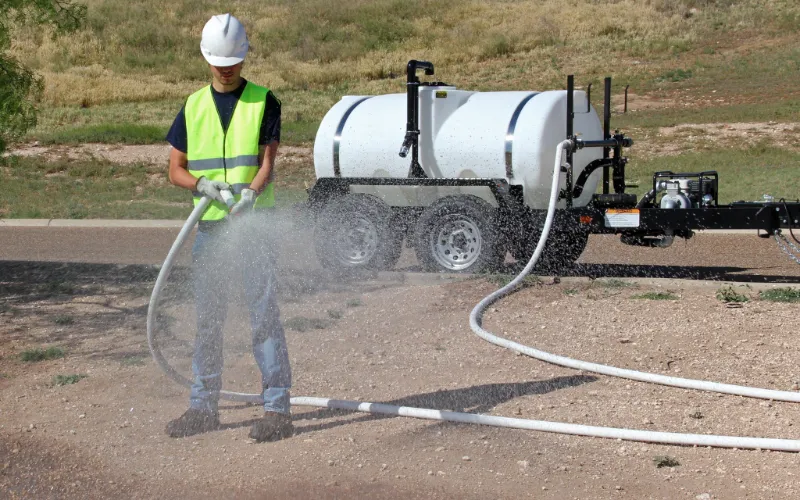
A water trailer for OSHA silica dust control can provide a mobile jobsite water source for wet methods, dust suppression, and construction dust control planning when fixed water access is limited. It can also support SWPPP dust control water source planning for access roads, disturbed soil, demolition areas, and dry work zones. The trailer does not create compliance by itself. The setup must match the task, the written site plan, applicable OSHA guidance, SWPPP requirements, DOT road-use needs, and crew procedures.
How a Water Trailer for OSHA Silica Dust Control Fits the Jobsite Plan
Construction dust control is not only an equipment question. On many jobsites, dust suppression setup may connect to OSHA silica exposure control planning, SWPPP dust control practices, nuisance dust management, site access, and public-road transport. A water trailer can help by bringing water closer to the work area, but it should be treated as one part of a broader plan rather than a stand-alone compliance solution.
The practical question is simple: where does the job need water, how will crews apply it, and what rule, plan, or procedure requires the control? A construction dust control compliance water trailer setup should start with the dust-producing work, then work backward to water source, trailer capacity needs, hose or spray configuration, staging location, refill routine, site access, and DOT road-use verification.
OSHA Silica Dust Control
Water may support wet cutting, wetting, or other wet methods when water application is part of the selected task control. Crews should verify the control method required for the activity.
SWPPP Dust Control
A trailer may provide temporary water for surface wetting, access roads, disturbed soil, or other dust control practices identified in a written site plan.
DOT and Towing Setup
DOT or state road-use considerations may apply when the trailer moves on public roads, travels between jobsites, or fills from an offsite source.
Documentation and Monitoring
The trailer setup should match the written plan, crew instructions, water application method, monitoring responsibility, and any site-specific limits on runoff or overwatering.
How Water Supports OSHA Silica Dust Control
OSHA silica controls may require or reference wet methods for certain dust-producing tasks depending on the work activity, tool, material, and exposure control approach. In practical jobsite terms, water can help reduce airborne dust when it is applied at the point of cutting, breaking, drilling, sweeping, or other dust-producing work where wet methods are specified.
The phrase OSHA Table 1 water dust control is often used when contractors are discussing task-based control methods that include water delivery or wet-method language. A trailer may help on no-hydrant jobsites where crews do not have fixed water access near the tool, slab, debris pile, haul route, or work face. The trailer still needs the right setup for the task. Verify the required control method before assuming that hose access, a spray bar, a pump, or a gravity-feed connection is sufficient. From there, a silica dust suppression water trailer setup should be planned around how crews will actually apply water during the task, including hose reach, pump or gravity-feed needs, refill routine, spray or misting method, and trailer staging location.
-
Start with the dust-producing task.
Identify whether the work involves cutting, demolition, soil disturbance, vehicle traffic, debris handling, or another dust source. The task determines the water application need.
-
Confirm whether water is the specified control.
Do not assume water is always enough. Confirm the applicable OSHA guidance, written exposure control plan, and site safety requirements for the activity.
-
Match the trailer to the work area.
Review hose reach, staging space, refill distance, traffic flow, and whether the trailer can safely reach the dust-producing area without disrupting equipment movement.
Water Trailer Setup for SWPPP Dust Control
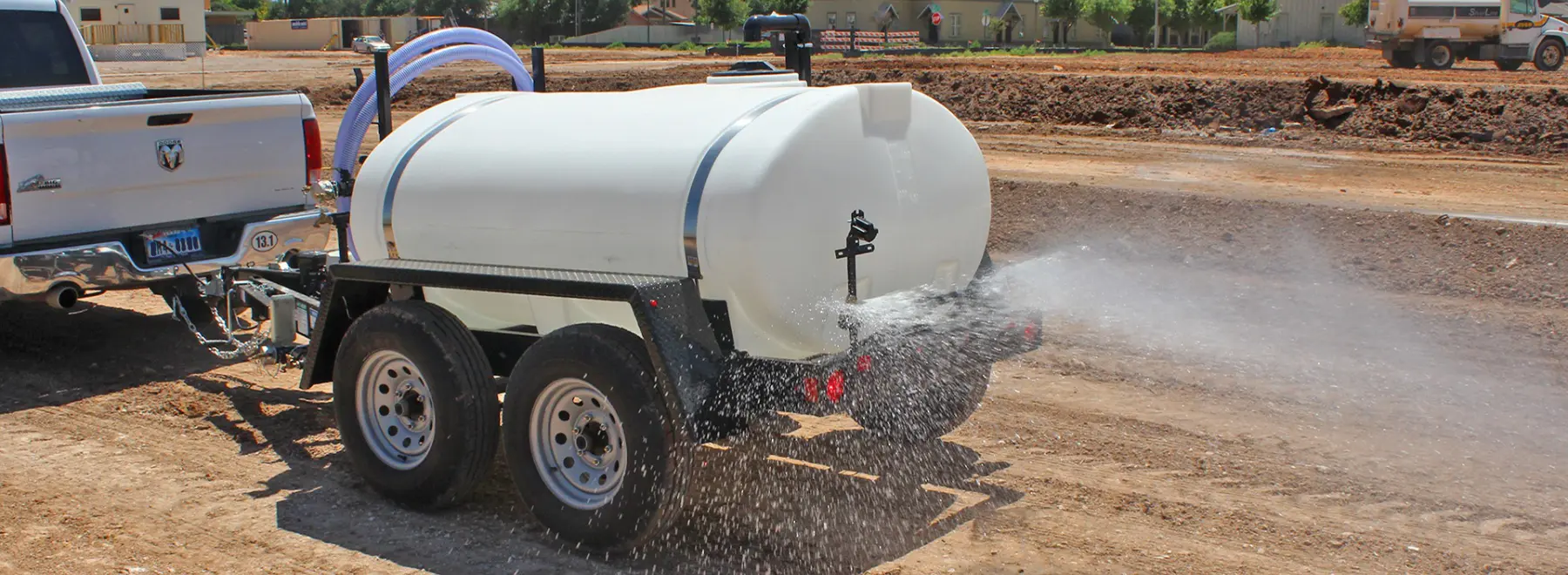
A water trailer setup for SWPPP dust control can help provide a temporary water source when a Stormwater Pollution Prevention Plan includes dust control practices such as surface wetting, access road control, or management of disturbed soil. The trailer should be configured around the written plan, not treated as a substitute for it.
Before ordering or staging the trailer, identify where dust control is required, where the trailer will be filled, and how water will be applied. Crews should also consider whether overwatering could create runoff, mud, sediment movement, soft ground, or unsafe footing. The right SWPPP dust control water source is one that can reach the control area, support the application method, and fit the monitoring routine assigned in the site plan.
For broader construction planning, see our guide to construction dust control and jobsite water trailers and the related page for water tank trailers for construction. For work involving demolition dust, see demolition dust control water trailers, and for broader watering equipment, review dust suppression trailer options.
Construction Dust Control Compliance Water Trailer Checklist
Use this checklist to frame a project discussion before selecting a jobsite water trailer, hose package, spray method, or DOT road-use configuration.
OSHA Silica / SWPPP / DOT Water Trailer Setup Checklist
- Dust-producing task: Identify what activity is being controlled and where dust is generated.
- Compliance driver: Clarify whether the dust issue is tied to silica, SWPPP, nuisance dust, road dust, or general site conditions.
- Approved control: Verify whether water application is an approved or specified control for the task.
- Fill source: Confirm where the trailer will be filled and how often refilling may be needed.
- Discharge setup: Determine whether the site needs hose, spray bar, pump, misting, gravity-feed, or another application method.
- Access and staging: Confirm the trailer can reach the work zone safely without interfering with equipment, traffic, or crews.
- Public-road travel: Verify whether DOT, road-use, lighting, braking, towing, registration, or state requirements are relevant.
- Runoff and footing: Plan how crews will avoid overwatering, runoff, mud, sediment movement, or unsafe walking and driving surfaces.
- Documentation: Confirm which site plan, exposure control plan, SWPPP section, or crew procedure governs the setup.
Construction Water Trailers Suited to Dust Control Setups
Each construction water trailer below is commonly configured for dust suppression setup, wet-method water access, and general jobsite water supply. The right fit may be a compact trailer for tight access, a higher-capacity trailer for larger jobsites, or a spray setup for work zones that need controlled discharge. Confirm the discharge method, loaded weight, and whether the trailer stays onsite or needs DOT road-use configuration for public roads before ordering. Configuration details below are taken from each product listing.
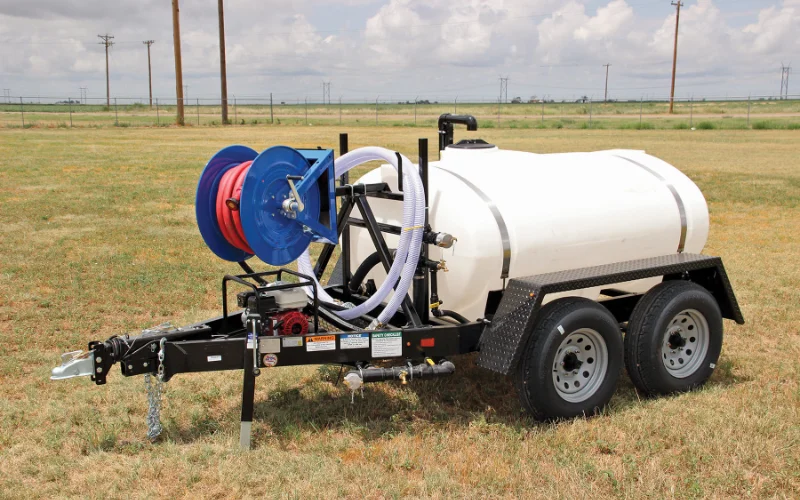
550 Gallon Compact Jobsite Water Trailer
A compact option for tight jobsites, smaller work zones, and dust-producing tasks where the trailer must stage close to the work area. Ships spray-ready with pump, suction hose, and discharge hose included.
✓ Fits sites with limited access and staging space
View Details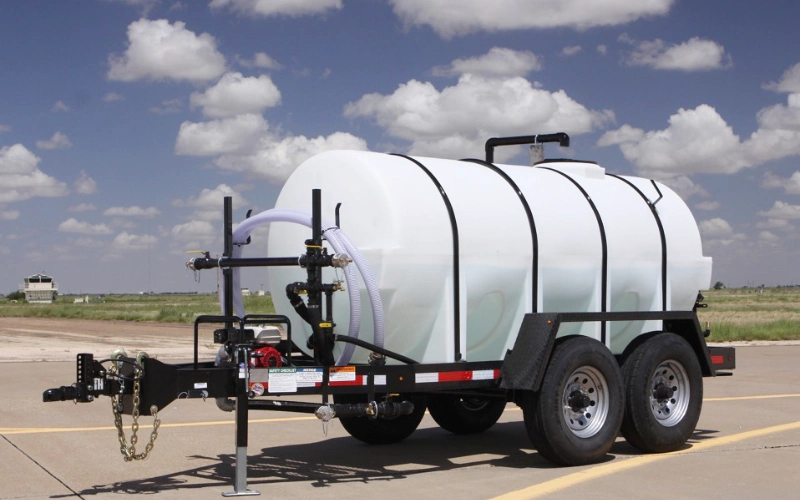
1025 Gallon Spray Application Water Trailer
A mid-capacity option built around controlled spray application, suited to access road wetting, disturbed soil, and SWPPP surface dust control across active work zones.
✓ Controlled surface wetting with jobsite maneuverability
View Details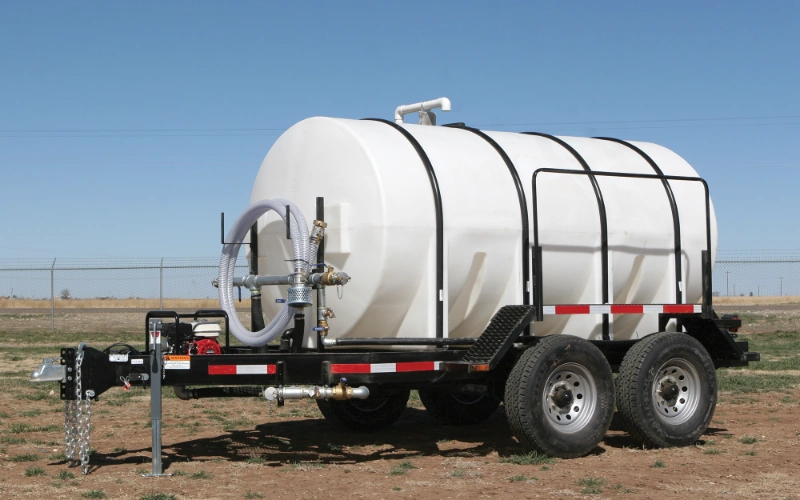
2010 Gallon High Capacity Site Water Trailer
A high-capacity option for large jobsites, long haul routes, and SWPPP dust control plans that cover multiple zones with fewer refill trips.
✓ Supports broad coverage on large or multi-zone sites
View DetailsFrequently Asked Questions
Yes, a water trailer can support OSHA silica dust control planning by providing a mobile water source for wet methods, wetting, or dust suppression where water application is part of the selected control approach. The exact requirement depends on the work activity, tool, material, and applicable OSHA guidance.
OSHA Table 1 water dust control refers to task-based silica exposure control guidance where certain construction activities may call for integrated water delivery, wet methods, or other controls. Contractors should verify the listed control method for their specific task before configuring jobsite water equipment.
No. A water trailer by itself should not be treated as proof of OSHA silica compliance. It may support a written exposure control plan, wet-method setup, or task-specific dust suppression process when used as part of the required control approach.
A water trailer may support SWPPP dust control by supplying temporary water for surface wetting, access road dust control, disturbed soil management, or other dust control practices identified in the site plan. The trailer setup should match the written SWPPP and should avoid creating runoff, mud, or unsafe site conditions.
The setup should identify the dust-producing task, water source, fill routine, trailer access, discharge method, hose or spray setup, DOT road-use needs, runoff controls, and documentation the crew must follow.
The need for a pump, hose, spray bar, misting method, or gravity-feed setup depends on the task location, required water application point, trailer staging location, and how crews need to reach the dust-producing area. Confirm the setup before ordering.
Contractors should verify the dust-producing task, whether water is the specified control, how water will be applied, who monitors the condition, how runoff will be avoided, and which written plan or procedure governs the work.
DOT or road-use configuration may matter when a jobsite water trailer travels on public roads, moves between jobsites, or hauls water from an offsite fill source. Buyers should verify tow vehicle compatibility, loaded trailer weight, lighting, tires, brakes where applicable, hitch setup, registration, and state road-use requirements.
Related Guides
About this reference: This page is a planning aid for jobsite water trailer configuration. It is not legal advice, safety advice, OSHA compliance advice, SWPPP compliance advice, or DOT compliance advice. Requirements vary by task, site plan, jurisdiction, vehicle configuration, and operating conditions. Verify current requirements with the responsible safety, environmental, fleet, or regulatory authority before using a trailer as part of a dust control plan.
Call Now
Speak with a Sales Specialist about your dust control water setup, including water source, application method, SWPPP planning, DOT verification points, and jobsite configuration needs.
Call a Sales SpecialistRequest a Quote
Share your project details and we can help identify construction water trailer options for OSHA silica dust control support, SWPPP dust control planning, wet-method water access, and jobsite water setup.
Request a Quote