

Demolition Dust Control Water Trailer Setup
A demolition dust control water trailer setup gives crews a mobile water source they can stage near teardown, debris handling, and cleanup areas, even when the site has no convenient hydrant access.
When Demolition Work Puts Dust in the Air
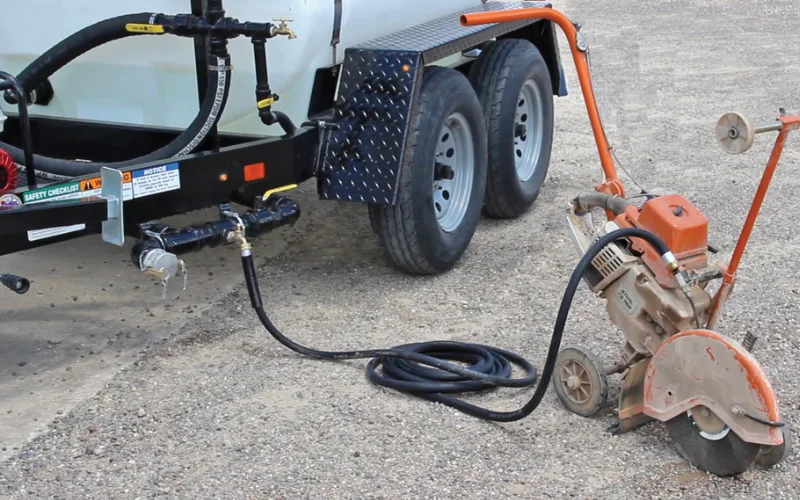
Demolition work creates dust at almost every stage. Building teardown, concrete breaking, debris handling, loading, hauling, and cleanup all release fine material into the air, and equipment moving across dry ground adds more. A demolition dust control water trailer setup answers that problem directly: crews fill a tank-equipped trailer at an available water source, tow it to the demolition area, and use a hose, spray bar, misting setup, or water spray system to apply water where dust is generated. Because the trailer moves with the work, the same setup can support active teardown in the morning, debris loading in the afternoon, and cleanup at the end of the job. It is most useful on sites where a hydrant, active utility connection, or large water truck is not available or practical, which describes many demolition jobsites.
Where Demolition Dust Control Is Needed
Dust suppression is rarely a one-spot job on a demolition site. Common areas and phases where crews apply water include:
- Building teardown and active demolition zones
- Concrete breaking and removal areas
- Debris handling and sorting areas
- Loading and hauling points where debris is moved off site
- Cleanup areas during the final phases of the job
- Dry work zones where equipment traffic kicks up dust
- Demolition-adjacent access roads
- Sites with limited hydrant access
- Temporary work zones without fixed water access
Because these areas shift as the project progresses, a portable water supply that can follow the work is often more practical than a fixed connection at one corner of the site.
How a Demolition Dust Control Water Trailer Setup Supports the Work
A water trailer gives crews a portable water supply that moves with the demolition workflow. Configured for the site, the trailer may be used to support:
- Hose-based wetting Direct water application on surfaces, debris, and work areas as dust-producing activity happens.
- Misting or controlled spray Helps knock down fine airborne dust over active teardown and debris-handling areas.
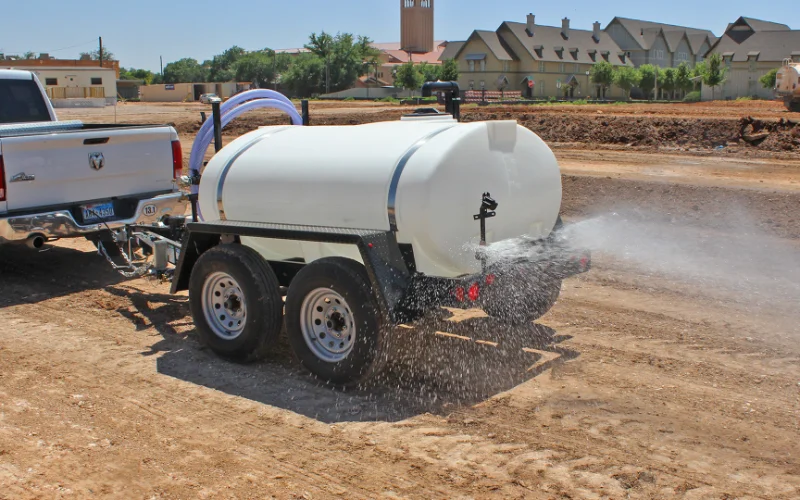
- Spray bar application Useful for wetting access roads and ground surfaces where equipment traffic generates dust.
- Debris pile wetting Wetting concrete debris and mixed material before and during handling helps limit the dust released when it is moved.
- Dust control near loading areas Loading and hauling are repeat dust events; a staged trailer keeps water close to the loading point.
- Temporary water supply When hydrant access is limited, the trailer hauls water from an available fill source to the work zone.
Water application is a core dust suppression method for demolition work, but a water trailer alone does not automatically satisfy every dust-control requirement. Confirm the requirements that apply to your project and build the trailer into your overall plan.
Demolition Dust Control Without Hydrant Access
Many demolition jobsites do not have a convenient hydrant, an active utility connection, or any fixed water source near the dust-producing area. Water service to the building may already be disconnected before teardown begins, and the nearest hydrant may be too far from the work zone to be practical for dust suppression.
A water trailer helps bridge that gap. Crews fill the tank at an available water source, then tow the trailer to the site and stage it close to the teardown area, debris piles, or loading zone. The work zone gets a usable water supply without depending on utility access at the demolition site itself. When planning demolition dust control without hydrant access, the main variables are how far the trailer must travel to refill and how often the work will require a full tank.
Building Demolition Dust Suppression Setup Checklist
A building demolition dust suppression setup does not need to be complicated. Most crews can plan it with a simple checklist:
- Identify the dust-producing demolition phases, such as teardown, concrete breaking, debris handling, and loading.
- Confirm the fill source and how far it is from the site.
- Decide where the trailer can be safely staged near the work.
- Check tow vehicle capability and site access for the trailer.
- Choose the application method: hose, spray bar, misting, or spray setup.
- Apply water where dust is generated, before and during dust-producing activity.
- Avoid overwatering areas where mud, runoff, or unsafe footing could become a problem.
- Monitor conditions and repeat applications as the work moves and dries out.
Planning a Temporary Water Supply for Demolition Dust Control
On most demolition jobs, the trailer functions as part of a temporary water supply plan rather than a permanent installation. Before the job starts, it helps to work through a few practical questions:
- How far must the trailer travel from the fill source to the work zone?
- Does the site still have active water service, or is the trailer the only supply?
- How much area needs water application during each phase?
- Will water be applied by hose, spray bar, or misting?
- How often will the tank need to be refilled to keep up with the work?
- Where can the trailer be positioned without blocking equipment movement?
- Will the same setup support teardown, loading, and cleanup, or will it need to move between phases?
Answering these questions up front keeps dust suppression from becoming a mid-job scramble when the teardown area dries out or the debris handling pace picks up.
Choosing a Trailer for Demolition Dust Control
Construction and jobsite water trailers can support demolition dust suppression, temporary water supply, debris-area wetting, and cleanup when configured for the site conditions. The right fit depends on how much area needs water, how far the trailer travels to refill, and how the crew plans to apply water.
Smaller Demolition Sites and Cleanup Work
Compact and small-capacity trailers are easier to position in tight work zones and can support hose-based wetting and cleanup-phase dust control.
Active Teardown and Debris Handling
Larger-capacity construction water trailers reduce refill trips when crews are wetting debris piles and loading areas throughout the day.
Sites Far from a Fill Source
When the fill source is a long haul from the work zone, higher-capacity trailers help the crew keep water on site between refills.
See our full sizing guide for demolition dust control setups
Recommended Trailers for Demolition Dust Control
These DOT-compliant construction water trailer options can be configured for demolition dust suppression, debris-area wetting, and temporary jobsite water supply. All three tow legally on public roads between the fill source and the work zone.
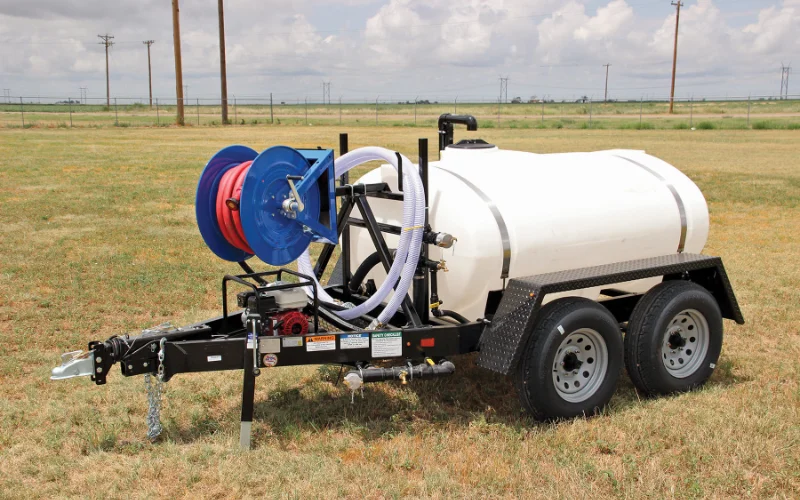
550 Gallon Water Trailer
Compact, easy-to-maneuver option for tight demolition work zones, hose-based wetting, and cleanup-phase dust control.
✓ Includes spray bar, 25 foot lay-flat hose, and self-priming pump
View Details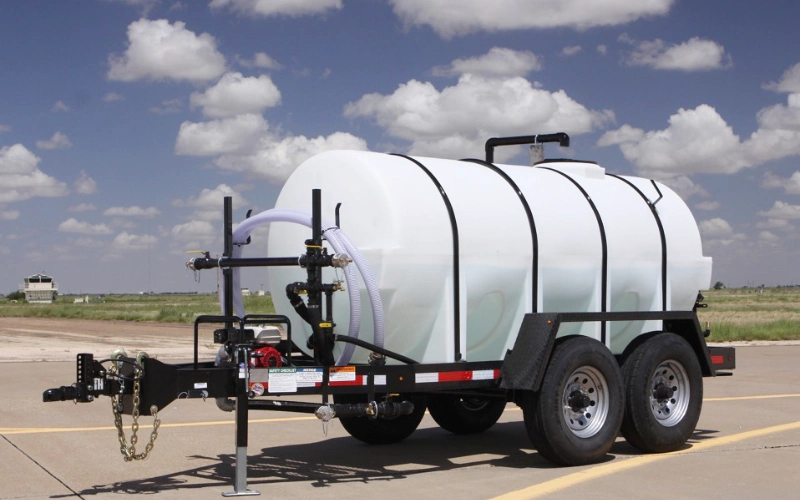
1010 Gallon Water Spray Trailer
Two rear spray nozzles and a 100 foot hose reel put controlled water on debris piles, loading areas, and access roads.
✓ Three fill methods for fast refills: Quick Fill, Pressure Fill, Direct Fill
View Details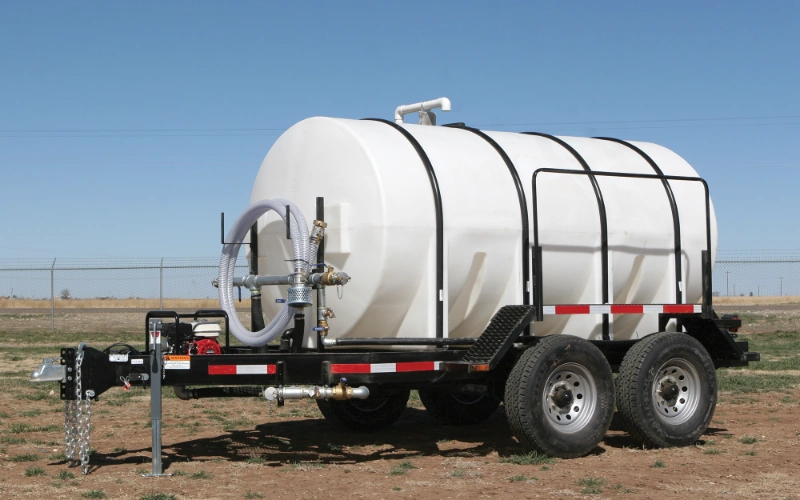
1600 Gallon Sprayer Trailer
High-capacity option that cuts refill trips on large teardowns, with a dual nozzle spray bar covering up to a 25 foot swath.
✓ Fills by 2 inch anti-siphon tube or direct suction through the pump
View DetailsRelated Guides
For broader planning, our construction dust control and jobsite water trailers pillar covers the full construction lineup, and these related pages cover adjacent demolition and dust control topics.
Frequently Asked Questions
It is a mobile water supply staged near the demolition area and paired with a hose, spray bar, or misting setup so crews can apply water where dust is generated. The trailer is filled at an available water source, towed to the work zone, and repositioned as teardown, debris handling, and cleanup move across the site.
Yes. A water trailer gives crews a portable water supply that can support hose-based wetting, misting, controlled spray, and debris pile wetting during demolition work. It is especially useful when hydrants, active utility connections, or large water trucks are not available or practical for the site.
Crews typically apply water at the points where dust is generated, including active teardown areas, concrete breaking, debris piles, and loading zones. A common approach is to stage a water trailer near the work area and use a hose, spray bar, or misting setup to wet material before and during dust-producing phases, then repeat as conditions change.
A water trailer can bridge that gap. Crews fill the tank at an available water source, then tow the trailer to the demolition area and stage it near the dust-producing work. This gives the site a temporary water supply without depending on a hydrant or active utility connection at the work zone.
It depends on the work. Misting can help knock down fine airborne dust over a work area, while hose spraying is useful for direct wetting of debris piles, surfaces, and loading zones. Many crews use a combination, matching the application method to the demolition phase. A Sales Specialist can help you compare setups for your site.
Yes. Wetting concrete debris before and during handling, breaking, and loading helps reduce the dust those activities release. A water trailer staged near the debris area lets crews apply water with a hose or spray setup as material is moved and hauled.
Confirm the fill source, the distance the trailer must travel, where the trailer can be staged safely without blocking equipment, tow vehicle and site access, and which application method fits the work. Also plan for refills and watch for overwatering that could create mud, runoff, or unsafe footing.
Not necessarily. Water application is a core dust suppression method, but requirements vary by project, jurisdiction, and site conditions, and some jobs call for additional controls. Confirm the requirements that apply to your project, then build the water trailer setup as part of your overall dust control plan.
Ready to Move?
Tell us about your demolition site and dust control plan and we'll respond same-day with construction water trailer options that fit.
Request a QuoteStill Deciding?
Need help setting up demolition dust control? Talk to a Sales Specialist about construction water trailer options for demolition dust suppression, temporary jobsite water supply, hose setups, spray bars, and access-limited worksites.
Talk to a Sales Specialist