

Water trailer for jobsites without hydrant access
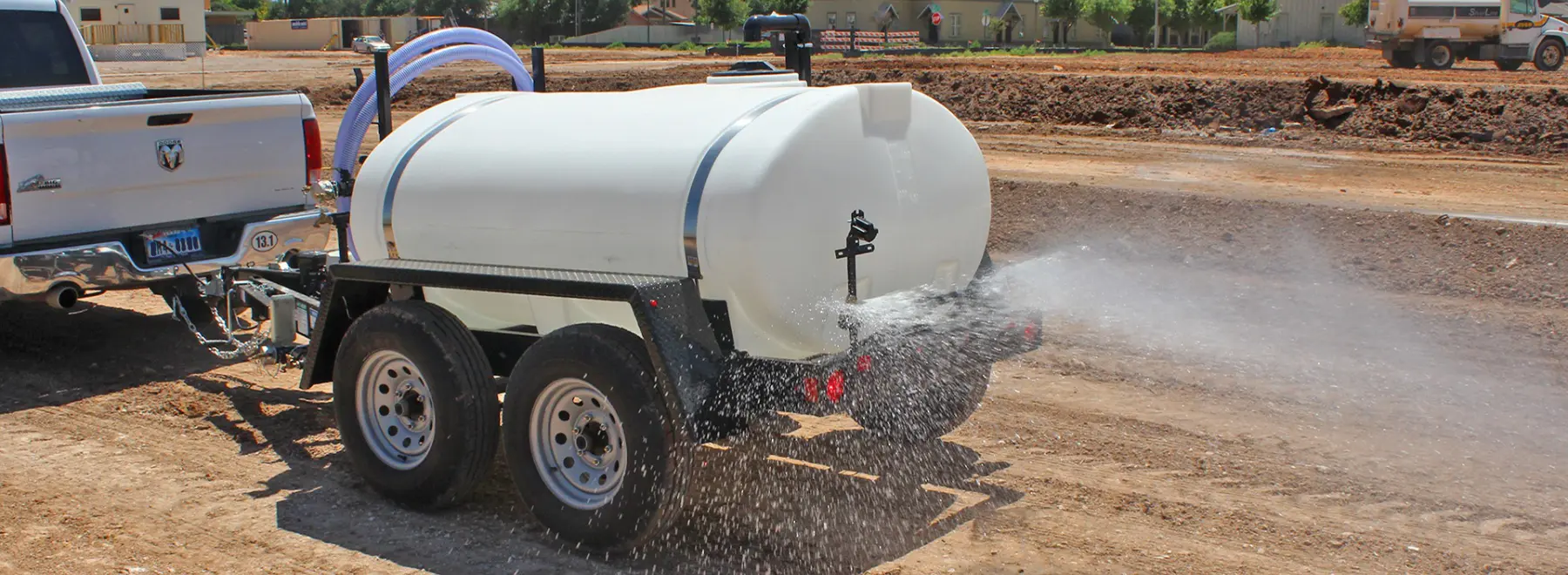
When the nearest hydrant is miles away and utilities are not live yet, a water trailer for jobsites without hydrant access lets your crew haul water from an available fill source and stage it right where the work is happening.
When Jobsites Need Water Without Hydrant Access
Not every jobsite has a hydrant down the street or an active water service at the meter. Remote construction sites, early-stage jobsites before utilities are connected, roadwork and access roads away from fixed water, grading and earthwork sites, demolition and cleanup areas, and temporary work zones all run into the same problem: the crew needs water for dust control, soil moisture conditioning, cleanup, or washdown, but the nearest reliable source is offsite or too far from the active work area. When water does not show up, dust complaints pile in, compaction passes fail on dry soil, and crews idle while someone improvises a supply run. A towable mobile water supply closes that gap before it costs you a citation or a lost day.
What a Water Trailer for Jobsites Without Hydrant Access Needs to Do
Hauling water to an access-limited worksite puts different demands on a trailer than topping off from a hydrant at the gate; these are the requirements that matter when the fill source is somewhere else.
- Tow between fill source and site The trailer is the supply line. It has to make repeated runs between the fill source and the work zone, often over public roads, so the build and tow setup need to match how and where it will travel.
- Practical fill and discharge connections Refill runs are downtime. Connections that work with your available fill source keep turnaround short so the trailer spends its day at the site, not at the spigot.
- Capacity matched to haul distance The farther the fill source sits from the jobsite, the more each round trip costs you. Capacity should be sized against haul distance and daily water use, not picked off a shelf.
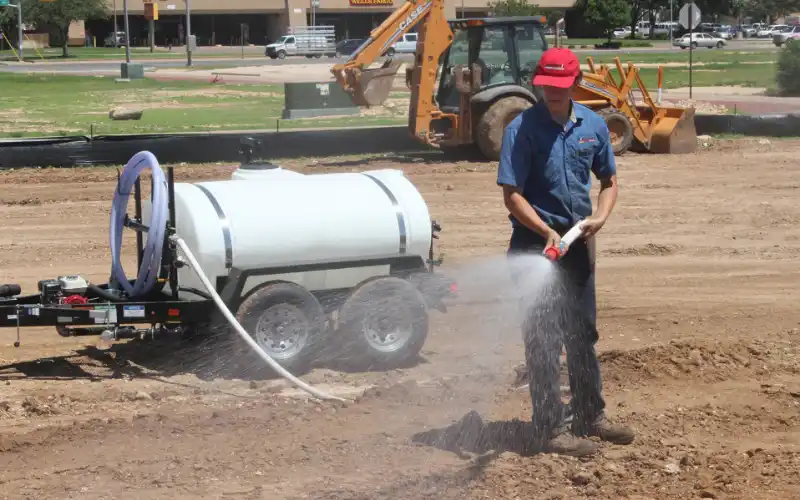
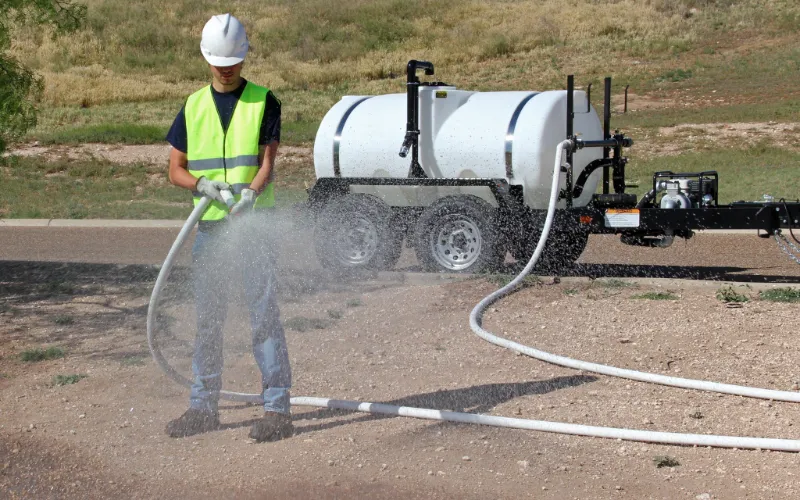
- Application options for the actual task Dust control on an access road, wetting soil ahead of compaction, and rinsing equipment each call for different setups: spray bar, hose, or gravity feed. The trailer needs to apply water the way the task demands.
- Stable staging on unimproved ground No-utility sites rarely have pavement. The trailer has to sit safely on graded or rough ground near active equipment without blocking the traffic flow of the site.
Temporary Water Supply for Remote Construction Sites
Setting up temporary water supply for remote construction sites starts with planning, not hardware. Before the trailer arrives, the crew should know where water will come from, how far it must be hauled, how often refills will be needed, and where the trailer can be staged without blocking equipment movement. Walk the plan against these points:
- Available fill source and any permits or arrangements it requires
- Distance from fill source to jobsite
- Trailer access and tow route, including gates and grades
- Tank refill routine matched to daily water use
- Staging location near the active work zone
- Hose reach or spray setup for the task at hand
- Worksite traffic flow around the staged trailer
- Ground conditions where the trailer will sit
- Safety around active equipment
Construction Site Water Trailer Without Utilities
Early-stage sites are the most common version of this problem. Before permanent utilities are connected, a construction site water trailer without utilities can carry the water load for the work that cannot wait: initial grading, dust control on access roads, temporary cleanup, wetting dry soil before compaction, water support near staging areas, and limited washdown tasks. The trailer covers the gap between mobilization and the day the meter goes live. It is temporary water access, not a substitute for utility planning; permanent water infrastructure still needs to be part of the project plan.
Mobile Water Supply for No-Hydrant Jobsites
The water need rarely stays in one spot. As grading moves across the site, as access roads extend, or as one work zone closes and another opens, the supply has to follow. That is the case for a mobile water supply for no-hydrant jobsites: the trailer can be staged near one area, refilled at the source, and repositioned as the site changes, without waiting on a fixed connection that does not exist yet. The right setup depends on trailer capacity, the tow vehicle, the access route, whether the task needs a pump or gravity feed, hose reach, and how the water will actually be used. A Sales Specialist can help match those variables to your site before you commit to a configuration.
How to Choose the Right Trailer
For water hauling for construction sites, two variables drive the decision more than anything else: how far the fill source sits from the work, and how the crew will apply the water once it is staged.
Fill source close to the site
When refill runs are short, a compact trailer that is easy to tow and reposition often beats a larger tank. More frequent refills are a fair trade for maneuverability in tight work zones.
Long haul from a distant fill source
When each round trip eats real time, a higher-capacity construction water trailer cuts the number of runs per day and keeps water on site through the shift.
Water need moves with the project
For sites where the active zone shifts week to week, prioritize a trailer your tow vehicle can reposition easily, with an application setup (spray bar or hose) that covers the tasks in front of you.
Recommended Trailers for Remote Jobsite Water Supply
Construction water trailers can support no-hydrant jobsites, remote construction water supply, temporary water staging, dust control, compaction support, and general jobsite water needs when configured for the site conditions. These builds are a starting point; the right fit depends on your haul distance, tow vehicle, and application. For a more compact hauler, see the 550 gallon arena water trailer, or compare the full range of construction site water trailer options.
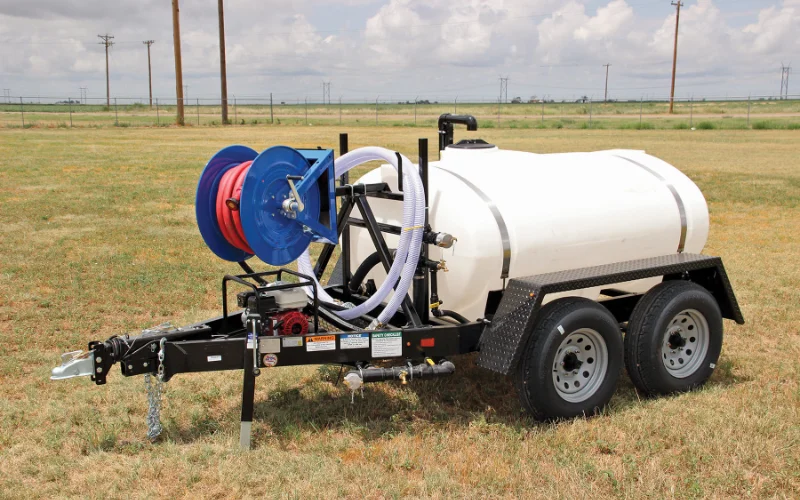
Water Buffalo Trailer
Purpose-built for hauling and staging water, with gravity feed standard and pump options when the task needs spray.
✓ 550 to 2,010 gallon sizes; DOT-compliant trailer
View Details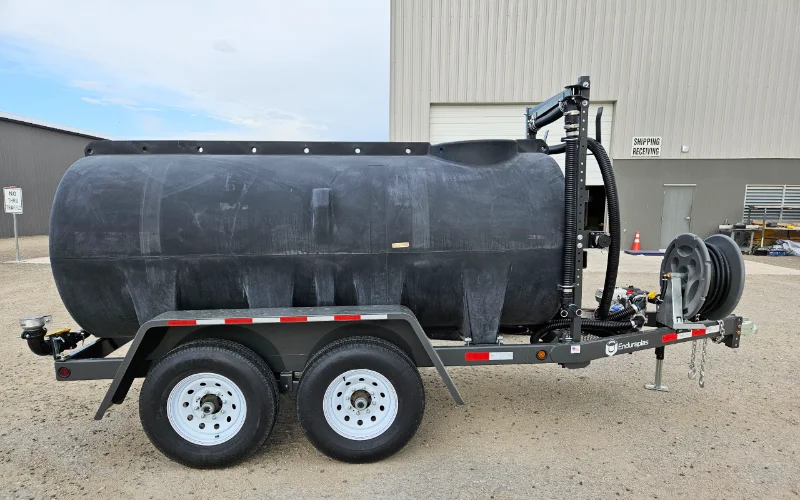
1,010 Gallon Water Spray Trailer
Hauls water to the site and puts it straight to work, with rear spray nozzles and a 100-foot hose reel.
✓ Three fill methods: Quick Fill, Pressure Fill, Direct Fill
View Details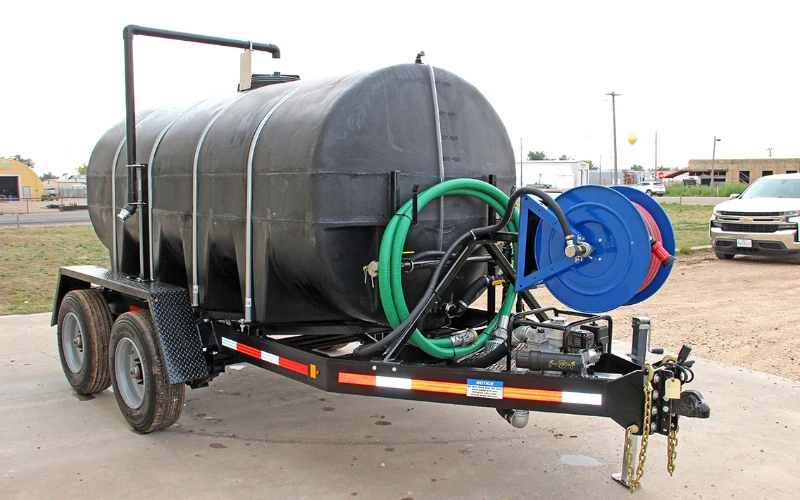
2,010 Gallon High Pressure Water Wagon
Maximum capacity with a high pressure pump for the toughest on-site dust control between refill runs.
✓ 100 GPM at 100 PSI; DOT compliant
View DetailsRelated Guides
Frequently Asked Questions
It is a towable tank trailer that lets construction crews haul water from an available fill source and stage it at a jobsite that has no hydrant, no active utilities, or no fixed water connection near the work area. Crews fill the tank at a known source, tow it to the site, and position it where water is needed for dust control, compaction support, cleanup, or general jobsite use.
Most crews identify a permitted fill source such as a municipal fill station, a bulk water supplier, or an onsite well, then haul water to the site in a tank trailer. The trailer is staged near the active work zone and refilled on a routine that matches how quickly the site uses water. Browse our construction dust control and jobsite water trailers to compare options.
Yes. A construction site water trailer without utilities is a common way to cover early-stage water needs such as initial grading, access road dust control, soil wetting before compaction, and limited washdown. It provides temporary water access while permanent utilities are still being planned or installed; it does not replace permanent water infrastructure.
Plan around the available fill source, the distance between the fill source and the jobsite, the tow route and site access, how often the tank will need refilling, where the trailer can be staged without blocking equipment, hose reach or spray setup, ground conditions, and safety around active equipment. A Sales Specialist can walk through these points for your site.
It depends on how the water will be used. Some tasks can work with gravity feed, while spray bar application, hose washdown, and longer hose reach typically call for a pump-equipped configuration. Talk with a Sales Specialist about how your crew will apply the water before settling on a setup; you can also compare water tank trailers for construction to see common configurations.
Stage the trailer close to the active work area on stable ground, with a clear tow path back to the fill source and out of the flow of equipment traffic. As the project progresses, the trailer can be refilled and repositioned so the water supply follows the work.
Ready to move?
Need temporary water for a jobsite without hydrant access? Send us your site details and we'll respond with a quote the same day.
Request a QuoteStill deciding?
Talk to a Sales Specialist about construction water trailer options for remote sites, temporary water staging, dust control, compaction support, and general jobsite water needs. One call can save you a week of guesswork.
Talk to a Specialist