

Water Trailer for Soil Compaction
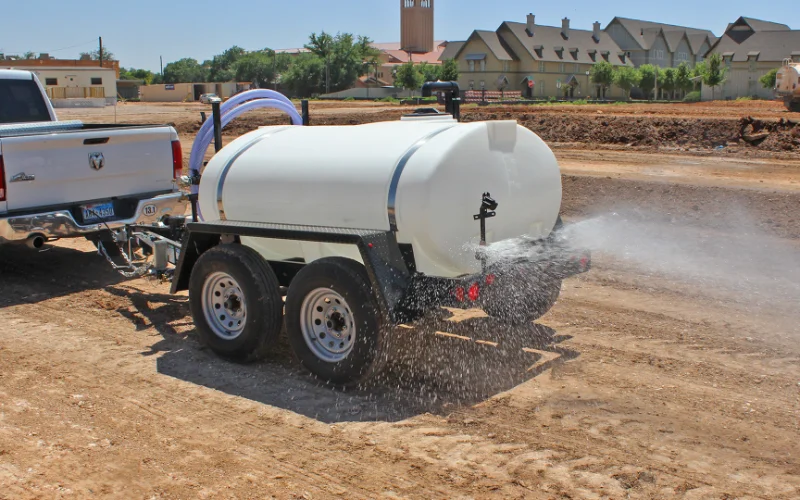
Dry soil and road base will not compact properly. A water trailer for soil compaction gives grading and earthwork crews a mobile way to bring water to the work area and apply it where moisture conditioning is needed before compaction.
When Dry Ground Slows Down Compaction Work
Earthwork and grading often require soil or road base to be at the right moisture level before compaction can be effective. When material is too dry, rollers and plate compactors struggle to achieve density, sections fail testing, and crews end up reworking lifts they thought were finished. The catch is that the sites where this happens most, new building pads, access roads, and remote grading areas, rarely have a hydrant or fixed water connection nearby, and a full-size water truck may be impractical or too expensive for the size of the job. A water trailer for soil compaction solves this by letting crews haul water to the work area and apply it in controlled passes, so moisture conditioning happens on the grading schedule instead of waiting on water access.
Where Soil Compaction Watering Is Needed
Jobsite watering for soil compaction shows up across nearly every phase of earthwork. Crews commonly stage or tow a water trailer to support:
- Grading areas
- Subgrade preparation
- Road base compaction
- Access road preparation
- Building pads
- Utility trench backfill areas
- Dry soil areas
- Compacted fill zones
- Remote jobsites without fixed water access
If your project also involves dust suppression, equipment washdown, or general site water supply, see our full lineup of construction dust control and jobsite water trailers.
How a Water Trailer for Soil Compaction Supports Moisture Conditioning
A water trailer gives crews a mobile water source that can be staged near the work area or towed along the area being prepared. Instead of running long hose lines from a distant connection or scheduling deliveries around a water truck, the crew fills the trailer at an available source and brings the water directly to the grade.
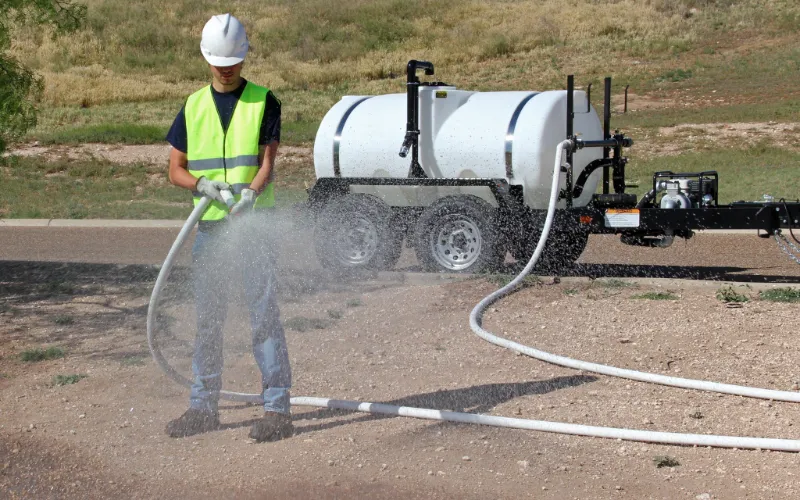
Soil moisture conditioning with a water trailer is straightforward in practice. Depending on the site and trailer configuration, water may be applied through a rear spray bar for wide, even passes, a hose for targeted wetting, or a pump and discharge setup for filling or spot applications. Crews can make light passes over a lift, let the equipment operator evaluate the material, and apply more water only where it is needed. Because the trailer stays on site, watering can be repeated as conditions change through the day, which keeps compaction prep moving with the grading schedule rather than against it.
Moisture Conditioning Soil Before Compaction
The goal of moisture conditioning soil before compaction is to apply water evenly enough to support the compaction process without creating unsafe muddy conditions, runoff, or overwatered sections. Too little water and the material will not densify; too much and the crew is waiting on a saturated lift to dry out. Before watering begins, it helps to think through:
- Soil type and how dry the material is
- The size of the compaction area
- The grading schedule and when compaction will follow watering
- Weather conditions, including heat, wind, and incoming rain
- Equipment access for the trailer, tow vehicle, and compactors
- How evenly water can be applied across the lift
- Avoiding overwatering, ponding, or runoff
- Coordinating water application with compaction timing
Exact moisture targets and compaction requirements should always come from your project specifications, geotechnical guidance, or the site supervisor. The trailer's job is to make controlled water application practical wherever the work is happening.
Water Trailer for Road Base and Subgrade Compaction
Road base and subgrade work are two of the most common places a water trailer earns its keep. A water trailer for road base compaction lets crews wet down dry aggregate before and between roller passes, especially on access roads, haul roads, and paving prep where the material arrives drier than the compaction work calls for. Towing the trailer slowly along the run with a spray bar gives even coverage across the lift.
A water trailer for subgrade compaction works the same way at the soil level. When the exposed subgrade has dried out ahead of fill placement or proof rolling, crews can apply water in measured passes to bring the material back toward a workable condition. As with all compaction work, defer the exact requirements to the project specifications, geotechnical guidance, or the supervisor running the grade.
Jobsite Watering Setup for Soil Compaction
Setting up jobsite watering for soil compaction does not need to be complicated. A simple sequence keeps the crew productive and the grade workable:
- Identify the areas that need moisture conditioning
- Confirm the fill source for the trailer
- Decide where the trailer can be staged or towed
- Check access for the tow vehicle and compaction equipment
- Choose a spray bar, hose, pump, or discharge setup
- Apply water evenly across the target area
- Avoid overwatering, runoff, or unsafe muddy conditions
- Coordinate water application with grading and compaction work
What This Trailer Needs to Do
The compaction-support scenario above translates into a short list of practical requirements for the trailer itself.
- Even, Controllable Application A spray bar or hose setup lets the crew make light, repeatable passes across a lift instead of dumping water in one spot, which is how ponding and muddy sections start.
- Capacity Matched to the Area The tank needs to cover the compaction area without constant refill trips, while staying light enough for the tow vehicle and soft enough ground conditions to handle.
- Jobsite Mobility Subgrade and road base runs move as the work progresses, so the trailer has to tow along the grade and reposition quickly between watering passes and compaction passes.
- Flexible Fill Options Many grading sites have no fixed water connection, so the trailer needs to fill from whatever approved source is available, whether that is a hydrant, a storage tank, or another supply point.
- Multiple Discharge Options Wide passes call for a spray bar, while trench backfill and tight spots around structures call for a hose, so the configuration should match how the water actually gets applied on your site.
How to Choose the Right Trailer
For compaction support, the variables that matter most are the size of the area being conditioned, how far the trailer is from a refill point, and whether the trailer travels between job sites on public roads. Our water tank trailers for construction cover the full range.
Building Pads and Trench Backfill
Smaller compaction areas and tight access favor compact, small-capacity trailers that maneuver easily around structures and open trenches, with a hose for targeted wetting.
Road Base and Subgrade Runs
Linear runs benefit from a mid-capacity trailer with a rear spray bar, towed slowly along the grade for even coverage between roller passes.
Large Grading Areas and Remote Sites
Bigger areas and sites far from a fill source favor higher-capacity trailers that reduce refill trips and keep watering on pace with the compaction schedule.
See our full sizing guide for soil compaction and site watering →
Recommended Trailers for Soil Compaction and Site Watering
Construction water trailers can support soil compaction prep, road base work, grading, site watering, and temporary jobsite water supply when configured for the site conditions. These three cover the most common compaction-support setups, from hauling water to the grade to spraying long road base runs.
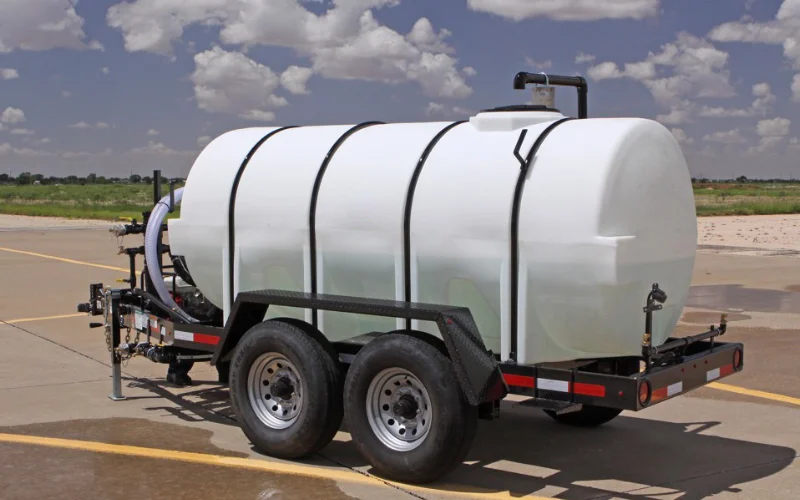
1010 Gallon DOT Trailer
Mid-capacity workhorse for road base and subgrade runs, balancing coverage with maneuverability.
✓ DOT-compliant for travel between job sites
View Details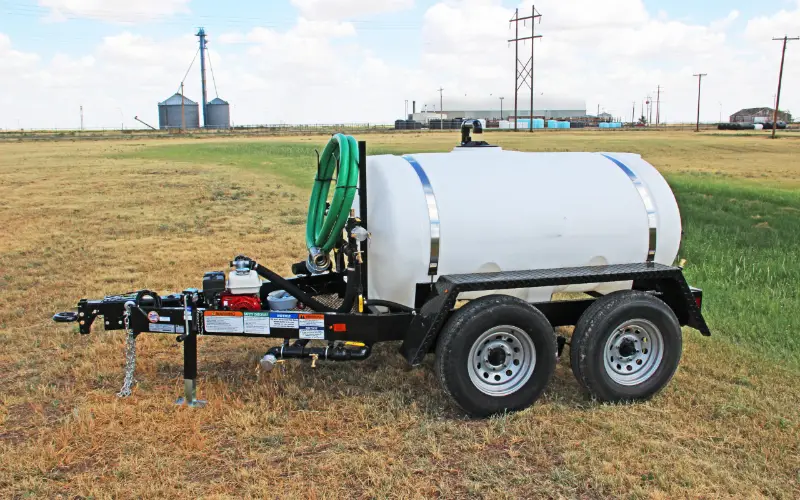
1200 Gallon Nurse Trailer
Mid-capacity hauler for bringing water to the grade and transferring it where compaction prep needs it.
✓ Available in DOT and non-DOT configurations
View Details
1600 Gallon Trailer
High capacity for large grading areas and remote sites where refill trips slow the work.
✓ High capacity for extended watering operations
View DetailsRelated Guides
Frequently Asked Questions
A water trailer for soil compaction is a towable water tank with a discharge setup, such as a spray bar, hose, or pump, that crews use to wet soil or road base before compaction. It gives grading and earthwork crews a mobile water source on jobsites that do not have hydrants or fixed water access.
Dry soil and road base often need added moisture before they will compact properly. A water trailer lets crews stage water next to the work area and apply it in controlled passes, so material can be brought toward the moisture condition called for in the project specifications before rollers or plate compactors go to work.
Yes. Subgrade preparation is one of the most common reasons crews bring a water trailer to a grading site. The trailer can be towed along the subgrade while water is applied through a spray bar or hose, then staged nearby while compaction equipment works the area. Exact moisture requirements should come from the project specifications or geotechnical guidance.
Crews typically tow the trailer along the road base in slow passes, using a rear spray bar for wide, even coverage or a hose for targeted areas. The goal is to apply water evenly across the lift and coordinate watering with the compaction schedule, while deferring exact moisture targets to the project specifications or the site supervisor.
Apply water in light, even passes rather than soaking an area all at once, and give the crew a chance to evaluate the material between passes. Watch for ponding, runoff, and muddy conditions, which signal that the soil has taken on too much water. Weather, soil type, and the compaction schedule all affect how much water the area can absorb.
For small and mid-size compaction areas, building pads, and trench backfill zones, a water trailer is often a practical alternative to renting a water truck. It can be towed by a standard work truck, staged on site between uses, and refilled from an available source. Large continuous earthwork operations may still call for higher-capacity equipment; a Sales Specialist can help you compare options.
Ready to Move?
Tell us about your compaction area, fill source, and tow vehicle and we'll match you with the right configuration, with same-day quote turnaround.
Request a QuoteStill Deciding?
Need help planning water delivery for grading or compaction work? Talk to a Sales Specialist about construction water trailer options for soil moisture conditioning, road base prep, subgrade work, and jobsite watering.
Talk to a Specialist