

Water Trailer for Equipment Washdown
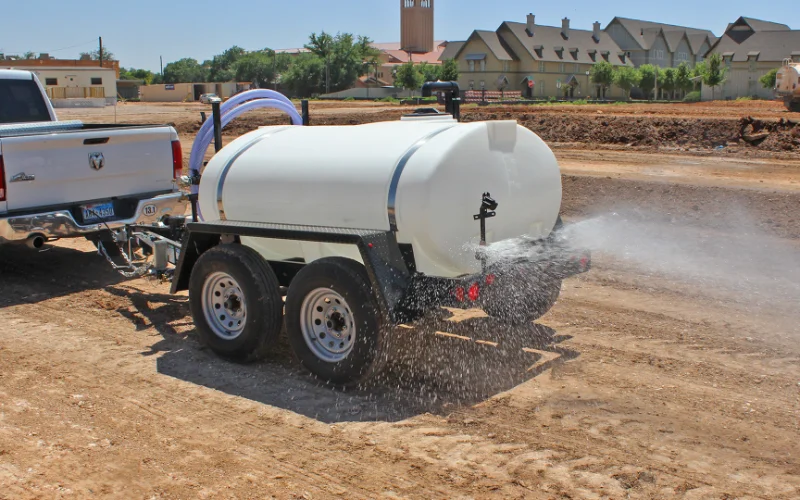
A water trailer for equipment washdown gives crews a mobile water source that can be filled from an available supply and staged right at the rinse area, even when the jobsite has no hydrant, hookup, or permanent wash station.
When Muddy Equipment Needs Rinsing and the Site Has No Water
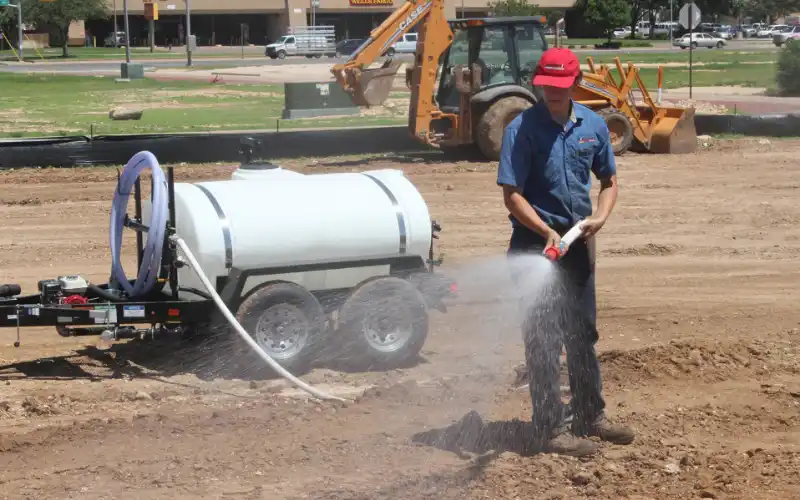
Excavators come off a wet cut with caked tracks, trucks carry mud toward the site exit, and concrete or soil work leaves tools and surfaces coated by the end of the shift. The work that creates the mess rarely happens next to a spigot. Remote sites, early-phase projects without utilities, and jobs with limited hydrant access leave crews hauling buckets or skipping washdown entirely. That is how mud gets tracked onto public roads, equipment wears faster, and cleanup eats into the schedule. A jobsite equipment rinse water trailer puts the water where the rinse work actually happens, so crews can clean tires, tracks, attachments, and work areas without waiting on permanent water access.
What a Water Trailer for Equipment Washdown Needs to Do
Washdown duty puts different demands on a trailer than dust control or irrigation; these are the requirements that matter when the job is rinsing equipment and supporting cleanup.
- Fill from an available supply The trailer has to accept water wherever the project can get it, whether that is an offsite fill point, an onsite storage tank, or a permitted hydrant connection, because the site itself has no plumbed water.
- Capacity matched to the rinse workload Rinsing caked mud off tracks and attachments uses water quickly. A tank that empties after one or two machines turns washdown into a refill errand instead of a routine.
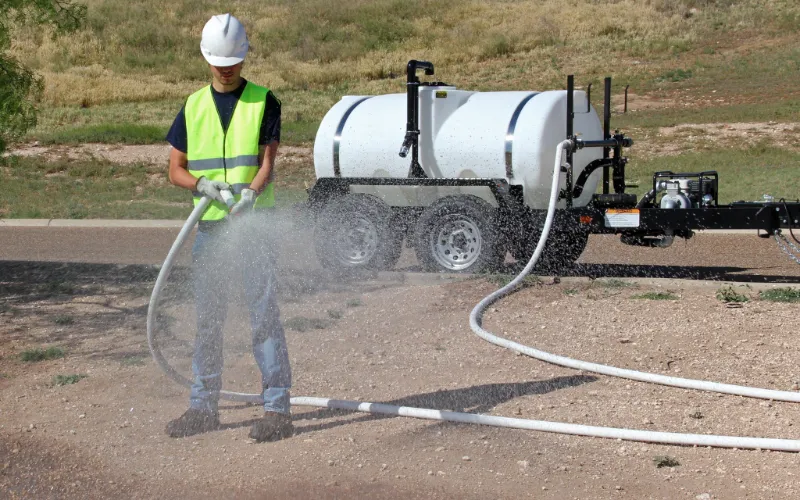
- Hose reach and discharge options The trailer cannot always park next to the machine being rinsed. Hose length, and a pump, nozzle, or spray bar setup suited to the task, determine whether the rinse area actually works.
- Towable around the site The rinse point moves as project phases change. A trailer that repositions easily follows the work from the equipment staging area to the access point to the final cleanup zone.
- Stable staging on rough ground Washdown areas turn wet by definition. The trailer needs to sit where equipment can approach it without the staging spot itself becoming an unsafe mud pit.
How to Choose the Right Trailer
For washdown duty, the decision usually comes down to how much rinse work the site generates each day, whether the rinse point stays put or moves, and whether the trailer will pull double duty on dust control or other jobsite water tasks.
Single Rinse Station, Small Crew
A compact or small-capacity trailer staged near the site exit handles tool cleanup and light equipment rinsing without tying up a heavy tow vehicle.
Multiple Machines or a Moving Rinse Point
A larger-capacity construction water trailer cuts refill trips when several machines need rinsing daily or the washdown area follows the work across the site.
Washdown Plus Dust Control Double Duty
A higher-capacity trailer with spray options can cover equipment rinse, surface wetting, and dust suppression from one unit. Compare concrete dust control trailer options if dust is part of the job.
Mobile Washdown Water Supply for Construction
A mobile washdown water supply for construction earns its keep when the rinse point changes during the project, the work area moves, or crews need temporary water before permanent utilities are in. Instead of building the workflow around the nearest water source, the water follows the work.
A few planning points make the setup run smoothly: confirm where the trailer will be filled and how long a fill cycle takes, stage the rinse area where equipment can reach it without crossing active traffic, check how far the hose needs to reach from where the trailer can actually park, and decide whether the rinse tasks call for a pump or gravity flow is enough. Plan for how runoff, mud, and standing water will be managed around the rinse area, and watch refill needs through the workday so the tank is not empty when the last machine rolls up.
Water Trailer for Jobsite Cleanup
The same unit that supports the rinse station doubles as a water trailer for jobsite cleanup. Crews use it to rinse surfaces after concrete or soil work, wet down dusty cleanup areas, wash hand tools at the end of a shift, and keep portable washdown water for equipment close to active work zones. It is a basic rinse and cleanup supply, not a regulated wash station, so projects with formal containment or environmental requirements should confirm those separately against the site plan.
Setting Up a Temporary Equipment Rinse Area
Before the trailer arrives, walk the site with this checklist:
- Identify what needs to be rinsed: tires, tracks, attachments, tools, or surfaces
- Confirm the fill source and how the trailer will reach it
- Choose a safe staging area the trailer and tow vehicle can access
- Keep the rinse area clear of traffic conflicts and pedestrian routes
- Choose the hose, pump, nozzle, or discharge setup for the tasks
- Avoid creating unsafe mud, runoff, or standing water around the station
- Monitor refill needs during the workday
Recommended Trailers for Equipment Washdown
Each of these works as a construction equipment rinse trailer; the difference is how much rinse and cleanup work the site generates between refills. They also tie into our broader lineup of water tank trailers for construction.
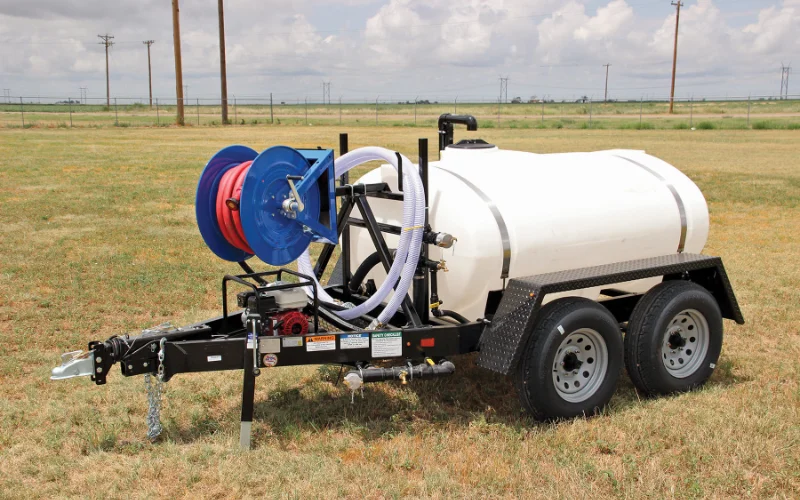
550 Gallon Water Wagon
Compact rinse supply with hose and nozzle included for tool cleanup and single-machine washdown.
✓ DOT-compliant, no CDL required
View Details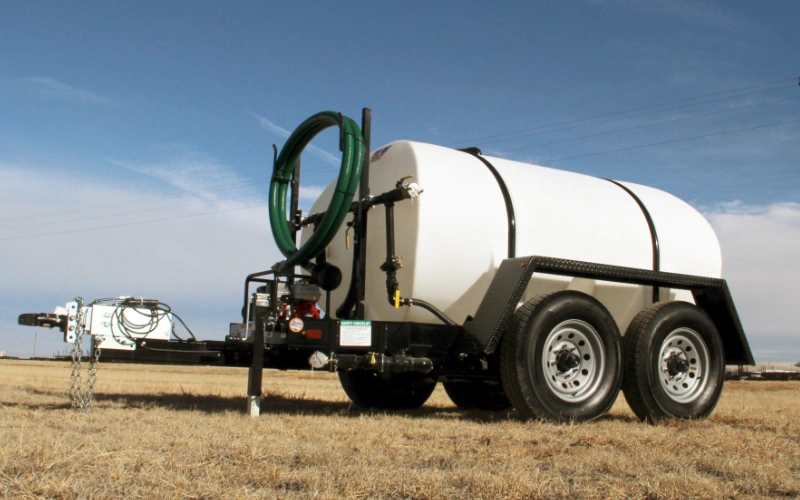
800 Gallon Water Tank Trailer
Mid-capacity unit for daily washdown across multiple machines with fewer refills.
✓ Used on construction equipment washing stations
View Details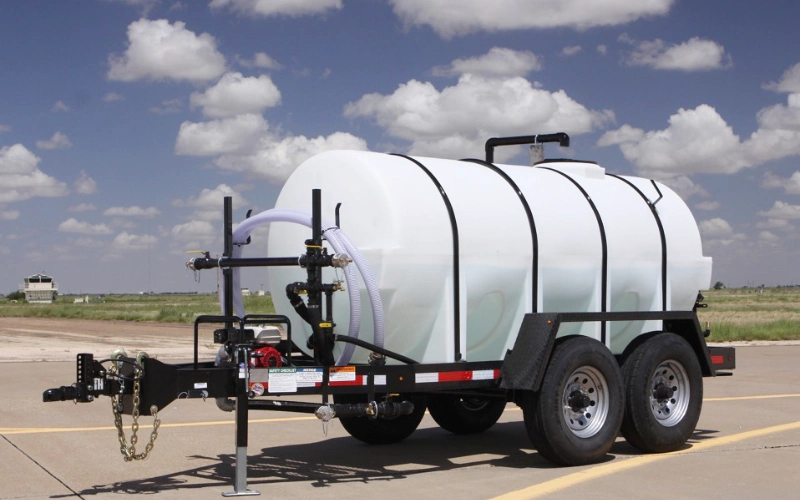
1010 Gallon Water Spray Trailer
High-capacity sprayer whose 100' hose reel reaches machines the trailer can't park beside.
✓ DOT-compliant with 100' mounted hose reel
View DetailsRelated Guides
Equipment washdown is one slice of jobsite water planning. These guides cover construction site water trailer options and dust-focused setups for the rest of the project.
Frequently Asked Questions
A water trailer for equipment washdown is a towable water tank that crews fill from an available supply and stage near a rinse area. It gives the jobsite a temporary water source for rinsing muddy equipment, tools, tires, and tracks when permanent water access, hydrants, or utility hookups are limited.
Yes. Crews stage the trailer near the equipment staging area or site exit and use the hose, pump, or nozzle setup to rinse tires, tracks, attachments, and work surfaces. Larger machines and heavier mud generally call for a higher-capacity trailer so the tank is not emptied after one or two machines.
It depends on the task. Light tool cleanup may only need gravity flow through a hose, while rinsing caked mud off tracks and attachments usually calls for a pump and nozzle configuration. Talk through your rinse tasks with a Sales Specialist before choosing the discharge setup.
Pick a staging spot that equipment can approach safely, confirm where the trailer will be filled, and set the rinse area away from traffic conflicts. Then match the hose, pump, and nozzle setup to what needs to be rinsed, and plan how often the tank will need a refill during the workday.
Yes. The same trailer that supports an equipment rinse area can supply water for rinsing surfaces, wetting dusty cleanup areas, washing hand tools, and giving crews water close to active work zones. Many construction crews pair cleanup duty with dust control on the same trailer.
Stage the rinse area where wash water will not pool in traffic lanes, create unsafe mud, or run toward drains or sensitive areas. Runoff handling requirements vary by site and jurisdiction, so confirm your project's stormwater and site plan requirements before setting up a rinse area.
Ready to Move?
Tell us what needs rinsing and where you'll fill, and we'll send same-day pricing on the right setup.
Request a QuoteStill Deciding?
Need help planning temporary washdown water for your jobsite? Talk to a Sales Specialist about construction water trailer options for equipment rinse areas, cleanup tasks, temporary wash stations, and limited-access worksites.
Talk to a Specialist