

How to Use a Water Trailer for Construction Dust Control
A setup guide for site managers and crews who need to keep dust down on access roads, haul routes, and disturbed soil without hydrant access or a full-size water truck.
Dust Control Is a Daily Job on Most Sites
Dust control is a routine challenge on construction sites. Vehicle traffic, grading, dry soil, demolition, and material handling all kick fine particles into the air, and wind carries them straight toward workers, equipment, and neighbors. Left alone, that dust creates visibility hazards, compliance problems, and complaints that can slow or stop work.
Here is how to use a water trailer for construction dust control: fill the tank from an available water source, tow the trailer to the work area, and apply water through a spray bar, hose, or water spray system to wet down roads, soil, and active work zones. The trailer carries its own water supply and pump, so crews can suppress dust anywhere on site, even where there is no hydrant access or fixed water line. The rest of this page walks through where dust control is needed, how to set the trailer up, and how to plan coverage for your site.
Where Construction Dust Control Is Needed
Most jobsite dust comes from a predictable set of surfaces. Walk the site and you will usually find the problem areas fall into these categories:
- Unpaved access roads and haul roads carrying truck and equipment traffic
- Staging areas and equipment travel paths between work zones
- Disturbed soil and active grading zones
- Stockpile areas where loaders and wind lift fine material
- Areas adjacent to demolition work
- Dry or windy sites and temporary work zones without hydrant access
If your dust problem is centered on teardown work rather than roads and soil, our demolition dust control water trailer page covers our solution in more detail.
What This Trailer Needs to Do
The dust problems above translate directly into a short list of requirements for the trailer itself.
- Mobile water supply Haul routes and grading zones rarely sit near a hydrant. The trailer has to carry water to where the dust is, not the other way around.
- Spray bar coverage Access roads and open surfaces need even wetting across the full travel lane. Spot spraying alone leaves dry strips that start dusting again as soon as traffic resumes.
- Hose for spot treatment Stockpiles, staging areas, and edges around structures need targeted wetting that a fixed spray bar cannot reach.
- Enough tank capacity Every refill trip is time the dust is winning. Capacity should match the area you cover and how far away your fill source is.
- Road-ready towing where required Contractors moving between sites on public roads typically need a DOT-compliant trailer. Single-site use on private property may not.
How a Water Trailer Supports Jobsite Dust Suppression
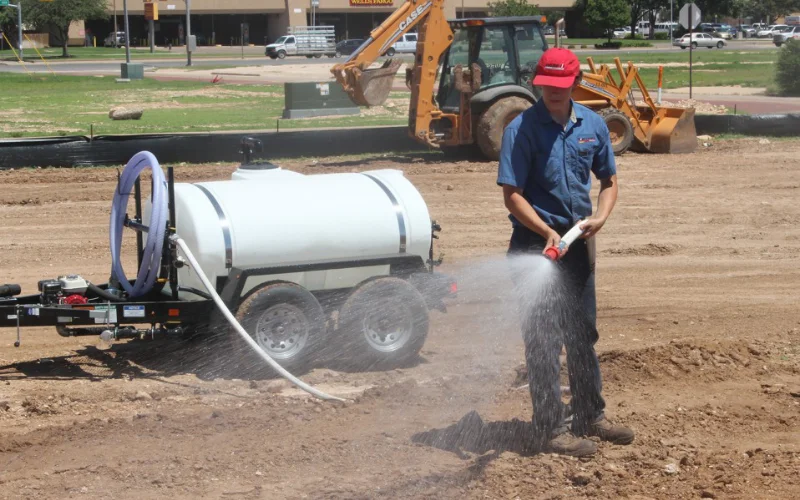
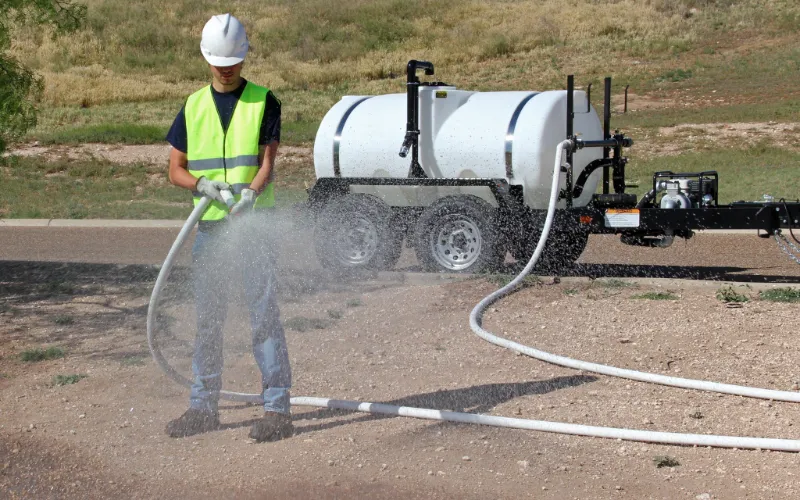
Jobsite dust suppression with a water trailer works because the unit is self-contained. The tank holds the water, the pump moves it, and the spray bar, hose, or water spray system puts it on the surface. That means crews can position the trailer near a dusty staging area for spot work, or tow it slowly along haul routes while the rear spray bar wets the full lane behind it.
The configuration depends on the site. A trailer set up with a rear spray bar handles roads and open surfaces; a hose setup handles edges, stockpiles, and tight corners; many crews run both from the same unit. Because the trailer refills from whatever water source is available, it also doubles as a temporary water supply for other jobsite needs. For the full range of configurations, see our construction dust control and jobsite water trailers pillar page.
How to Use a Water Trailer for Construction Dust Control: Setup Checklist
Run through this checklist before the first pass. It takes a few minutes and prevents most of the problems crews run into on day one.
- Identify the dust control areas: roads, staging zones, disturbed soil, and stockpiles.
- Confirm the available fill source and how long a round trip to it takes.
- Choose the route or staging location for the trailer.
- Check jobsite access for the tow vehicle and trailer, including gates and turning room.
- Confirm whether a spray bar, hose, or pump setup is needed for each area.
- Fill the tank from an appropriate water source.
- Apply water evenly, keeping passes consistent so you do not create unsafe muddy areas.
- Monitor dust conditions through the day and repeat passes as needed.
Water Trailer Dust Control Coverage and Flow Rate
Water trailer dust control coverage is not a single number. It depends on the trailer setup: tank size, pump, spray bar or hose configuration, travel speed, surface type, weather, and how much dust the site is generating. A compacted haul road on a humid day needs far less water per pass than loose, dry soil in wind.
The same goes for construction dust control water trailer flow rate. The right pump and plumbing depend on how long you run each day, the spray setup you choose, hose length, and whether you need to draft from an external source. Rather than working from a generic chart, bring your site size, routes, and watering schedule to a Sales Specialist and plan the configuration around your actual conditions.
How to Choose the Right Trailer
For dust control work, the decision usually comes down to capacity, access, and whether the trailer travels on public roads. Match the trailer to how much surface you wet each day and how often you can refill.
Smaller Sites or Tight Access
A compact 550 gallon trailer maneuvers through gates and congested areas and handles daily dust control on smaller footprints.
Mid-Size Sites with Daily Watering
A 500 to 1,000 gallon trailer handles daily dust suppression on most job sites with a workable balance of capacity and maneuverability.
Large Sites or All-Day Watering
Sites with long haul routes or continuous watering often need 1,600 gallons or more to keep refill trips from eating the day.
Recommended Trailers for Construction Dust Control
These three trailers cover the typical dust control range: a spray-focused unit for roads and spot work, a high-capacity option for long routes, and a heavy-duty hauler that can be configured for mixed jobsite duty.
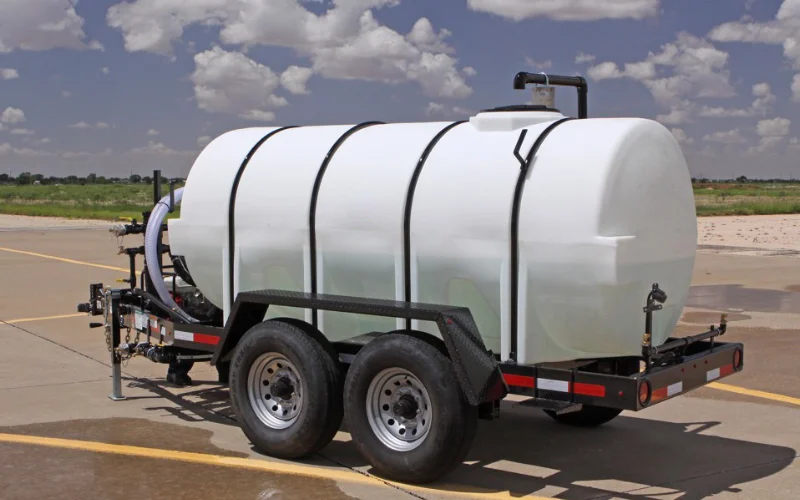
1010 Gallon Water Spray Trailer
Dual rear spray nozzles cover roads while the 100 foot hose reel handles spot treatment.
✓ DOT-compliant with three fill methods for fast turnaround
View Details
1600 Gallon Trailer
High capacity for large sites, long haul routes, and extended dust control operations.
✓ Fewer refill trips on large-acreage sites
View Details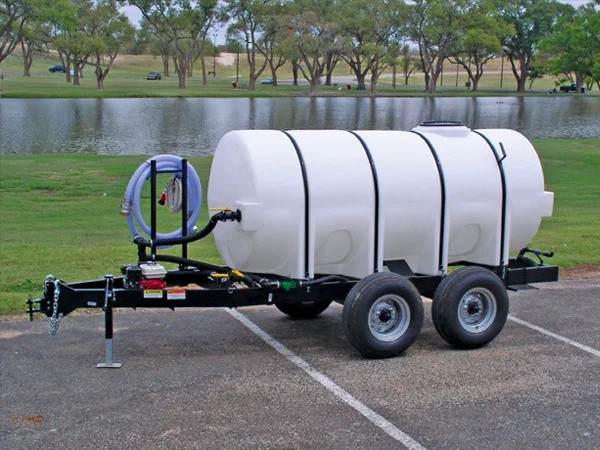
1025 Gallon Arena Water Trailer
Heavy-duty hauling workhorse with engine and pump options matched to your site conditions.
✓ Available in DOT and non-DOT configurations
View DetailsRelated Guides

Frequently Asked Questions
Fill the tank from an available water source, tow the trailer to the dusty work area, and apply water through a spray bar, hose, or water spray system. Crews typically make slow, even passes along access roads and haul routes, then spot treat staging areas and stockpiles with the hose. Repeat as traffic, wind, and drying conditions require.
Yes. Towing the trailer along unpaved access roads and haul routes while running a rear spray bar is one of the most common ways crews keep traffic dust down. For demolition areas with heavier dust loads, see our demolition dust control water trailers page.
Not always. A hose works for spot wetting smaller areas, but a spray bar distributes water more evenly across roads and open surfaces and covers ground faster. Most crews handling regular dust control on access roads choose a configuration with a rear spray bar plus a hose for targeted areas.
Yes. That is one of the main reasons construction crews use them. The trailer can be filled from any accessible water source, and suction fill options are available for drafting from ponds or tanks. A Sales Specialist can confirm pump compatibility and fill accessories for your water source.
Coverage depends on tank size, pump setup, spray bar or hose configuration, travel speed, surface type, weather, and how dusty the site is. Because these variables differ from site to site, talk through your acreage, routes, and watering schedule with a Sales Specialist before settling on a configuration.
Keep a consistent travel speed, make even passes with only the overlap needed, and monitor the surface between passes. The goal is a damp surface that holds dust down, not standing water or mud that creates traction and track-out problems. Adjust frequency as wind and drying conditions change.
Ready to Move?
Tell us your site size, routes, and fill source and we'll quote a dust control configuration, usually the same day.
Request a QuoteStill Planning Your Setup?
Need help setting up jobsite dust suppression? Talk to a Sales Specialist about construction dust control water trailer options for access roads, haul routes, spray bars, and temporary jobsite water supply.
Talk to a Sales Specialist