

Baseball Infield Watering Trailer
Baseball infields, turf dry spots, and athletic field repair zones often need water outside the normal irrigation schedule, and a permanent system cannot always put it where the field actually needs it.
When Infield Dirt and Dry Spots Need Water Outside the Irrigation Schedule
Most athletic fields have permanent irrigation, but the system was built to cover the whole field, not the baseball infield dirt before a tournament, the worn-out goal mouth on a soccer field, the new sod patch behind home plate, or the dusty base paths on game day. A baseball infield watering trailer gives the grounds crew a controlled way to put water exactly where the field needs it, without rebuilding the irrigation system. Crews use the same trailer for spot watering across baseball infields, soccer field dry spots, high-use turf repair zones, and athletic field maintenance routines where fixed irrigation simply does not reach.
What a Baseball Infield Watering Trailer Needs to Do
Athletic field spot watering puts a different set of demands on a water trailer than full-scale irrigation or potable hauling. The setup needs to handle controlled, targeted application without rutting the turf, flooding adjacent grass, or overwatering the infield dirt.
- Reach the Field Without Damaging Turf Crews move the trailer along access lanes, warning tracks, or outfield routes, so manageable footprint and weight matter as much as raw capacity for protecting sports turf.
- Apply Water in a Controlled Pattern Spot watering is not flood irrigation. A hose-and-nozzle, spray bar, or controlled discharge setup lets the crew place water on infield dirt or a repair zone without soaking the surrounding turf.
- Hold Enough Capacity for the Route Capacity should match the number of infields, dry spots, or turf repair zones a crew needs to cover between fills, especially during tournament weekends or sod establishment work.
- Move Quickly Between Areas A baseball infield watering trailer often serves several spots in one shift. A towable rig is faster than dragging a hose from the nearest hydrant across a multi-field complex.
- Match the Tow Vehicle and Site Access Field gates, paved paths, and tow vehicle ratings all set practical limits on trailer size, especially at school district fields and parks department complexes with tight access.
How to Choose the Right Setup for Sports Field Dry Spot Repair Watering
The right trailer depends on what the field actually needs, how much infield and turf the crew is responsible for, and how the trailer will be moved between areas. A single high school baseball field has different needs than a parks department complex with several baseball, soccer, and football fields.
Single Baseball Infield or Practice Field
A smaller-capacity trailer near the bottom of the 550 to 2,010 gallon lineup covers one infield, base path wetting, or a single dry spot, especially when a hydrant is nearby for refills.
Baseball Field Dust Control on High-Use Days
A mid-capacity trailer gives the grounds crew enough water to wet the infield dirt, base paths, and dragged areas before game time, then return for touch-up during the day without a long trip back to the hydrant.
Multi-Field Facility or Tournament Complex
A larger-capacity trailer toward the top of the 550 to 2,010 gallon lineup reduces refills when crews are spot watering several baseball infields, soccer field dry spots, and turf repair zones in one route.
See our full sizing guide for baseball infield and sports turf watering →
Recommended Trailers for Infield Dirt and Athletic Field Spot Watering
These three configurations cover the most common athletic field maintenance patterns: a single infield with a nearby hydrant, a multi-field facility with mixed sports turf, and a tournament or parks complex with several baseball infields and turf repair zones to serve in one route.
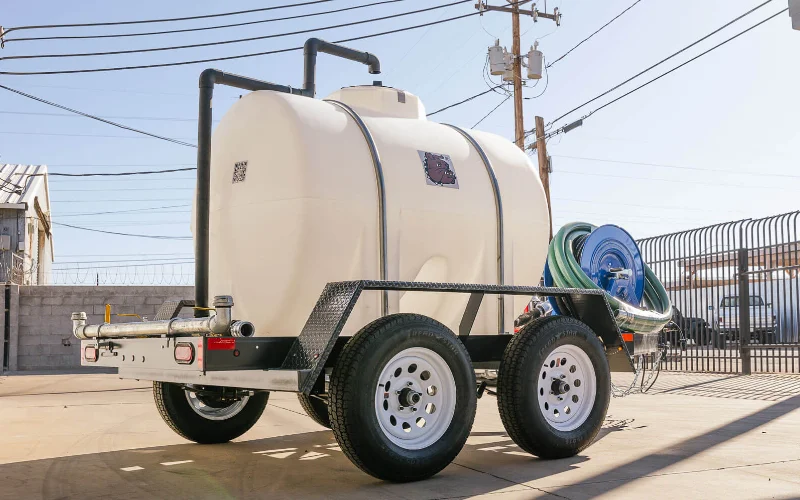
Small-Capacity Trailer | 550 Gallons
Fits single baseball infield watering, dry spot touch-ups, and short routes with a nearby refill point.
✓ Tows behind standard pickup trucks
View Details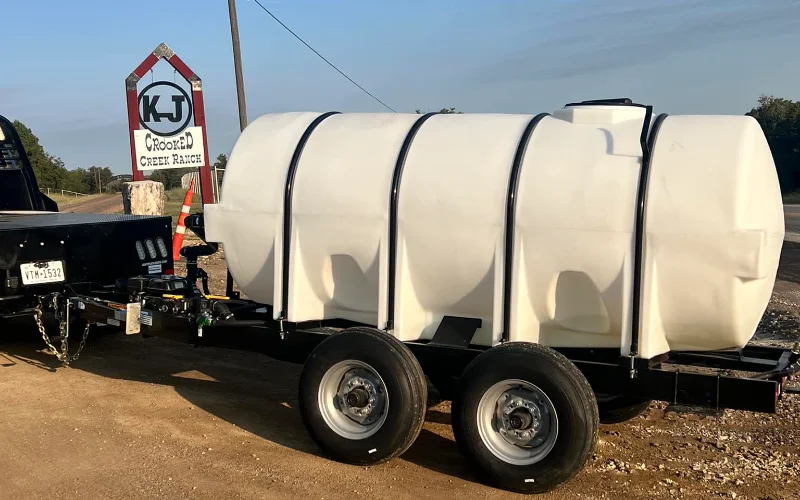
Mid-Capacity Trailer | Multi-Field Use
Covers a baseball infield plus soccer field dry spot watering across one facility between fills.
✓ Configurable for hose, nozzle, or spray bar setups
View Details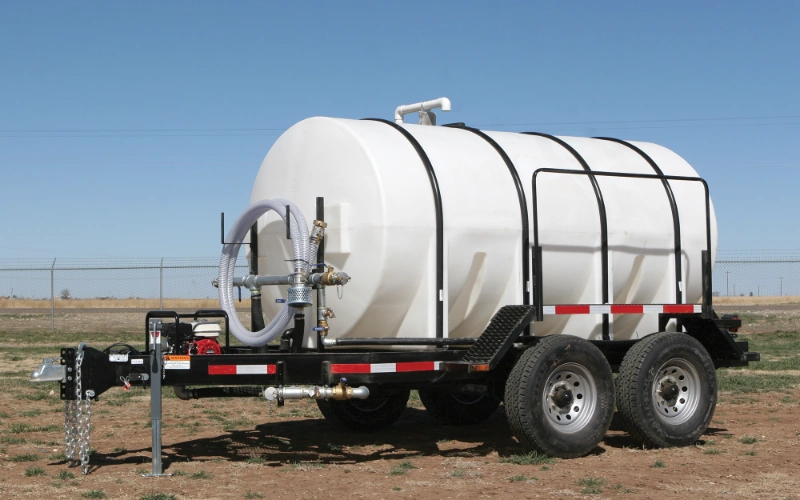
Large-Capacity Trailer | Up to 2,010 Gallons
Built for tournament weekends, parks departments, and crews running multi-field spot watering routes.
✓ Fewer refills during heavy maintenance schedules
View DetailsRelated Guides


Frequently Asked Questions
A baseball infield watering trailer is a towable water tank that grounds crews use to apply targeted water to infield dirt, dry spots, and athletic field repair areas outside of the permanent irrigation cycle. Capacities typically run between 550 and 2,010 gallons depending on how many infields or fields the crew covers in one route.
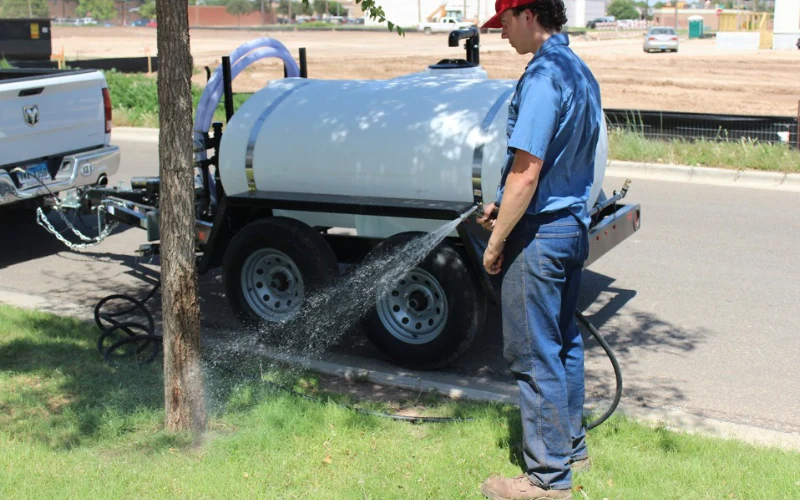
Crews use a hose, nozzle, spray bar, or controlled discharge setup off the trailer to wet the infield dirt before play, after dragging, or during maintenance. The right setup depends on the trailer configuration and how much control the crew needs over coverage and flow. A Sales Specialist can walk through configuration options.
Water can help reduce dust on dry infield dirt, base paths, and maintenance areas, especially before games or after dragging. A trailer-based baseball field dust control water trailer setup gives crews flexibility to wet specific zones when fixed irrigation does not reach, though water is one part of a broader infield maintenance routine.
Yes. The same soccer field watering trailer setup that handles baseball infields can support soccer field dry spots, wear zones near goals, and turf repair areas. Multi-sport facilities often size the trailer to cover several fields between fills. See sports field irrigation trailer options for related configurations.
No. Athletic field spot watering supports permanent irrigation, it does not replace it. A trailer fills in where the system cannot reach, where coverage is uneven, or where new sod, seed, or turf repair work needs extra moisture between irrigation cycles.
Ready to Move?
Tell us about the fields you maintain and the spot watering routine you need to support. We will respond with a configuration and quote the same day.
Request a QuoteStill Deciding?
A Sales Specialist can walk through trailer sizing, hose and spray options, and field access considerations before you commit to a configuration.
Talk to a Specialist