

Parks Department Watering Trailer
A parks department watering trailer gives parks crews and municipal grounds teams a towable water source they can use across parks, medians, plazas, and public green spaces where hydrants and permanent irrigation are not within reach.
Watering Public Grounds Across a Full City Route
Parks departments and grounds crews maintain a long list of public spaces across a city, campus, HOA, or municipal district. Parks, medians, plazas, streetscape plantings, public green spaces, and landscape beds all need water on a routine, but very few of those stops have a hydrant or irrigation line within easy reach. Crews end up stretching hose runs, hauling tanks in pickup beds, or skipping sites when the schedule tightens. A sports turf and landscape water trailer set up as a parks department watering trailer gives the crew one mobile water source to fill at a known location and tow directly to each stop along the route.
What This Trailer Needs to Do
A municipal grounds watering trailer has to fit the way parks crews actually work. The requirements below are the ones that matter when a single trailer has to cover multiple parks, medians, and plazas in one shift.
- ✓ Route-Sized Capacity Match the tank to the route, the number of stops, and the distance from the fill point. A trailer that covers two parks before refilling keeps the crew moving instead of driving back and forth.
- ✓ Maneuverable Footprint Medians, plazas, and park access points are not built for oversize trailers. Footprint, turning radius, and tongue weight all factor into whether the trailer can stage at the work zone without blocking traffic or driving on turf.
- ✓ Controlled Discharge A hose, nozzle, or spray bar setup lets crews put water at the root zone of trees, shrubs, and beds without flooding mulch, washing in fines, or creating muddy areas in a public space.
- ✓ Versatile Application for Mixed Plantings A single route can hit newly planted trees, established shrub borders, seasonal annual beds, and turf strips in the same shift. A trailer that pairs spray bar coverage with a hose-and-nozzle setup lets the crew shift from broadcast watering to slow root-zone soaks at a tree well without changing equipment between stops.
- ✓ DOT-Ready Towing Parks crews move between properties on public streets. Lights, brakes, and tag compliance keep the trailer street-legal between sites without a separate haul truck or special permits.
- ✓ Reliable Pump and Hose Package A working pump, hose, and nozzle out of the gate gets the crew watering on day one. Borrowed hose ends and mismatched fittings cost route time that is already tight on a hot afternoon.
- ✓ Predictable Refill Routine If the fill point is slow or far from the route, the last stops of the day get shortchanged. A predictable refill plan keeps every park, median, and plaza on the same watering schedule.
How to Choose the Right Trailer
The right capacity depends on how many stops are on the route, how far the fill point is from the work zone, and how much access the crew has at each park, median, or plaza. The scenarios below cover the most common ways parks and grounds crews set this up.
Small Parks, Medians, and Plazas
Tight access points and short stops favor a smaller, easier-to-maneuver trailer. The crew can stage close to the work zone without blocking traffic or rutting turf.
Multiple Parks on One Route
A mid-capacity trailer covers several stops between refills, which keeps the route on schedule when the fill point sits at the maintenance yard or a single approved supply.
Campus, HOA, and Large Municipal Routes
Larger campuses, HOA common areas, and city-wide routes benefit from a higher-capacity trailer that reduces refill trips while still maneuvering through gates and around hardscape.
Recommended Parks Department Watering Trailer Options
The trailers below cover the capacity range parks departments and grounds crews actually need to support public grounds maintenance routes, from tight median work to longer campus and city-wide routes. Each works as a water trailer for public grounds maintenance, with capacity options sized to the route.
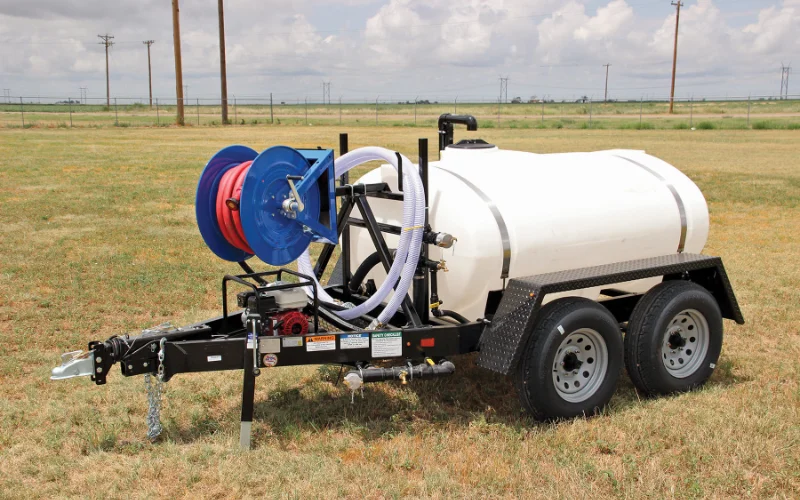
550 Gallon Public Grounds Water Trailer
Compact capacity for small parks, medians, plazas, and tight access points along a city route.
✓ Self-priming Honda pump, hose, and spray bar included
View Details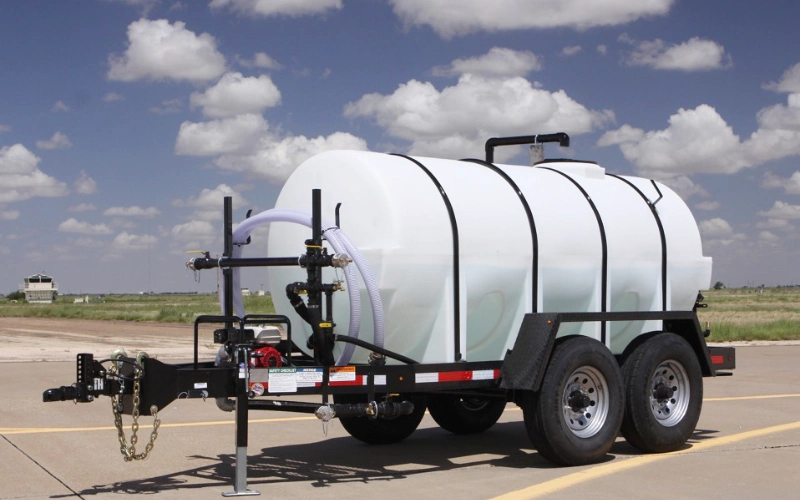
1025 Gallon Grounds Maintenance Water Trailer
Mid-capacity option for multi-stop routes across parks, public green spaces, and streetscape plantings.
✓ Tandem axles and DOT-compliant towing between sites
View Details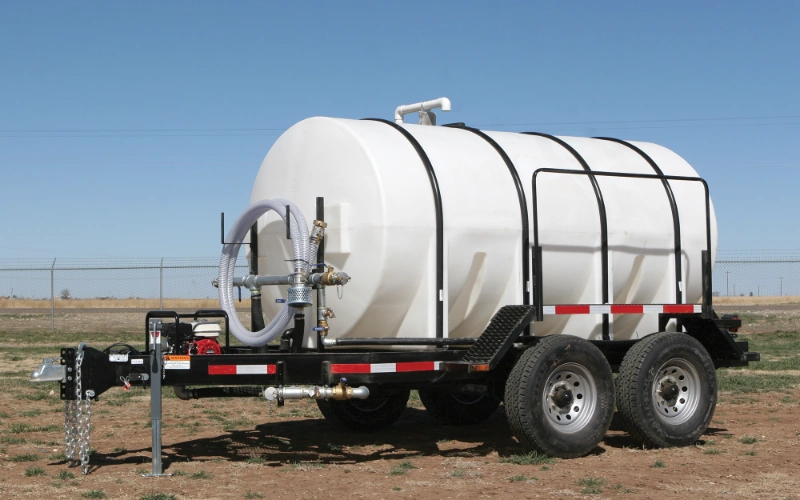
1600 Gallon Sprayer Water Trailer
Higher capacity for campus, HOA, and large municipal routes that need fewer refill trips per shift.
✓ Extended range for campus, HOA, and large municipal routes
View DetailsPublic Space Watering Without Hydrant Access
Not every park, median, or plaza has a hydrant, irrigation line, or utility connection within hose reach. A water trailer brings the supply to the work zone, so the crew can water the planted area without running long hoses across sidewalks, taping down lines through pedestrian traffic, or hauling small containers stop by stop.
Before a route starts, parks crews usually plan around a short list of practical points:
- ✓ Available fill source and approved supply point
- ✓ Distance between watering stops along the route
- ✓ Access for the tow vehicle and trailer at each site
- ✓ Hose reach from the staged trailer to the planted area
- ✓ Pump or gravity-feed needs based on the discharge setup
- ✓ Pedestrian and vehicle traffic at each public space
- ✓ Turf and hardscape protection at the staging point
- ✓ Refill routine that keeps the back half of the route on schedule
- ✓ Avoiding overwatering, runoff, or muddy areas at any single stop
Mobile Water Trailer for Park Maintenance Crews
Mobility is part of why a water trailer fits parks and grounds work. The other half is what the crew is actually watering at each stop. A single team can move a trailer across several parks, medians, and plazas in one shift, but each stop usually means a different planting type, root depth, and watering need. A mobile water trailer for park maintenance crews handles that mix without the crew swapping tools or rerouting back to a hydrant.
Common ways grounds crews put a trailer to work along a route:
- ✓ Establishment watering for new plantings. New trees, shrubs, and bed installs need regular root-zone watering during the establishment period after planting, well before any fixed irrigation gets adjusted to cover them. A trailer fills that gap with slow, deep soaks at each new install.
- ✓ Spot watering trees and shrubs at the dripline. Mature trees and shrubs benefit from periodic deep watering at the critical root zone during dry stretches. A trailer with a hose and nozzle delivers water at the dripline instead of spraying foliage, which is what the plant actually needs.
- ✓ Refilling slow-release watering bags. Slow-release bags wrapped around young trees need to be topped off on a routine. A trailer at the curb makes the refill loop quick instead of taping down a hose from the nearest hydrant or hauling jugs tree by tree.
- ✓ Watering irrigation dead zones. Most fixed irrigation systems leave dead zones, including corners, edges, beds added after the system was installed, and plantings outside the spray pattern. A trailer covers those without re-engineering the irrigation.
- ✓ Seasonal beds and annual color rotations. Annual beds and seasonal color dry out faster than shrub borders or turf. A route-based trailer keeps them on a watering routine through the busiest mowing weeks.
- ✓ Dry-weather and drought response. When public spaces stress between rainfall events, a trailer extends what the maintenance crew can cover before plantings show real damage.
- ✓ Medians, plazas, and streetscape plantings. Streetscape plantings rarely have permanent water service. The trailer brings the water; the crew manages traffic, hose reach, and discharge from the curb.
Portable Water Supply for Park Maintenance
A trailer works as a portable water supply for park maintenance and grounds work where fixed irrigation is limited, where new plantings need establishment-period support, or where dry weather pushes more watering onto the maintenance crew. The trailer is not a replacement for a permanent irrigation system on every site. It is a practical option for route-based watering, spot watering, and the public spaces that fall outside the reach of fixed irrigation.
For larger landscape installations or properties with active irrigation, see our landscape watering trailer options and irrigation water trailer options for the broader product set.
Related Guides

Frequently Asked Questions
A parks department watering trailer is a towable tank that parks crews, grounds teams, and municipal maintenance staff use to water public spaces, medians, plazas, and green areas. The trailer is filled at an approved supply, then towed to each stop along the watering route so crews can deliver water to sites that do not have a permanent irrigation system or a convenient hydrant nearby.
Crews fill the trailer at a known supply point, tow it to each watering stop, and discharge through a hose, nozzle, or spray bar depending on the site. This approach lets a single trailer cover medians, plazas, planted islands, and other public spaces that sit too far from a hydrant or irrigation line for a hose run.
Yes. Medians, plazas, and streetscape plantings are common watering stops for parks and grounds crews. The trailer is staged at the edge of the work zone, traffic and pedestrian access is managed, and the crew waters the planted area without driving across turf or hardscape.
Plan the route around the fill source, the distance between stops, vehicle and pedestrian traffic, hose reach, and how to protect turf and hardscape from rutting or runoff. A predictable refill routine keeps the route on schedule and helps the crew avoid overwatering or muddy areas at any single stop.
Yes. A water trailer works as a portable water supply for park maintenance, supporting routine grounds watering, spot watering of trees and shrubs, dry-weather support for plantings, and watering at sites that fall outside the reach of fixed irrigation.
The trailer hardware is the same family of equipment. The difference is how it is used. A parks department watering trailer is set up for route-based watering of public spaces, medians, plazas, and green areas across a city or campus, rather than a single landscape install on one property.
Yes. New trees and shrubs need regular root-zone watering during the establishment period after planting, especially in public spaces that sit outside the reach of fixed irrigation. A trailer with a hose and nozzle delivers slow, deep soaks at the dripline, and the same trailer can be used to refill slow-release watering bags wrapped around young trees along the route.
Yes. HOA common areas, campus grounds, and municipal districts all use watering trailers in a similar way. A grounds crew can stage the trailer at a refill point, then move it along a defined route to water common-area plantings, entry features, and green spaces without depending on a hydrant at each stop.
Ready to Move?
Tell us about your parks and grounds route. Our team responds same-day with sizing and pricing for the public spaces on your list.
Request a QuoteStill Deciding?
Need help planning watering routes for parks or public grounds? Talk to a Sales Specialist about sports turf and landscape water trailer options for parks departments, medians, plazas, and public green spaces.
Talk to a Specialist