

Buyer's Guide
Turf Safe Water Trailer: Single Axle vs Tandem Axle Selection Guide
Choosing a turf safe water trailer comes down to loaded weight, axle setup, ground pressure, turning radius, and your tow path. Pick the configuration that fits your access route, not just your capacity target.
Why turf-safe trailer selection matters
A loaded water trailer puts significant weight on a small footprint, and once that weight rolls onto wet turf or softened ground, damage shows up fast. Crews face callbacks about ruts down a sideline, compacted lanes through a park, or torn grass at gate entries that take weeks to recover. Pick the wrong setup for the site and you end up with repair work, irritated property managers, and lost time rerouting future watering passes. No trailer is turf-safe in every condition, but the right configuration paired with planned access can reduce the damage to something the surface can recover from.
The cost gap between the right trailer and the wrong trailer for turf usually does not live in the purchase price. It shows up in sod replacement, longer watering cycles when crews stage farther from the work area, fuel burned by undersized tow vehicles, and extra trips on every job. Axle setup and loaded weight also dictate where you can pull. The wrong choice forces crews into longer hose runs, more total passes, or skipped soft sections. Choosing well at the front end saves real labor and turf damage on every job for years.
Single axle vs tandem axle water trailer for turf
Use the table below to see how the two setups compare across the factors that actually drive turf damage and access.
| Decision factor | Single axle | Tandem axle |
|---|---|---|
| Turning radius | Tighter turns; works in confined landscape routes | Wider turning radius; needs more room to swing |
| Tow vehicle requirement | Often pairs with smaller tow vehicles already in landscape fleets | Typically requires a larger tow vehicle rated for higher loads |
| Capacity range | Better suited to lower-capacity work | Supports higher-capacity configurations |
| Weight distribution | Two contact points; weight concentrated on a single line | Four contact points; weight spread across a longer footprint |
| Tight-space access | Easier through narrow gates, around curbs, into courtyards | Better suited to open fields and longer haul routes |
| Highway towing | Adequate for short-range, in-town work | More stable for highway and longer hauls between sites |
| Common applications | Landscape watering, parks, medians, courtyards, residential properties | Athletic field watering, large grounds, multi-site routes |
| Best for | Crews working tight landscape routes with smaller capacity needs and a smaller tow vehicle. | Crews moving larger volumes across open fields with room to maneuver and a larger tow vehicle available. |
When to choose a single axle water trailer
A single axle setup is often the right call when access conditions, not capacity, drive the decision. If your crew spends most of its day weaving through tight landscape routes rather than watering wide-open fields, the tighter turning radius usually wins.
-
Landscape crews working confined routes
Parks with narrow paths, medians, courtyards, campus quads, and residential properties with curbs, fences, and gates favor a shorter, more maneuverable trailer.
-
Lower capacity demand
Spot watering, plant establishment, and smaller properties rarely need a large tank. A single axle trailer keeps loaded weight down and reduces concentrated pressure on soft ground.
-
Smaller tow vehicles in the fleet
If your crew runs trucks rated for lighter loads, a single axle setup keeps you within tow ratings and reduces strain on the vehicle.
Recommended single axle setups
The trailers below are common choices for tight landscape routes and lower-capacity turf work. Match the capacity to your typical job, not your maximum job.
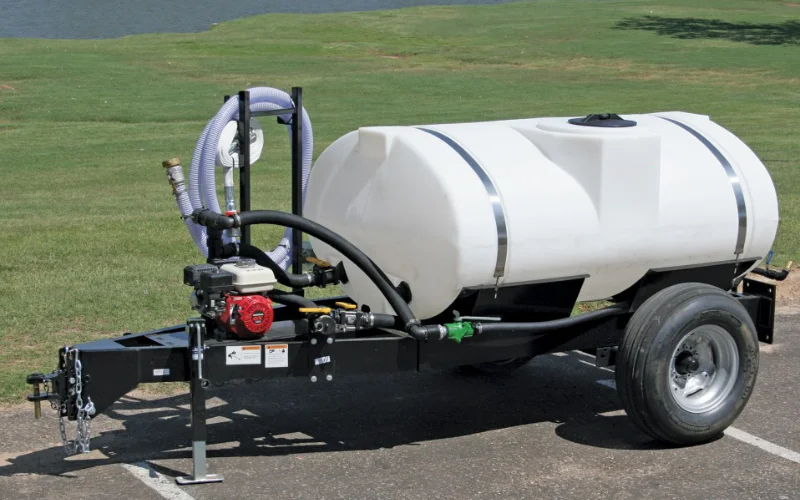
Compact single axle landscape trailer 500 gallon
Built for tight landscape routes where turning radius and gate width matter more than tank size.
✓ Same-day quote response
View Details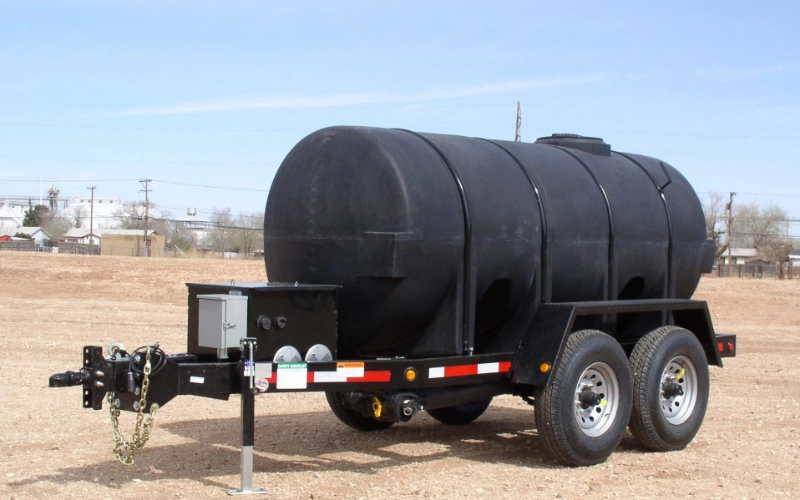
Utility water trailer 1000 gallon
A balanced option for parks, medians, and residential routes where crews need maneuverability without sacrificing usable capacity.
✓ Vendor-neutral selection support
View Details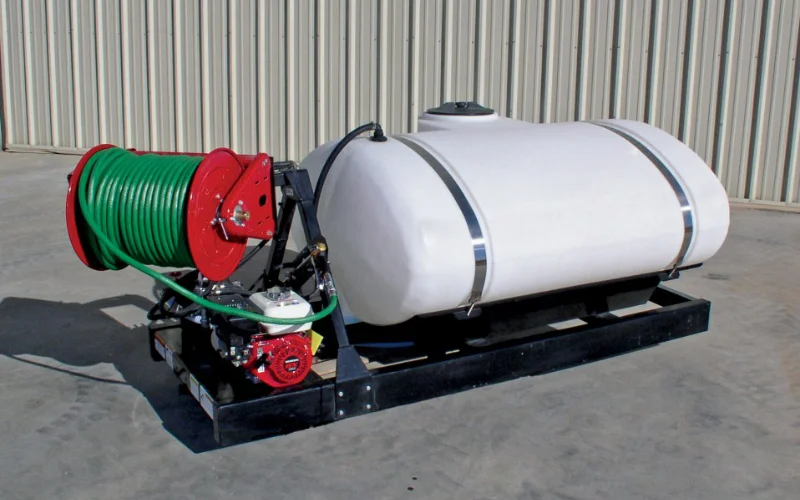
Field watering 500 gallon skid sprayer
Suited to crews staging at the edge of a field and using hose reach to cover the watering area.
✓ Configurable for spot watering or establishment
View DetailsWhen to choose a tandem axle water trailer
Tandem axle setups make sense when capacity demand or distance start driving the decision more than tight maneuvering. If crews are watering large athletic fields, moving between sites on the highway, or running long cycles, the longer wheelbase and weight distribution usually pay off.
-
Athletic fields and large grounds with open access
Football, baseball, and soccer complexes typically have room for a longer trailer to stage at the edge or pull onto the field via a planned route.
-
Higher capacity demand
Multiple zones, longer watering cycles, and fewer refills per shift favor a larger tank, which usually means a tandem axle setup.
-
Highway towing between sites
Tandem setups are typically more stable on long hauls and at speed, which matters for crews servicing multiple properties or districts.
Recommended tandem axle setups
The trailers below are common choices for higher-capacity turf work and longer routes. Match the configuration to your access conditions, not just your gallon target.
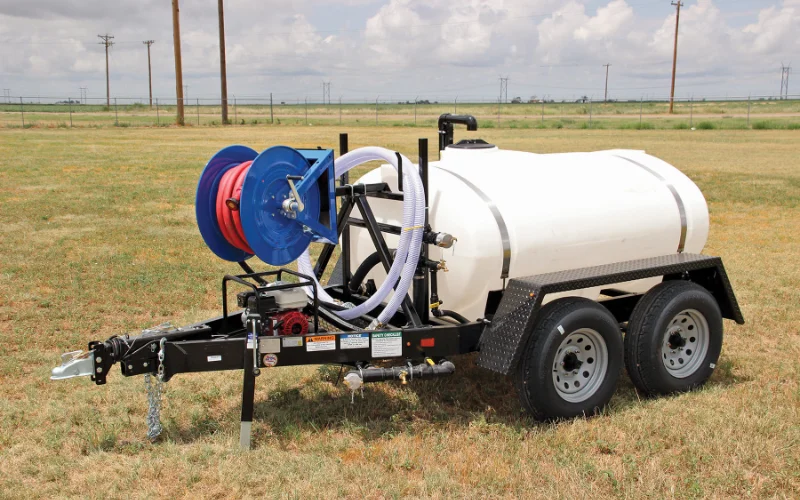
Tandem axle field express water trailer 550 Gallon
Built for crews watering athletic fields and large grounds where capacity and stability outweigh tight maneuvering.
✓ Same-day quote response
View Details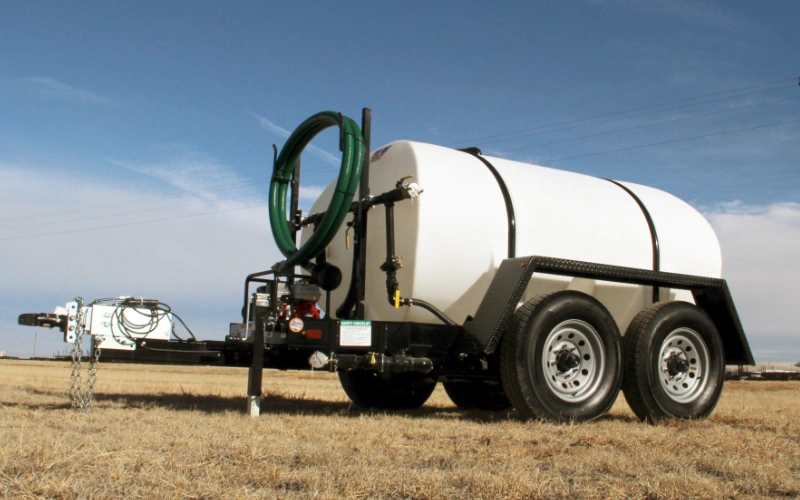
Tandem axle landscape water trailer 800 Gallon
A higher-capacity option for crews servicing multiple properties on a single shift with planned tow routes.
✓ Vendor-neutral selection support
View Details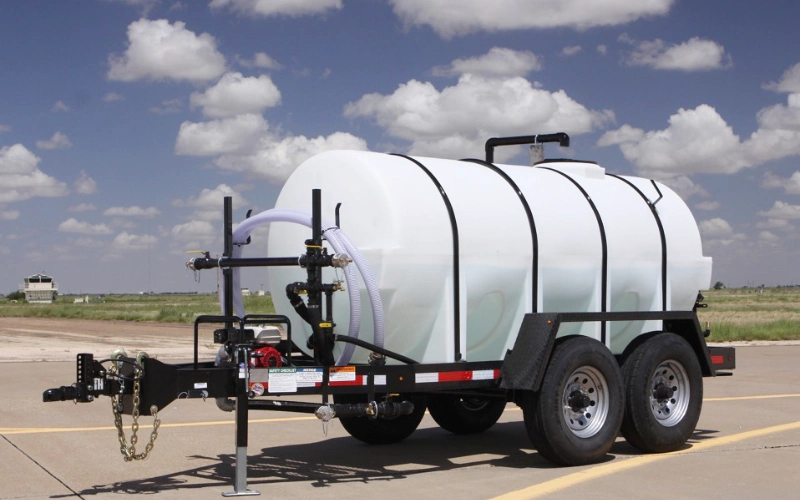
Tandem axle water trailer 1025 Gallon
Suited to crews and landscapers watering open fields where stability and water capacity matters .
✓ Configurable for multi-site routes
View DetailsCommon mistakes buyers make
These show up in nearly every quote call where a turf complaint kicked off the search.
-
Choosing capacity before checking the access route
Buyers often start with a gallon target and end up with a trailer that cannot physically reach the watering area. Walk the route loaded, not empty, before committing to a size. Gate widths, turning points, and curb heights all matter more than the brochure capacity.
-
Underestimating loaded weight on wet turf
Water weight stacks up fast. A trailer that handles fine on dry ground can rut soaked turf within one pass. Check forecasts and recent irrigation history before driving onto soft ground, and stage at the field edge when hose reach allows.
-
Skipping tow path planning
Crews often improvise the route once they arrive on site. Repeated turns, backups, and corrections do most of the visible turf damage. Mark the path before the first pass and stick to it on every visit.
-
Making repeated passes over the same line
Even a properly sized trailer will rut grass if it travels the same line several times in one shift. Vary the path or stage at field edge so the heavy traffic stays on pavement or gravel.
Related guides


Frequently asked questions
A turf safe water trailer is a trailer chosen and operated to minimize rutting, compaction, and surface damage on grass and soft ground. The label depends on more than the trailer itself. Loaded weight, axle setup, tire footprint, turning radius, and tow path planning all factor in. No trailer is turf safe in every condition.
No trailer is guaranteed not to rut grass. A loaded water trailer driven across saturated turf will leave marks regardless of axle count. The realistic goal is to reduce impact by matching trailer size to access conditions, planning the tow path, avoiding wet ground, and limiting repeated passes over the same line.
Neither is universally better. Single axle setups generally maneuver in tighter spaces and pair with smaller tow vehicles. Tandem axle setups distribute weight across a longer footprint and are typically more stable at higher capacities or on the highway. The right answer depends on your access route, capacity demand, and tow vehicle.
Ground pressure depends on loaded weight, tire footprint, axle configuration, and how the load is distributed across the trailer. Site conditions also matter. The same trailer that handles a dry field in summer can rut the same field after heavy rain. Equipment specs tell part of the story; route planning and timing tell the rest.
Walk the typical work route first. Note gate widths, turning points, curb heights, soft areas, and where the trailer needs to stage. Then match a trailer length, capacity, and axle setup to that route. A larger tank is not useful if it cannot reach the work area, and an oversized tow vehicle is wasted on a trailer that does not fit through the side gate.
Ready to move?
Send us your access conditions, capacity target, and tow vehicle details. You'll get a same-day quote with options that fit your turf and landscape routes.
Request a QuoteStill deciding?
A short call with a Sales Specialist usually saves an hour of cross-shopping. We'll walk through your route, capacity, and axle options so you can rule out the wrong setups before they hit your shortlist.
Talk to a Specialist